← prelander teardowns

Side by side · CS-P3 skin story

Our page on the right, word for word. The kept page on the left, part by part, described in our words, with a link that opens their live page at those lines (their text and pictures are not copied here). Our page was written against this kept page, part for part: each part of theirs is paired with the rows of ours that do its job, in new words and with our facts. The plan under each of their parts was written from the teardown, before our page: where our page went another way, the right column is what stands. Mark each part and leave a note. It saves as you go, and a mark on a part of ours shows on every comparison of that page.
Compare CS-P3 with
Theirs

Rovina · one-narrator story

Skin ages from underneath through oxidation, so whatever she puts on top cannot reach it; only an antioxidant that dissolves in fat and is taken by mouth gets to where it happens: astaxanthin, presented as the daily habit of Japanese women.

2,826 words · brand named 59% down the page · 3 buttons, the first at 81% · house chief 7/10 · craft chief REVISE

Open their live page ↗ · the full teardown

Ours

I spent nineteen years doing everything right for my skin. It kept looking older anyway. Then I found the one layer my creams and serums never reach.

CS-P3 · angle CS-A08 · 3,149 words · version 2 (2026-09-29): rebuilt on the kept page's angle and order, in our own words. Both chiefs, round 2: 7.5/10 as drafted, 8.5/10 with the fixes (all 48 applied)

Open our live page ↗ · comment line by line in the Copy Studio

The order, at a glance

Each bar is one page from first word to last. Width is the share of the page's words. Click a block to jump to that part.

Theirs
astaxanthin named · 42%brand named · 57%first button · 82%
Ours
astaxanthin named · 40%brand named · 63%first button · 67%
OpeningHer storyWhat she triedThe turnThe cause and the reason whyProofThe productResultsDoubts and limitsThe askThe close

What we took from this page

  • Mirror first, narrator second: three second-person snapshots before the first 'I', with the pronoun changing on the shortest line (entries 7, 8).
  • Plant self-blame early and lift it in a heading before the science begins (entries 8 and 21).
  • One cause, three numbered symptoms, each label pairing the cause with the sign she can see (entries 26 to 29). The same three signs appear four times: mirrored, questioned, explained, resolved in the timeline.
  • Criteria, then name, then tests, then brand: specification at 38%, ingredient at 46% in a one-word heading, label tests at 53%, brand at 59% as a ticked scorecard (entries 36, 42, 48, 53).
  • Close each exit the moment it opens: other pills, diet, the shop shelf, the marketplace (entries 33, 40, 47, 68).
  • Name the idea in one short sentence at the midpoint (entry 46), so the reader crosses into the buying half with something to repeat.
  • A results timeline that opens by admitting nothing happened, with the reason planted 14% earlier (entries 44 and 56).
  • Let a third party deliver the peak, with the picture planted by the expert a quarter of the page earlier (entries 40 and 59).
  • Decide in principle before hearing terms: promise, two paths, then deal and guarantee, and only then a button (entries 61 to 69).
  • A closing letter built on the last emotional objection, complete enough to work for the reader who scrolled past everything (entries 73 to 77).
  • Button labels that escalate: get it, check it, test it (entries 69, 78, 82).
  • Planted numbers that return: the years (five times), the sum spent (three), the minutes of hesitation (two), so the story feels kept by one memory.
  • Proportions by position: chrome, hook and descent 0 to 8%; thread and comment 8 to 19%; absolution, cause and verdicts 19 to 33%; wrong pills and specification 33 to 41%; desire story and ingredient 42 to 51%; label tests 51 to 56%; brand and timeline 56 to 68%; promise, paths and terms 70 to 81%; urgency and letter 81 to 95%.

What we left on it

  • Fabrication: the invented narrator, her credentials, the physician-style avatar and the ratings count (entry 6); the number is shared with another author on the same store.
  • Fabrication: the thread of 38,000 women, the numbered comment, the hero collage and every screenshot of them (entries 4, 10 to 17, 70). Composed, and unverifiable by anyone.
  • Fabrication: the unnamed researcher and laboratory, the Osaka woman, the stranger at the market, and any before-and-after picture (entries 37, 45, 59, 60).
  • The verdict that her creams, serums and injections did nothing (entries 3, 8, 24, 30, 32, 63). Our frame is solution-side only: The Cell Shield makes what she already takes hold.
  • Breakdown that outruns rebuilding (entry 26) and collagen narrated as being torn apart (entries 18, 23, 44): one sentence from the banned enzyme attack (p2), with the banned plateau story (p1) next door.
  • Reversal claims: damage undone, collagen rebuilt, years taken off (entries 45, 59, 61). The gate holds wrinkle depth, elasticity and hydration against placebo, and no more.
  • Every Japan claim: shops, skin doctors, the 1980s (entries 39 to 45, 54, 63). Nothing in the gate supports a population story.
  • The carrier-oil test and tick (entries 48, 53, 68): carrier superiority is banned (b8).
  • The 90-day guarantee (entries 65, 69, 81, 82): ours is the 30-Day Money-Back Guarantee.
  • Scarcity with no count, no date and no evidence, and the undated update (entries 70, 71, 78, 79).
  • A first button at 81% and a deal with no price.
  • The template seams: repeated blocks, a heading that promises steps and gives none, week labels out of order, a maker's pronoun in a customer's story (entries 15, 47, 59, 64, 66, 75).
  • The word mechanism in customer copy (entry 32), 31 em dashes, and the stack of contrast flips.
  • A claim locked inside an image, and 14 images with no alt text (entry 16).
  • The narrator dropping her routine for water and a softgel (entries 45, 55): ours replaces nothing.
  • Blame placed on dermatologists as a class, and the doctor used for pressure (entries 5, 73): on our pages doctors are allies.

Part by part · 70 paired · 3 theirs only · 2 ours only

I am
The headlinetheirs at 0% of the words · ours at 0%
Theirs, in our words
#3at 0%●●●●●h2 · 17 words

The headline promises the true cause behind skin that goes on aging, and lists three things the reader has paid for (a topical, a serum, an injectable) as having achieved nothing.

Why it works. Selects the woman who has bought all three and turns her frustration into one question with one hidden answer. curiosity-gapmirroringvindication

Why it sits here, and how it is written

It has to select the reader and open the loop in a single line: the cause is paid at 21%, the answer at 46%. It comes before any narrator because the narrator's standing depends on sharing this exact failure.

Seventeen words, one breath. In the capture the three product nouns are set in red, so the stress falls on her purchases and not on the promise. The closing absolute overstates, and a reader whose retinol did something will reject it. The third noun is never paid: the body explains why two topicals and a moisturizer fall short, and injectables get one passing mention in entry 19.

Planned for ours, before we wrote: rewritten to our claims. The device transfers (one reason, her own shelf named). The verdict that her products did nothing does not. Ours is solution-side: what she already takes for her skin finally holds (CS-A08). The H1 is recognition in her words (CL-06); The Cell Shield never leads it. m1p6

See these lines on their page ↗
Ours, word for word
I spent nineteen years doing everything right for my skin. It kept looking older anyway. Then I found the one layer my creams and serums never reach.
p6p3 row 0
The picturetheirs at 1% of the words · ours at 1%
Theirs, in our words
#4at 1%●●●●○img · 0 words

Hero image, seen in our capture: a collage of five dark-mode social comment cards, each with a woman's name, avatar, time stamp and reaction counts, all discussing a bottle that is never named.

Why it works. Shows a crowd already talking about the product before the reader knows what the product is. social-proofconsensuscuriosity-gap

Why it sits here, and how it is written

Set between headline and deck, so the first evidence she meets is peers, ahead of science and ahead of the narrator. It pre-sells the thread story that starts at 8%: she has seen the crowd before she is told about it. What they are all taking becomes a second open loop beside the headline's.

Fabrication: a designed collage, not a screenshot of a thread, and nobody could verify a card. The voices are well made: lower case, under-punctuated, five jobs for five cards (a surprised result on the arms after a daughter's nagging, a question about taking it with food, a hedge plus a husband's remark, a friend tagged with a note that its reviews go back years, a tried-everything verdict). One commenter shares the narrator's first name.

Planned for ours, before we wrote: left out. A composed comment collage does not transfer. The slot (peer voices above the fold) opens only when we hold real, attributable customer words; until then the hero is the softgel or the scene.

Open on their page ↗
Ours, word for word
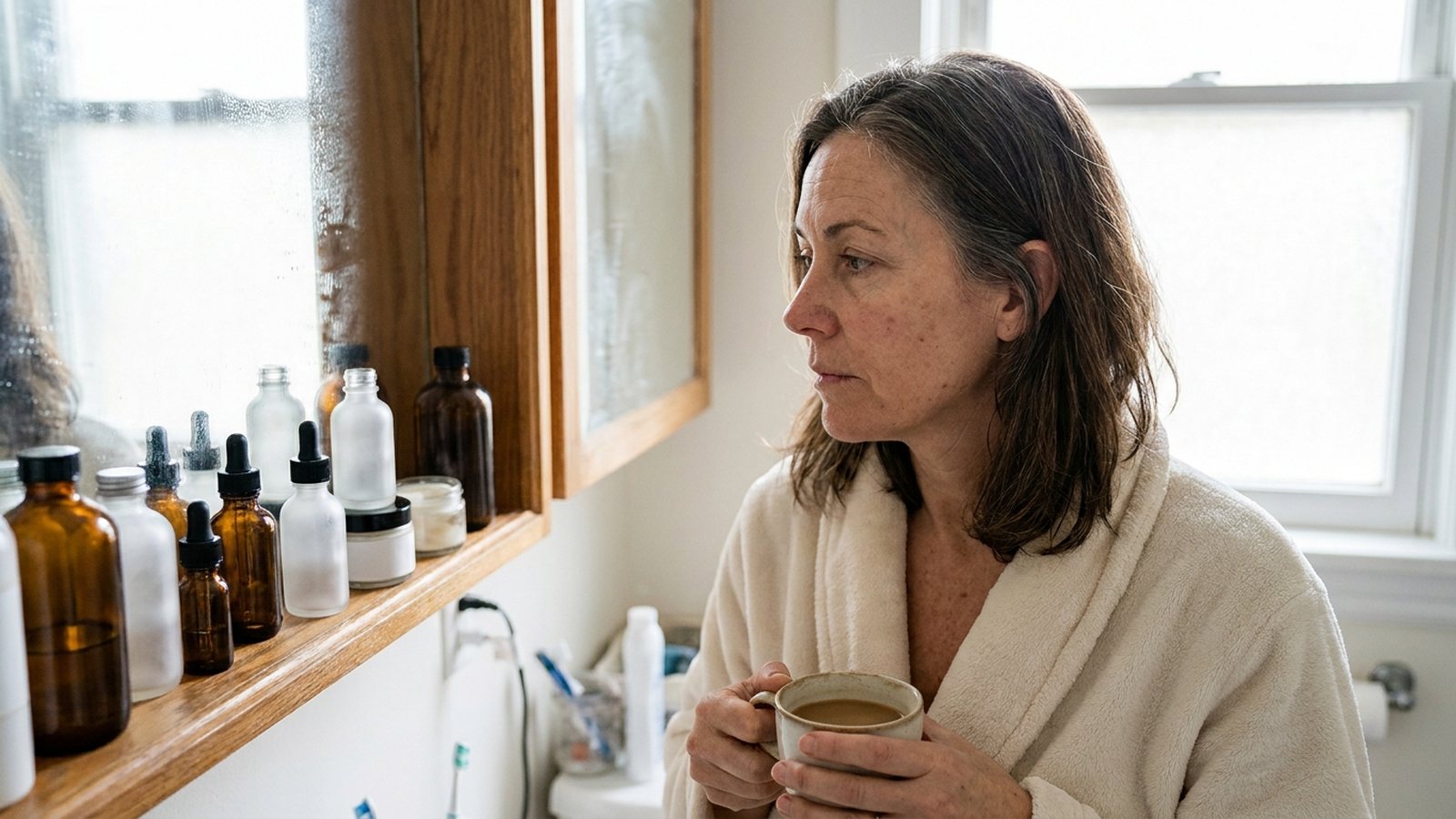
A woman in her fifties at a bathroom shelf of skincare bottles, a cup of coffee in her hand
Who is speakingtheirs at 2% of the words · ours at 1%
Theirs, in our words
#6at 3%●●●○○3× p · 19 words

A star row with 4,237 ratings, then the byline: Margaret Ellison, described as a skin researcher and cosmetic formulator of thirty years in San Diego, dated early September 2026.

Why it works. Gives the 'I' a name, a trade, a city and a fresh date, and lets an article borrow a product's review count. earned-authoritysocial-proofspecificity

Why it sits here, and how it is written

It answers the question of who she is to say so one line after the deck raises it, and before the first-person body begins, because a confession only works from someone the reader has already granted standing.

Fabrication: the persona is a template part. The ratings figure is identical on the store's kidney page under a different author, and an article cannot have star ratings. In the capture the avatar is a woman in a white coat with a stethoscope beside a green tick: a formulator dressed as a physician. The credential also fights the plot, in which a researcher of thirty years learns of free radicals from a stranger's comment.

Planned for ours, before we wrote: our proof in its place. The byline slot takes the brand's own advisor persona, a composite disclosed in the footer (CL-14), with a true date and no ratings count until a real one exists. r19

See these lines on their page ↗
Ours, word for word
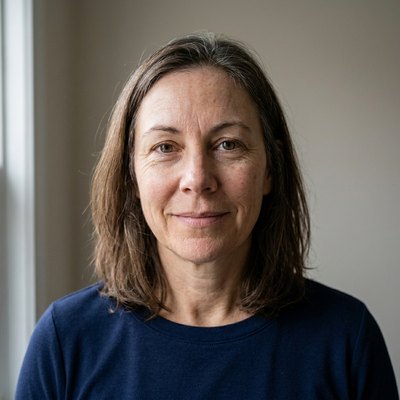
By Linda Marsh · Dental office manager, 57
What the page admitsours at 1%ours only
Theirs, in our words

Nothing on their page does this job here.

Ours, word for word
Ours alone. The kept pages present the narrator as a real person. Ours says she is a composite before the first claim, and again in the footer.
Sponsored. Linda is a composite character. Her story is drawn from what real people have written about their skin routines and about astaxanthin.
The line under the headlinetheirs at 1% of the words · ours at 2%in a different place on their page
Theirs, in our words
#5at 2%●●●●○p · 26 words

The deck makes the failure plural, claims the narrator examined more than 38,000 women whose skin aged ahead of schedule, and says skin doctors and beauty counters all overlooked what she found.

Why it works. Turns the headline's question into a first-person finding with a large sample, and casts the professionals as the ones who missed it. earned-authorityspecificitycommon-enemyidentification

Why it sits here, and how it is written

After a headline and a crowd, the reader needs a who. The deck brings in 'we' and 'I' in the same breath, so the narrator is at once a fellow failure and an investigator. It precedes the byline so that the byline reads as confirmation of a claim already made.

Title case throughout makes it a second headline; in the capture its first sentence is highlighted. The verb of study is the dishonest word: the body shows she read a social thread, and the sample is a member count. The sibling kidney page runs the same deck with a different number and different specialists.

Planned for ours, before we wrote: rewritten to our claims. We hold no study of 38,000 women and we never blame her dermatologist. Our deck may point to the human trials, to the body of published work, and to how few women have met astaxanthin. Missing claim: any population count of our own. b1r14p7

See these lines on their page ↗
Ours, word for word

The answer wasn't in a jar. It was in a 16-week trial of 65 women, and in a red nutrient most of us have never heard of.

r14p7 row 2
“That is me”theirs at 2% of the words · ours at 3%
Theirs, in our words
#7at 4%●●●●●3× p · 48 words

Three verbless snapshots addressed to the reader: a face that ages each year against the promises of what she owns; a dull morning tone and new slackness at the jaw; the be-patient speech her bottles keep giving her.

Why it works. Earns three nods from the reader before the narrator has said a word about herself. mirroringidentificationspecificity

Why it sits here, and how it is written

The body opens on 'you', not 'I'. The narrator has just been credentialed; now the page proves it knows the reader's mornings before asking her to care about the narrator's. The same signs (tone, jaw, products that ask for time) are the ones the cause section explains at 24 to 28%, so the mirror is also a planting.

Fragments without a main verb read like captions under photographs. Sensory anchors: the light, the jawline, the shelf. Treating a serum as someone who keeps asking for patience is the freshest image in the opening. The sibling page has the same three slots filled with lab values.

Planned for ours, before we wrote: rewritten to our claims. Keep the three-snapshot mirror, in her own words. Ours mirrors the shelf, the steps and the spend without the verdict that any of it failed. p6

See these lines on their page ↗
Ours, word for word

The shelf that grows by a jar a year, and the mirror that never seems to hear about it.

p6 row 3

The flat color at seven in the morning. The tight, dry feeling by four in the afternoon. The cheek that takes a second longer to spring back.

The label that says give it twelve weeks, on the jar that replaced the last one.

p6 row 5
What she already triedtheirs at 4% of the words · ours at 4%
Theirs, in our words
#8at 5%●●●●○4× p · 30 words

The voice switches to first person: a two-word verdict that nothing helps, her confusion, the sense of having done it all correctly without anything lasting, and a suspicion that she was simply born unlucky.

Why it works. Hands the reader's complaint to the narrator so they hold it together, and plants the self-blame the page will later lift. identificationmirroringopen-loop

Why it sits here, and how it is written

It follows three 'you' lines with no transition. The pronoun changes on the shortest line, so the reader is moved from her own mirror into the narrator's story without noticing the join. Self-blame has to be planted here to be removed at 19%.

In the capture the two-word verdict is bold. Line lengths step outward: 2, 5, 11, 12 words. The verb chosen for lasting is the one our own angle is built on.

Planned for ours, before we wrote: rewritten to our claims. A narrator may confess fatigue, never a verdict that the routine does not work. Ours: she did everything right, and one layer was never covered. p6p3

See these lines on their page ↗
Ours, word for word

If that's your shelf, I know it well. It's mine too.

I did every step, in the right order, morning and night. I still couldn't point to the mirror and say what the money had done.

p6 row 7

For years I blamed my mother's side of the family. Then I blamed plain bad luck.

What is at staketheirs at 5% of the words · ours at 6%
Theirs, in our words
#9at 6%●●●●○4× p · 67 words

She describes the isolation: others see a wrinkle, she sees the one thing her own profession could not solve on herself; the tiredness of standing at a mirror waiting for the next change; eleven years of it.

Why it works. Raises the cost from cosmetic to emotional, and gives the narrator a wound that matches her credential. identificationfear-of-declinestory-transportspecificity

Why it sits here, and how it is written

It sits at the bottom of the descent, just before the hinge. The reader has to feel how long and how lonely it was for the next word to land. The eleven-year figure is planted here and returns four times down the page.

A mid-sentence ellipsis imitates speech. The professional irony (studied it, could not fix it) is the only place the story uses her credential. Eleven is an odd, believable number.

Planned for ours, before we wrote: kept the move. The cost beat in her own words from the voice-of-customer file: what skincare fatigue does to a morning. No decline is dramatized. p6

See these lines on their page ↗
Ours, word for word

It's an odd kind of lonely. At the dental office I manage, I'm the one the hygienists ask about sunscreen.

Anyone else looks at me and sees a woman of 57 with a few lines. I see nineteen years of homework, and no grade.

I got tired in a way sleep doesn't fix. Tired of leaning into the mirror every morning to see what had changed overnight.

p6 row 11

Nineteen years of that.

The turntheirs at 7% of the words · ours at 8%
Theirs, in our words
#10at 8%●●●●○2× p · 18 words

A one-word hinge, then the discovery: a crowd of 38,000 women stuck at the identical point after trying everything.

Why it works. Turns a private failure into a shared pattern, which implies a shared cause. open-loopconsensussocial-proofstory-transport

Why it sits here, and how it is written

At 8%, straight after the lowest point. The deck promised this number; here it is paid for the first time and its meaning shifts, from subjects examined to women found.

A single word with an ellipsis stands as its own paragraph, a drum roll. The honest verb for what she did arrives here, some fifteen rows after the dishonest one in entry 5.

Planned for ours, before we wrote: our proof in its place. Our crowd is real and sourced: the women who already take collagen and have never met astaxanthin. No invented thread, no member count. p7i1

See these lines on their page ↗
#11at 8%●●○○○img · 0 wordsThe picture

An image slot (370 by 207) under the line about the crowd; by position it most likely shows the group or thread with its member count.

Why it works. Would turn the number from a claim into something seen. social-proof

Why it sits here, and how it is written

Placed after the number and before the scene of reading the thread, so the reader sees the place before she is walked through it.

No alt text. Content inferred from position, not seen: our local capture ends at 7% of the page. If it shows the thread, it is as unverifiable as the hero collage.

Planned for ours, before we wrote: left out. A screenshot of an invented community does not transfer. If a picture stands here it is a real, sourced one.

Open on their page ↗
Ours, word for word

Then I found out I had company.

I found them on a skincare forum. The women there were my age, give or take ten years.

i1 row 14
The turntheirs at 8% of the words · ours at 9%
Theirs, in our words
#12at 10%●●●○○2× p · 24 words

She goes into the thread braced for the three stock tips and finds instead thousands of women describing it in her own vocabulary.

Why it works. Sets expectation against discovery, and makes the reader's private words public. mirroringconsensuspattern-interruptstory-transport

Why it sits here, and how it is written

The stock tips are named first so the reader can tick them off as things she has been told as well. Only then does the surprise land. It prepares the claim, two rows on, that identical words mean an identical cause.

The tips come as three clipped sentences of one, two and three words, the rhythm of someone counting on her fingers. The reader has just read the narrator's own wording in entries 7 to 9, so she can test the claim against the page itself.

Planned for ours, before we wrote: kept the move. Her own words, quoted from real and named public sources in the voice-of-customer file, stand where the invented thread stood. p6

See these lines on their page ↗
#13at 10%●●○○○img · 0 wordsThe picture

A second image slot of the same size; by position it most likely shows a run of comments from that thread.

Why it works. Would let the reader see the matching words for herself. social-proofconsensus

Why it sits here, and how it is written

It splits the claim about shared words in two, so the eye rests on evidence between the assertion and its interpretation.

No alt text. Content inferred from position, not seen: our local capture ends at 7% of the page. If it matches the hero collage, it is composed.

Planned for ours, before we wrote: left out. Invented comments do not transfer.

Open on their page ↗
Ours, word for word

I went in braced for the usual three. Drink more water. Wear your sunscreen. Get your sleep.

The first post I opened listed a routine, step by step. It was mine, down to the order.

The turntheirs at 9% of the words · ours at 10%
Theirs, in our words
#14at 12%●●●●○4× p · 42 words

She stresses that routines and budgets differed while the wording was identical, says that had a cause, and teases a single numbered comment, #5,847, that accounted for every failure.

Why it works. Moves from same words to same cause to one place where the cause is written down. consensusreason-whyopen-loopspecificity

Why it sits here, and how it is written

The reader has accepted the crowd; now the crowd has to mean something. Ruling out routine and budget in advance removes the two explanations she would reach for. The numbered comment at the end is the hook that carries her across the first subhead.

A correction in two fragments insists on exactness, the first of the page's many contrast flips. The comment number is the most memorable specific on the page. Fabrication: the same number appears on the store's kidney page, on a different platform.

Planned for ours, before we wrote: rewritten to our claims. The pattern-then-cause step transfers. Ours: most antioxidants she has tried guard only part of the cell, and that is the common thread. No numbered comment. p3p7

See these lines on their page ↗
Ours, word for word

One used a nine-dollar drugstore cream. One flew to another city for her facials.

Different shelves, different budgets. And the same sentence, post after post: I'm doing everything right.

p6 row 18

When that many routines end in the same sentence, the routines aren't the cause.

Three weeks later I found the cause, in a paper from a university in Austria.

The turntheirs at 10% of the words · ours at 12%
Theirs, in our words
#15at 13%●●●○○h2 · 2× p · 34 words

The first subhead announces something baffling; the next two lines repeat, almost unchanged, the tease about the numbered comment that would account for each of her failures.

Why it works. Re-hooks the skimmer who reads subheads only, and holds the loop open one more screen. open-loopcuriosity-gap

Why it sits here, and how it is written

The page's first subhead arrives at 13%, exactly where the loop is about to pay. A skimmer landing on it gets the tease without the run-up.

The repetition is a seam, not a device: the line before the subhead and the lines after it are near duplicates, which shows the section was assembled from blocks. It costs a careful reader the feeling of having read this already.

Planned for ours, before we wrote: kept the move. A subhead at the point of payoff, written once. Our builder refuses repeated sentences.

See these lines on their page ↗
Ours, word for word
The paper on aging skin that I read four times

It was a review of the research on how skin ages, forty-five pages long.

Most of it was over my head. The title and the first line were not.

Proof: the research (theirs: the picture)theirs at 12% of the words · ours at 13%
Theirs, in our words
#16at 14%●●●●○img · 0 words

The image slot that holds the comment itself. The lines after it show what it states: three things free radicals do to skin at once, namely oxidize it, tear down collagen, and dry out the barrier.

Why it works. Delivers the page's central claim as an artifact that somebody else wrote. loop-closednew-mechanismsocial-proof

Why it sits here, and how it is written

The reader has waited since 12.7% for this. Showing it as a screenshot instead of typing it makes the claim arrive as found evidence and spares the narrator from asserting it in her own voice.

Fabrication: an anonymous comment is the page's entire source for its cause. The key claim exists only inside a picture with no alt text; with images off, the next line reacts to nothing. Not seen in our capture; its content is read off entries 17 and 18.

Planned for ours, before we wrote: our proof in its place. The found artifact becomes a real one: the published trial's record, captured with its PMID verified (L-05), and the claim also set in text. b2b1

Open on their page ↗
Ours, word for word
PubMed record: Oxidative stress in aging human skin. Rinnerthaler M, Bischof J, Streubel MK, Trost A, Richter K. Biomolecules, 2015.
On PubMed: a review of how oxidative stress ages human skin, from the University of Salzburg. PMID 25906193.

That first line says oxidative stress plays a major part in how skin ages. I had to look the term up. It means wear from unstable oxygen.

r1 row 25

The review follows that wear into the skin's proteins, its oils and its barrier. For the aging that comes from outside the body, it points mostly at sunlight.

r1 row 26
The turntheirs at 12% of the words · ours at 15%
Theirs, in our words
#17at 16%●●●○○2× p · 23 words

She notes that the comment came with no reasoning and no sales motive, as if its author were weary of repeating it, and that she looked at it for twenty minutes.

Why it works. Certifies the source as disinterested and slows the story so the claim can sink in. objection-preemptstory-transportspecificity

Why it sits here, and how it is written

Directly after the artifact and before any interpretation: the reader is told how to feel about the source (no agenda) before she is told what it means.

Four fragments, then a simile that gives an anonymous commenter a temperament in a handful of words. The twenty minutes return in entry 73, where she hesitates over the button for the same span: a deliberate echo.

Planned for ours, before we wrote: our proof in its place. Our disinterested source is the journal that published the trial, named. b1x3

See these lines on their page ↗
Ours, word for word

Nobody in that paper was selling a jar. It didn't name one product. You can read it yourself, with the number under the picture.

I read the summary four times, in my car, in the parking lot at work.

The causetheirs at 12% of the words · ours at 16%
Theirs, in our words
#18at 16%●●●●○3× p · 16 words

Three short questions restate the comment in her own voice: oxidation of the skin, collagen being torn, the moisture barrier drying out, all of it simultaneously.

Why it works. Puts the claim into text, and into the reader's mouth as disbelief, not assertion. new-mechanismcuriosity-gapidentification

Why it sits here, and how it is written

At 16% the cause is named in words for the first time. Phrased as incredulous questions, it lets the reader doubt alongside the narrator, so the research scene that follows answers her doubt too.

Question fragments of 5, 3 and 8 words. One cause with three effects is set up here and drives the numbered section at 24%. The tearing verb used for collagen appears three times on the page.

Planned for ours, before we wrote: rewritten to our claims. One sentence from the banned attack framing (p2). Ours names what The Cell Shield guards, never what is destroying her collagen: ordinary antioxidants leave the inner membrane exposed; astaxanthin spans it. p3m2r1

See these lines on their page ↗
Ours, word for word

Wear from oxygen?

r1 row 29

Inside my own skin?

Under every cream I owned?

What she already triedtheirs at 13% of the words · ours at 16%
Theirs, in our words
#19at 17%●●●●○3× p · 37 words

She tallies it: eleven years of adjustments, fourteen thousand dollars on topicals and two filler sessions, laser and surgery now under consideration; then asks whether neither her routine nor her discipline was ever at fault.

Why it works. Prices the old way, shows where it escalates next, and floats the absolution as a question. specificityanchoringloss-aversionvindication

Why it sits here, and how it is written

It stands between the claim and the research. The reader must feel what the wrong diagnosis cost before the right one is explained, and the sum sets the anchor that makes a bottle of softgels look small at 76%.

A dollar figure with its breakdown and an escalation ladder (serum, filler, laser, knife). The closing question joins two negatives with a conjunction and stumbles. The same sum appears on the sibling kidney page: a template number. It returns twice here, in entries 45 and 73.

Planned for ours, before we wrote: rewritten to our claims. The tally is ours to use as her investment, the thing The Cell Shield protects, never as money wasted. One softgel a day replaces nothing in it. p6b9

See these lines on their page ↗
Ours, word for word

I thought about the nineteen years. The last five alone had cost me a little over twelve thousand dollars.

p6 row 32

I had a brochure for a laser package in my purse.

Was it possible my shelf was fine, and the trouble sat where no jar was built to go?

p3 row 34
The turntheirs at 14% of the words · ours at 18%
Theirs, in our words
#20at 18%●●○○○2× p · 13 words

A time-stamped night scene: in the small hours she locates the science and says it altered everything.

Why it works. Bridges from a stranger's comment to the word research without naming a study. open-loopstory-transportspecificity

Why it sits here, and how it is written

So far the cause rests on an anonymous comment. Before the explanation begins, the page needs the word research on the table. Placed at the end of a section, it is also the cliffhanger into the next subhead.

The hour is the only concrete thing in it. The second line is a stock phrase that could sit on any page, and does sit on the sibling. No study is named here or anywhere else on the page.

Planned for ours, before we wrote: our proof in its place. At this slot we name the research: the human trials and the journals that published them. b1b2x3

See these lines on their page ↗
Ours, word for word

That night I read until one in the morning.

When I shut the laptop, my shelf looked different to me.

The causetheirs at 15% of the words · ours at 18%
Theirs, in our words
#21at 19%●●●●○h2 · 16 words

The subhead absolves her: the cause was her body's biology, together with her own ignorance of how it operates.

Why it works. Releases the self-blame planted at 6%. vindicationrelief

Why it sits here, and how it is written

Absolution arrives before explanation, and as a heading, so she reads the science already forgiven. The third clause keeps back a small share of responsibility (not knowing), which is what makes acting on the knowledge the remedy.

Three sentences inside one heading; the last is loose in grammar and sounds spoken. It admits a limit, which reads as candor. Identical on the sibling page.

Planned for ours, before we wrote: kept the move. Vindication is compatible with our frame and stronger in it: nothing she did was wrong and nothing she bought was wrong; one layer was never covered. p3p7

See these lines on their page ↗
Ours, word for word
My skin routine was never the problem. Nobody had told me where skin ages.
The picturetheirs at 15% of the words · ours at 19%
Theirs, in our words
#22at 20%●●○○○img · 0 words

An image slot directly under the absolving subhead; by position it most likely diagrams skin under attack from below the surface.

Why it works. Would give the unseen cause a picture before the long paragraph describes it. new-mechanism

Why it sits here, and how it is written

A diagram ahead of sixty words of biology lets the reader take the paragraph as a caption.

No alt text. Content inferred from position, not seen: our local capture ends at 7% of the page.

Planned for ours, before we wrote: our own explanation in its place. Our one illustration of The Cell Shield: the molecule lying across the full thickness of the cell membrane. m2

Open on their page ↗
Ours, word for word
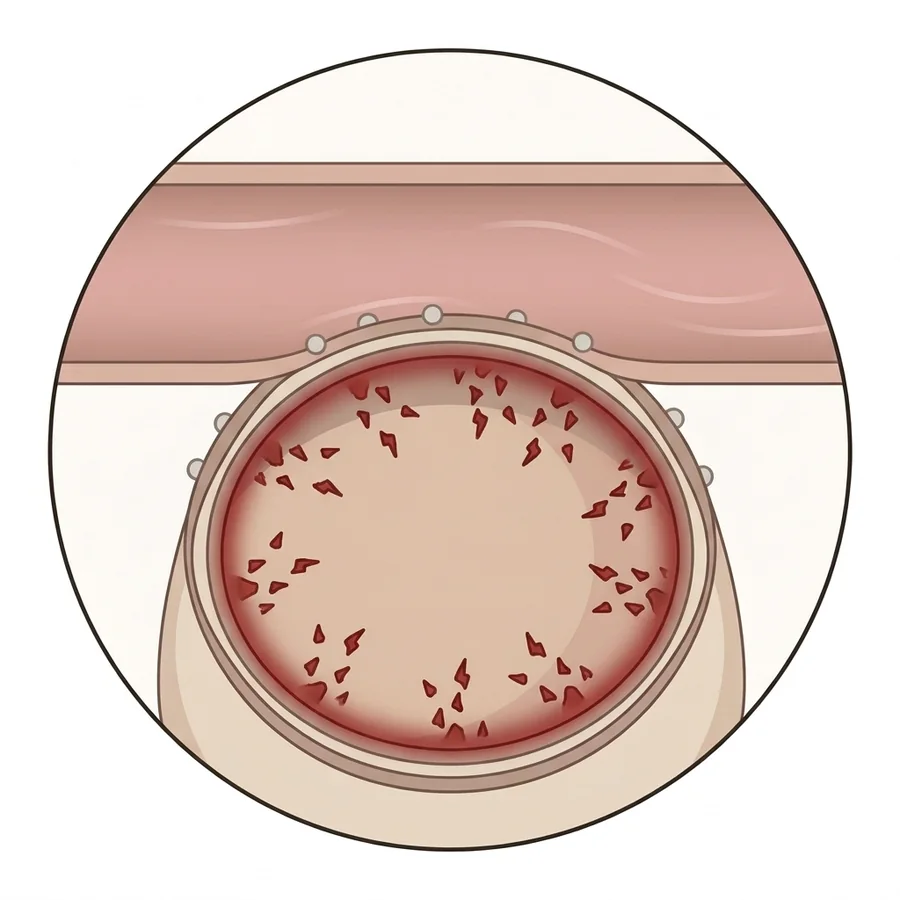
A drawing of one cell. Small red marks of wear collect along the inner face of the cell wall.
One cell, up close. The red marks are wear, and they collect on the inner face of the wall.
The causetheirs at 15% of the words · ours at 19%
Theirs, in our words
#23at 21%●●●●●p · 60 words

The longest paragraph yet, spoken to the reader: skin is cast as a structure under attack from within by free radicals from five everyday sources; they harm its support proteins, lipid barrier and tone, producing the opening's three signs.

Why it works. Names the villain and ties each of the opening's symptoms to it. new-mechanismcommon-enemyreason-whymirroring

Why it sits here, and how it is written

First full explanation, at 21%, after the absolution. The three signs were mirrored at 4%, questioned at 16%, and now receive a cause, so the explanation is experienced as recognition.

The pronoun goes back to 'you' for the science, so the diagnosis is the reader's own. Five sources and three effects in one sentence: dense but parallel. Dashes fence the list of sources.

Planned for ours, before we wrote: our own explanation in its place. Our cause for skin is oxidative stress from modern life and UV, and the gap ordinary antioxidants leave at the inner membrane. We describe what The Cell Shield guards; we do not narrate her collagen being destroyed. Never positioned as a replacement for sunscreen. r1p3m4

See these lines on their page ↗
Ours, word for word

Your skin is built of cells, and every cell is wrapped in a thin wall of fat. Sunlight makes unstable oxygen molecules in your skin. So do city air, sugar, short nights and plain worry. Those molecules wear on the cell wall, and the wear shows up later as the three things in your mirror.

r1b2p3 row 39
What she already triedtheirs at 18% of the words · ours at 21%
Theirs, in our words
#24at 22%●●●●●2× p · 27 words

Back in first person: her effort had all gone into the top layer as the harm went on beneath, and nothing she owned could stop it, since it began deeper than any of them goes.

Why it works. Reframes every past purchase as correctly done and aimed at the wrong layer. reason-whycontrastvindication

Why it sits here, and how it is written

As soon as the villain is named, the page must explain why good products did not stop it. Depth is the answer, and depth becomes the test the ingredient passes at 48%.

The opposition of top and below is the page's master metaphor, introduced here in two plain sentences and returned to throughout. The pronoun goes back to 'I', so the reader's shelf is judged through the narrator's.

Planned for ours, before we wrote: rewritten to our claims. This is the failed-routine verdict and it does not transfer. Ours: her routine does its work at its own layer, and The Cell Shield covers the layer under it. It replaces nothing and protects everything in it. b9m2p3

See these lines on their page ↗
Ours, word for word

Every jar I owned worked from the outside in. The wear I was reading about starts on the inside.

p3 row 40

So that was the layer my creams and serums never reach. My whole routine was on the other side of the wall.

p3 row 41
The doctor's answertheirs at 18% of the words · ours at 22%
Theirs, in our words
#25at 23%●●●●○p · 43 words

Eleven years of retinol are summed up as polish on the top layer that never touched what was tearing at collagen below; her dermatologist praised the routine, rightly, and the aging went on. Verdict in two words.

Why it works. Places professional approval inside the failure, so that better care cannot be the reader's way out. vindicationcontrastreason-why

Why it sits here, and how it is written

The reader's likeliest reply to the depth theory is that her doctor would have told her. The page answers before she asks: the doctor saw a good routine and was right about it. This is an approval, not a shrug; the authority is wrong only about the target.

One sentence opens on a throat-clearing frame and a dash. The dermatologist gets one quoted line and no blame, and the narrator concedes the routine did look good, which keeps her likeable. The deck blamed the profession as a class; in person the doctor is treated gently.

Planned for ours, before we wrote: rewritten to our claims. Doctors are allies on our pages and her routine is not judged. Ours: the routine her dermatologist approves does its work at its layer; The Cell Shield covers the membrane under it. b9m2

See these lines on their page ↗
Ours, word for word

My dermatologist went over my routine last year, jar by jar, and told me not to change a thing. She was right. Retinol, vitamin C, sunscreen: each one does its job. Not one of them was built to guard the inside of a cell wall.

p3 row 42
The reason whytheirs at 20% of the words · ours at 24%
Theirs, in our words
#26at 24%●●●●○h2 · 2× p · 60 words

A subhead promises three simultaneous effects. The first is labelled in capitals with its visible sign, then explained: free radicals take down the firming proteins quicker than they are replaced, the framework gives way, and retinol only works on top.

Why it works. Starts the one-cause, three-symptoms structure and makes sagging a structural failure, not a surface one. new-mechanismreason-whyspecificitycontrast

Why it sits here, and how it is written

The villain has been named in a paragraph; now each symptom gets its own numbered proof so the reader finds her worst one in a heading. Sagging goes first because it is the most feared and the least answered by anything in a jar.

The label format is cause, dash, visible sign, in capitals: scannable. A building metaphor carries the explanation. The item closes on a two-sentence refrain (the product on top, the cause below) that returns at the end of the next item and twice in the verdict list: a chorus that is mechanical by its fourth use.

Planned for ours, before we wrote: rewritten to our claims. This is where the page leans hardest on a banned framing: breakdown outrunning rebuild (p2). Ours is the solution side of the same biology: astaxanthin quiets the enzymes that eat collagen, 90% and more in the human work, so the collagen she builds and buys holds. m1x1b2

See these lines on their page ↗
Ours, word for word
Three changes in my skin, and the one cause under all three

The cheek that lost its spring. Collagen is the frame under your skin. Your body keeps enzymes whose job is to clear away old collagen, and unstable oxygen switches those enzymes on. Sunlight is a big part of that.

r1b2m1 row 44
The reason whytheirs at 22% of the words · ours at 25%
Theirs, in our words
#27at 26%●●●○○2× p · 66 words

Second item: the same oxidation removes the lipid layer that seals water in, so moisture escapes and skin turns dry and crepe-like however much cream goes on; cream works from outside, the cause from within.

Why it works. Explains the dryness that survives moisturizer, using the same cause. new-mechanismreason-whymirroringcontrast

Why it sits here, and how it is written

Second because dryness is the symptom she fights daily; after structure comes feel. It reuses the opening's own complaint as its label, so the reader meets her words again as a diagnosis.

At 57 words one of the longest paragraphs, carried by a clear chain of cause and effect. It ends on the refrain again.

Planned for ours, before we wrote: rewritten to our claims. We may say hydration improved against placebo in the human trials. We may not say her moisturizer is futile. b1

See these lines on their page ↗
Ours, word for word

The tight, dry feeling by evening. Your skin keeps its water behind a thin seal of natural oils. Unstable oxygen wears on oils the way air turns butter. A worn seal lets water out sooner. My moisturizer adds water from the outside, and it does that well. Guarding the seal from the inside was never its job.

r1b1 row 45
The reason whytheirs at 24% of the words · ours at 27%
Theirs, in our words
#28at 28%●●●○○2× p · 67 words

Third item: oxidation is said to drain the cell itself; a protected cell gives off a warm, even light, a stressed one turns flat and grey, which makeup cannot imitate because the dullness sits within the cell.

Why it works. Accounts for the tone complaint and introduces radiance as something a cell produces. new-mechanismreason-whycontrasthope

Why it sits here, and how it is written

Last of the three because it is the softest claim and the one the story will show first (weeks three to four). It also plants the idea of radiance that the timeline and the guarantee pay out.

The least physical of the three explanations: light from a cell is an image, not a process. A dash-heavy paragraph. Its final sentence ties all three items together, which makes the recap that follows partly redundant.

Planned for ours, before we wrote: rewritten to our claims. The Astaxanthin Glow is ours to use since round 2, and the capillary claim gives it a reason. No talk of cells being drained. b5m5

See these lines on their page ↗
Ours, word for word

The flat color. Skin gets its warmth from the smallest blood vessels underneath it. When those vessels are under the same wear, less blood gets through. Then a face looks tired after eight good hours of sleep. Makeup can paint that warmth on from the outside. The real thing comes from underneath.

m5b5 row 46
The reason whytheirs at 27% of the words · ours at 28%
Theirs, in our words
#29at 29%●●●○○p · 32 words

A recap in four fragments: three signs, a single oxidative cause, all worsening together, none answering to separate fixes because no fix touched the source.

Why it works. Compresses the section into a formula she can repeat, and turns three problems into one purchase. reason-whycontrastloop-closed

Why it sits here, and how it is written

It closes the three-item section and states the rule (one source) that the next section applies product by product.

Stacked fragments of identical cadence. Its nouns are laboratory words left over from the kidney template, where they are blood values; the register slips from mirror to clinic.

Planned for ours, before we wrote: kept the move. One softgel in place of juggling; one shield under everything she already uses. r23m2

See these lines on their page ↗
Ours, word for word

Three changes. One cause under all three. They got worse together because they share a root. And there I was, buying a different jar for each one.

r1 row 47
What she already triedtheirs at 28% of the words · ours at 29%
Theirs, in our words
#30at 30%●●○○○h2 · 6 words

A subhead announces the list of what failed, with reasons to follow.

Why it works. Promises a verdict on products she owns, which keeps a skimmer reading. open-loopreason-why

Why it sits here, and how it is written

After the rule comes its application. The heading tells her the next block is about her own shelf.

Five words and a dash. Identical on the sibling page.

Planned for ours, before we wrote: rewritten to our claims. Our heading for this block is what each thing does, never what failed.

See these lines on their page ↗
#31at 30%●○○○○img · 0 wordsThe picture

An image slot under that subhead; by position it most likely shows the products about to be judged.

Why it works. Would put her own shelf in front of her before the verdicts. mirroring

Why it sits here, and how it is written

Seen before the three verdicts, a picture of familiar jars makes each verdict personal.

No alt text. Content inferred from position, not seen: our local capture ends at 7% of the page.

Planned for ours, before we wrote: kept the move. A real photograph of a routine on a shelf, the softgel beside it and not in place of it. b9

Open on their page ↗
Ours, word for word
What every product on my skin shelf does, and where each one stops
What she already triedtheirs at 28% of the words · ours at 30%
Theirs, in our words
#32at 32%●●●●○3× p · 88 words

Three verdicts of one shape, each granting what the product does on top, then what continues below: retinol resurfaces an unprotected structure; vitamin C serum degrades in its bottle and stays superficial; moisturizer adds water a damaged barrier releases.

Why it works. Turns her three likeliest purchases into evidence for the depth theory. reason-whycontrastcommon-enemy

Why it sits here, and how it is written

The rule is applied to named products so that she does the same with her own shelf. It precedes the narrator's supplement attempt, so that taking something by mouth is the only door left open.

Each verdict concedes a real effect first, which sounds fair. The second and third close on a near-identical refrain that uses the word mechanism for the cause: abstract, and repeated within two paragraphs. The wall-and-foundation picture in the first verdict is the keeper.

Planned for ours, before we wrote: rewritten to our claims. What each does, never an attack: topicals work at the surface, collagen builds, The Cell Shield keeps what she built. The word mechanism never appears in our copy (CL-02). m1b9p3

See these lines on their page ↗
Ours, word for word

My retinol keeps the surface of my skin turning over, and I wouldn't give it up. Renewal is its job. Standing guard in a cell wall was never on its label.

p3 row 49

My vitamin C serum is a true antioxidant. But vitamin C dissolves in water, and the wall of a cell is fat. The two don't mix.

p3 row 50

My moisturizer holds water in for the day. My collagen hands my skin its building blocks. Neither one is a guard.

m1 row 51

None of it was wrong. I want to say that plainly. Each thing on that shelf does what it says.

What she already triedtheirs at 31% of the words · ours at 33%
Theirs, in our words
#33at 34%●●●○○h2 · 3× p · 36 words

Subhead: she went shopping for the fix and it was not for sale. Next morning she orders every antioxidant pill on offer, names three kinds, and gives the bill: a hundred dollars.

Why it works. Takes the reader's obvious next step (buy an antioxidant) and lets it fail on the narrator's money. story-transportspecificityobjection-preempt

Why it sits here, and how it is written

The logic so far leads straight to any antioxidant pill, and a reader could leave here to buy vitamin E. The page spends the next 3% closing that exit before it introduces the right kind.

A hundred dollars beside fourteen thousand makes the attempt casual and the failure cheap. The subhead's claim is contradicted by the page itself 25% later, when the thing turns out to be for sale.

Planned for ours, before we wrote: kept the move. Close the generic-antioxidant exit with the gate's own facts: vitamin C works outside the cell, vitamin E on the membrane surface, a multivitamin is underdosed. p3r3r5

See these lines on their page ↗
Ours, word for word
I went to buy an antioxidant for my skin, and came home with the wrong three

The next morning I did the obvious thing and drove to the drugstore.

Vitamin C. Vitamin E. A hair, skin and nails multivitamin with a sunburst on the box.

Sixty-one dollars, and I felt very clever all the way home.

The turntheirs at 33% of the words · ours at 34%
Theirs, in our words
#34at 36%●●●○○4× p · 25 words

She admits the pills did little, doubts her whole theory, goes back to the science, and announces that this time she found the thing that works.

Why it works. Lets the narrator voice the reader's skepticism, then reopens the loop. candoropen-loopidentification

Why it sits here, and how it is written

A doubt beat at 36%, after the theory and before the specification. The reader who thinks antioxidants are hype hears the narrator say so first.

A slip into present tense reads like a diary line. The last sentence is a stock bridge. Three of the four lines are word for word on the sibling page, the fourth nearly.

Planned for ours, before we wrote: kept the move. One honest doubt before the specification, in the narrator's own words.

See these lines on their page ↗
Ours, word for word

Two months later, I couldn't name one thing those bottles had done for my face.

I began to wonder if I'd talked myself into a theory.

So I went back to the research with one question. Where does each antioxidant end up?

The picturetheirs at 34% of the words · ours at 36%
Theirs, in our words
#35at 37%●●○○○img · 0 words

An image slot after the announcement; by position it most likely shows the research she says she found.

Why it works. Would lend the look of a source to a claim that names none. borrowed-authority

Why it sits here, and how it is written

It stands between the promise of an answer and the specification, where a reader expects to be shown the paper.

No alt text. Content inferred from position, not seen: our local capture ends at 7% of the page.

Planned for ours, before we wrote: our proof in its place. The proof object belongs here: the real record of the human trial, captured, PMID verified (L-05). b1b2

Open on their page ↗
Ours, word for word
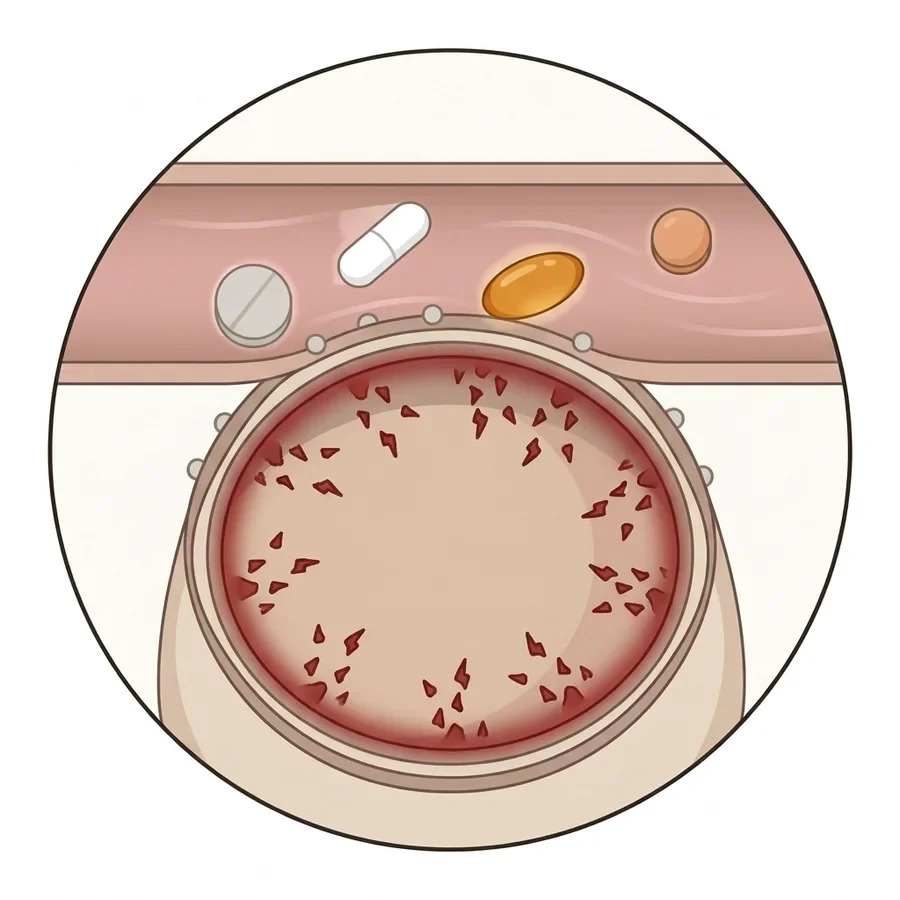
A drawing of a blood vessel beside one cell. Four ordinary pills drift past in the blood. Inside the cell, the red marks of wear are still there.
The vitamins I had bought travel in the blood and the water around a cell. None of them settles inside the cell wall.
The reason whytheirs at 34% of the words · ours at 36%
Theirs, in our words
#36at 38%●●●●○2× p · 72 words

The specification comes before the name: an antioxidant that dissolves in fat, at a clinical dose, so it can lodge in the membranes of skin cells and remain; water-soluble or token-dose products pass through, hence the useless shop pills.

Why it works. Defines the winning criteria (fat solubility, dose) while the ingredient is still unnamed. new-mechanismreason-whycontrastcuriosity-gap

Why it sits here, and how it is written

Criteria first. At 38% she learns what to look for, so the ingredient at 46% and the brand at 59% each arrive as the answer to a test she has already accepted.

The dose is called clinical and exact with no number attached; the number is held back until 54%. One adjective for a token pill is unidiomatic. Two paragraphs of pure explanation with no person in them.

Planned for ours, before we wrote: our own explanation in its place. The Cell Shield: the molecule spans the whole membrane, where vitamins stay in the bloodstream or on the surface. 12 mg against the 4 to 6 mg brands. m2r5p3b7

See these lines on their page ↗
Ours, word for word

The vitamin C stayed out in the water, between the cells. The vitamin E came to rest on the outer face of the cell wall. The multivitamin had a pinch of each.

p3r3r5 row 61

So I took a legal pad and wrote three lines. One, it had to dissolve in fat, because the cell wall is fat. Two, it had to reach through that wall, from one face to the other. Three, it had to come in an amount that had been tested in people.

m2r5b7 row 62
Proof: an experttheirs at 36% of the words · ours at 39%
Theirs, in our words
#37at 40%●●○○○2× p · 25 words

She says she needed the genuine article, that a researcher helped, and that she found a laboratory that standardizes correctly and reviewed what it does.

Why it works. Introduces an unnamed expert and an unnamed laboratory as the sources of what follows. borrowed-authorityopen-loop

Why it sits here, and how it is written

The criteria are set, and someone other than the narrator now has to vouch. These two lines are the hinge between her reasoning and the expert's story.

The weakest lines on the page: no name, no institution, no place, and one sentence without a subject. Fabrication by omission: an expert nobody could look up. A stub left from the kidney template, where the narrator drives to a laboratory in Ohio and watches the work.

Planned for ours, before we wrote: our proof in its place. Our sources have names: natural Haematococcus pluvialis, closed-bioreactor cultivation, a third-party certificate for every batch behind a QR code. c3c4c5

See these lines on their page ↗
Ours, word for word

I'm no scientist. I manage a dental office, and when a supplier makes a big claim, I ask for the paperwork.

The paperwork was a trial in women. Its title had a word in it I couldn't say.

Proof: the research (theirs: the picture)theirs at 37% of the words · ours at 40%
Theirs, in our words
#38at 41%●●○○○img · 0 words

A taller image slot (370 by 277); by position it most likely shows the laboratory or the researcher.

Why it works. Would put a face or a bench on an expert who has no name. borrowed-authority

Why it sits here, and how it is written

It comes just before the expert speaks, so her words arrive with a picture attached.

No alt text. Content inferred from position, not seen: our local capture ends at 7% of the page.

Planned for ours, before we wrote: our proof in its place. A real photograph from our own supply chain, or the certificate itself. c3c5

Open on their page ↗
Ours, word for word
PubMed record: Protective effects of astaxanthin on skin deterioration. Tominaga K, Hongo N, Fujishita M, Takahashi Y, Adachi Y. Journal of Clinical Biochemistry and Nutrition, 2017.
On PubMed: a 16-week study of 65 women. On placebo, wrinkles and skin moisture got worse. On 6 mg or 12 mg of astaxanthin a day, they held. PMID 28751807.
Proof: the research (theirs: proof: an expert)theirs at 37% of the words · ours at 41%
Theirs, in our words
#39at 42%●●●●○3× p · 53 words

The researcher reframes aging with a question about why women in Japan in their seventies and eighties so often look far younger; the narrator offers the stock answer, the diet of fish, tea and seaweed.

Why it works. Opens a second mystery with a living example, and has the narrator give the reader's own guess so it can be corrected. curiosity-gapborrowed-authorityopen-loopstory-transport

Why it sits here, and how it is written

Cause and criteria are settled; what the page needs now is desire. A population that visibly beat the problem supplies it, and the question restarts curiosity at 42%, the stretch where explanation loses readers.

Reported dialogue, not quoted. The wrong answer is framed as the common one, which folds the reader in. A national generalization stands in for evidence, from a speaker with no name.

Planned for ours, before we wrote: rewritten to our claims. The gate holds nothing about Japan or any population. The second-mystery device can run on the women in the human trials. Missing claim: any population that already takes it. b1p7

See these lines on their page ↗
Ours, word for word

Sixty-five healthy women between 35 and 60. Sixteen weeks, from late summer into winter, when sun and dry air are hardest on skin.

b1 row 66

Some swallowed a softgel with the red nutrient in it. The rest got a dummy softgel that looked the same.

b1 row 67

By the end, the women on the dummy softgel had deeper lines and drier skin. The women on the real one held.

b1b2 row 68
Proof: the research (theirs: proof: an expert)theirs at 39% of the words · ours at 43%
Theirs, in our words
#40at 44%●●●●○p · 58 words

The researcher grants that diet explains the average, then narrows to the outliers the narrator really has in mind: a woman of eighty taken for a sibling of her granddaughter, the cases that defy explanation.

Why it works. Separates healthy eating from the secret, so that food cannot be what the reader takes away. contrastcuriosity-gapspecificityopen-loop

Why it sits here, and how it is written

It closes the diet exit the way the pills exit was closed at 35%: concede, then narrow. It must come before the ingredient, so the ingredient explains the outliers and not the average.

The master metaphor is reused for an argument: an answer can be superficial too. The granddaughter picture foreshadows the narrator's own payoff at 67%. The second person here is the researcher addressing the narrator, and reads as the page addressing the reader.

Planned for ours, before we wrote: rewritten to our claims. Concede, then narrow, with our content: antioxidants in food and in a multivitamin are real, and one of them is built to span the membrane. m2m3p3

See these lines on their page ↗
Ours, word for word

I'd read enough by then to be careful. Antioxidants in food are real, and I'm not giving up my blueberries. But the women were put in their groups by chance, so good eaters landed on both sides. One thing was different.

p3 row 69
The reason whytheirs at 41% of the words · ours at 44%
Theirs, in our words
#41at 45%●●●●○2× p · 39 words

The answer comes in two lines: those women take it and do not merely eat it; a single concentrated antioxidant each morning, the only one with the potency and the fat solubility to accumulate in skin.

Why it works. Narrows to one thing and one daily habit, a line before naming it. open-loopnew-mechanismexclusivityease

Why it sits here, and how it is written

Last beat before the name. It restates the two criteria from 38% (power, fat solubility), so the name lands as their solution.

Singularity is hammered three ways in two lines. The second sentence is long and built around a dash, and it climbs.

Planned for ours, before we wrote: our own explanation in its place. The Cell Shield, one softgel a day. b9m2m3

See these lines on their page ↗
Ours, word for word

The women who held had taken one small red softgel a day. That was all. No new cream, and no new step.

b9b1 row 70

One nutrient, taken with a meal, built to settle into the wall of a cell and stay there.

m2r31 row 71
The reason whytheirs at 42% of the words · ours at 45%
Theirs, in our words
#42at 46%●●●●●h2 · p · 52 words

A one-word subhead names the ingredient. The paragraph makes it ordinary: on sale all over Japan, advised by skin doctors there ahead of retinol, taken by women since the 1980s, as routine as dental care.

Why it works. Closes the loop the headline opened and makes an unfamiliar word feel old and proven somewhere else. loop-closedconsensussocial-proofborrowed-authority

Why it sits here, and how it is written

At 46%, close to the midpoint: late enough that cause, criteria and desire are all in place, early enough to leave half the page for tests, story and terms. The normalizing follows the name at once, because a new word raises the question of why she has never heard of it.

The one-word heading is the strongest typographic moment on the page. Every claim about Japanese shops and doctors is unsourced. The comparison to a daily hygiene habit files it as routine, not treatment.

Planned for ours, before we wrote: rewritten to our claims. The name lands the same way, in a heading of its own. Our normalizer is true: most of this market has never met astaxanthin, and it has more than 60 clinical studies behind it. No Japan claims. p7r14r15

See these lines on their page ↗
Ours, word for word
Astaxanthin, the red nutrient that guards your skin cells from the inside
m1 row 72

I sounded it out at my desk, one piece at a time. Asta-ZAN-thin.

I'd read ingredient lists for nineteen years and had never once met that word. Most women haven't. Yet astaxanthin has been through more than 60 clinical studies, on skin and on the rest of the body.

p7r14 row 74
The reason whytheirs at 44% of the words · ours at 47%
Theirs, in our words
#43at 48%●●●●○p · 53 words

Origin and power: the pigment behind pink salmon and flamingos, made by ocean microalgae; rated 6,000 times vitamin C and 550 times vitamin E; and fat-soluble, which the page offers as its full explanation for working where topicals cannot.

Why it works. Gives the ingredient a picture, a magnitude and a property, in that order. specificitycontrastreason-whynew-mechanism

Why it sits here, and how it is written

After the name and its social standing she needs to see it and size it. The property, which is the real argument, comes last in the paragraph so that it is read with the momentum of the numbers.

The multipliers are category standard and are given without what they measure. Spacing in the rows shows two phrases set apart inline, the first multiplier and the solubility. The closing clause claims totality.

Planned for ours, before we wrote: our proof in its place. The gate holds both multipliers with their unit: singlet-oxygen quenching. Natural, from microalgae. m3c4

See these lines on their page ↗
Ours, word for word

It's the pigment that turns freshwater algae a deep red. Against one kind of unstable oxygen, lab tests put astaxanthin at 6,000 times the strength of vitamin C. Against vitamin E, 550 times. And it dissolves in fat, which was the first thing on my list.

c4m3r15 row 75
The reason whytheirs at 46% of the words · ours at 48%
Theirs, in our words
#44at 49%●●●●●p · 48 words

How it works, in one picture: cell membranes are fat, so the molecule lodges in them and does not rinse away, accumulates over weeks, and stops free radicals short of collagen and the barrier.

Why it works. Turns a chemical property into a guard posted within the cell, and introduces weeks as the time frame. new-mechanismreason-whyfuture-pacing

Why it sits here, and how it is written

It follows the numbers so that power gets a location. The weeks are planted here, 14% ahead of the timeline, so the slow first days will read as predicted.

A sentinel image, close to our own noun: the category converges on guarding. Present tense, no hedges. The tearing verb returns.

Planned for ours, before we wrote: our own explanation in its place. The Cell Shield in its own words: the molecule spans the full thickness of the membrane and quiets the enzymes that eat collagen. m2m1x1

See these lines on their page ↗
Ours, word for word

Astaxanthin is a long molecule. It reaches through the cell wall, so it guards the inner side as well as the outer. And it calms the enzymes that eat collagen. None of that happens by lunch. The trial ran sixteen weeks for a reason.

m2m1x1 row 76
Proof: the research (theirs: the scene ahead)theirs at 48% of the words · ours at 50%
Theirs, in our words
#45at 50%●●●●○p · 38 words

A vignette sets a woman in Osaka, water on her face and a single softgel, looking a quarter-century younger than her documents say, against 'us' and the fourteen-thousand-dollar pursuit from outside.

Why it works. Compresses the whole argument into two routines side by side and reuses the price anchor. contrasteaseanchoringspecificity

Why it sits here, and how it is written

It caps the explanation with a person, ahead of the narrator's own summary. The large sum returns at the midpoint, so the anchor is fresh when the buying tests begin.

A named city and a travel document as the measure of age: concrete and witty. The plural pronoun includes the reader in the spending. Fabrication: an invented woman and a number nobody could check.

Planned for ours, before we wrote: rewritten to our claims. No years-younger claim and no invented woman. Ours is the ease alone: one softgel a day that replaces nothing on her shelf. b9

See these lines on their page ↗
Ours, word for word

The 16-week trial was paid for by a company that makes astaxanthin. That's common, and I still wanted a second opinion.

I found one run by skin doctors at a university in Seoul. Forty-four people took a small dose of astaxanthin together with collagen, or a dummy, for twelve weeks.

b1 row 78

On the real thing, skin sprang back better and lost less water. In their skin samples, the signal to clear collagen went down, and the signal to build it went up.

b1b2m1 row 79

I'd been putting collagen in my coffee for three years. I already had half of that study in my cup.

p6 row 80

Astaxanthin was the other half, the half that guards. So the collagen you build holds. So does the collagen you buy.

m1 row 81

One softgel with breakfast. Nothing on my shelf had to move.

b9 row 82
The causetheirs at 49% of the words · ours at 54%
Theirs, in our words
#46at 50%●●●●●p · 35 words

Her summary: eleven years explained; the fault lay in reach and never in routine; her products all acted on top, and this was the only one that went in.

Why it works. Gives the argument a short name the reader can carry out of the page. vindicationcontrastloop-closedreason-why

Why it sits here, and how it is written

End of the teaching half, at 50%. Everything after it is buying. She crosses the midpoint with one sentence to remember.

The page's signature contrast flip, used here at its best because it names the idea. Three short declaratives in a row.

Planned for ours, before we wrote: rewritten to our claims. Ours keeps the name-the-idea move on the solution side: her routine reaches its layer; The Cell Shield reaches the membrane. m2b9

See these lines on their page ↗
Ours, word for word

That was nineteen years, explained. My routine was one layer short. Every jar worked on its own layer, and one layer had been left with no guard at all.

m2b9p3 row 83
Why this onetheirs at 50% of the words · ours at 55%
Theirs, in our words
#47at 51%●●●●○h2 · 2× p · 52 words

A second shopping trip under the same subhead formula as the first: she drives to a vitamin shop, takes the first bottle of astaxanthin with pride, then reads its label and announces three quiet ways sellers shortchange buyers.

Why it works. Moves the villain from biology to the supplement aisle at the moment the reader could buy any astaxanthin. story-transportcommon-enemyopen-loop

Why it sits here, and how it is written

Straight after the ingredient is sold, because that is when a reader opens a new tab to price it. The page gets there first.

The subhead recycles the formula of entry 33 almost word for word; it can pass as parallelism, but it is a reused block. Pride before the fall is a human beat.

Planned for ours, before we wrote: kept the move. Our aisle is documented: about 64% of unverified astaxanthin products fail third-party potency testing, and the category leader stopped publishing its certificates. c1c2

See these lines on their page ↗
Ours, word for word
The first astaxanthin I bought for my skin failed three checks

I drove back to the drugstore, found a bottle with astaxanthin on the front, and carried it to the register like a trophy.

In the car I turned it over and read the back, the way I read a supplier's invoice. A bottle can come up short three ways. Mine managed all three.

Why this onetheirs at 52% of the words · ours at 57%
Theirs, in our words
#48at 53%●●●●●3× p · 116 words

Three numbered faults: the astaxanthin on American shelves is mostly synthetic, made from petroleum; the bottle held 4 milligrams against an effective 12; and a dry capsule lacks the oil the molecule needs for absorption.

Why it works. Sets three pass-or-fail tests that only a natural, 12 mg, oil-filled softgel can pass. common-enemyspecificitycontrastloss-aversion

Why it sits here, and how it is written

The tests precede the brand by 6%, so the brand's checklist at 59% reads as a scorecard already agreed.

Each item opens on a verdict of three or four words, gives one number, then a consequence. Two crude comparisons (an engine fluid, a bathroom fixture) are the memorable parts. The 95% figure has no source.

Planned for ours, before we wrote: rewritten to our claims. Two tests transfer on gate claims: natural versus petrochemical, and 12 mg versus the 4 to 6 mg brands. The third rests on carrier-oil superiority, which is banned (b8); ours is the potency test and the published certificate. r16b7c1c3c4

See these lines on their page ↗
Ours, word for word

One: where it comes from. The natural kind is made by microalgae. The synthetic kind is built from petrochemicals. The 16-week trial used the natural kind, and my bottle didn't say which one it was.

c4r16 row 87

Two: how much is in it. My bottle had 4 mg in each softgel. The 16-week trial used 6 mg and 12 mg. One sign of stress in the skin's top layer rose on the dummy and on 6 mg, and stayed put on 12. So 12 was the dose I wanted, and that meant three softgels a day.

b7 row 88

Three: whether anyone checked. One independent review checked astaxanthin products that had never been tested by an outside lab. About 64% fell short on potency. My bottle had a gold seal on the front and no lab named anywhere.

c1 row 89
Why this onetheirs at 56% of the words · ours at 61%
Theirs, in our words
#49at 56%●●●○○2× p · 28 words

She reports testing the market: bottles from three shops plus Amazon, each failing one or more tests and most failing every one; she nearly quits.

Why it works. Disqualifies the whole shelf and drops the narrator to a second low, so someone else can rescue her. specificityconsensusopen-loop

Why it sits here, and how it is written

Last beat before the brand. The low makes the brand's entrance a relief, and explains why the narrator did not find it herself.

The arithmetic wobbles: three bottles, three shops and a marketplace as well. The closing line is stock.

Planned for ours, before we wrote: kept the move. The shelf result, stated as the published failure rate, not as a private test. c1

See these lines on their page ↗
Ours, word for word

By that count, about two bottles in three would fail a test nobody made them take.

c1 row 90

I put the bottle in the drawer with the rest, and I nearly gave up on the whole idea.

The product is namedtheirs at 57% of the words · ours at 62%
Theirs, in our words
#50at 56%●●●○○h2 · 9 words

A subhead with a weekday and an hour credits her daughter with the solution.

Why it works. Announces the rescue and names the rescuer before the brand. specificitystory-transportopen-loop

Why it sits here, and how it is written

The product's entrance is credited to a family member, which insulates the reveal from the suspicion of selling.

The day and hour are kept from the template; the sibling page carries the same stamp with a different clause after it. Spacing in the row shows the last words set apart inline.

Planned for ours, before we wrote: rewritten to our claims. A time stamp only if the story is true or disclosed as a composite (CL-14).

See these lines on their page ↗
Ours, word for word
The astaxanthin I take for my skin passed all three checks
The picturetheirs at 58% of the words · ours at 62%
Theirs, in our words
#51at 57%●●○○○img · 0 words

An image slot (370 by 247) under that subhead; by position it most likely shows the daughter, the bottle, or both.

Why it works. Would show the product in a family's hands before its name is printed. story-transport

Why it sits here, and how it is written

A photograph ahead of the name lets the bottle be seen as a gift before it is read as a brand.

No alt text. Content inferred from position, not seen: our local capture ends at 7% of the page.

Planned for ours, before we wrote: kept the move. Our reveal image is the softgel and the pack with its callouts. c3

Open on their page ↗
Ours, word for word
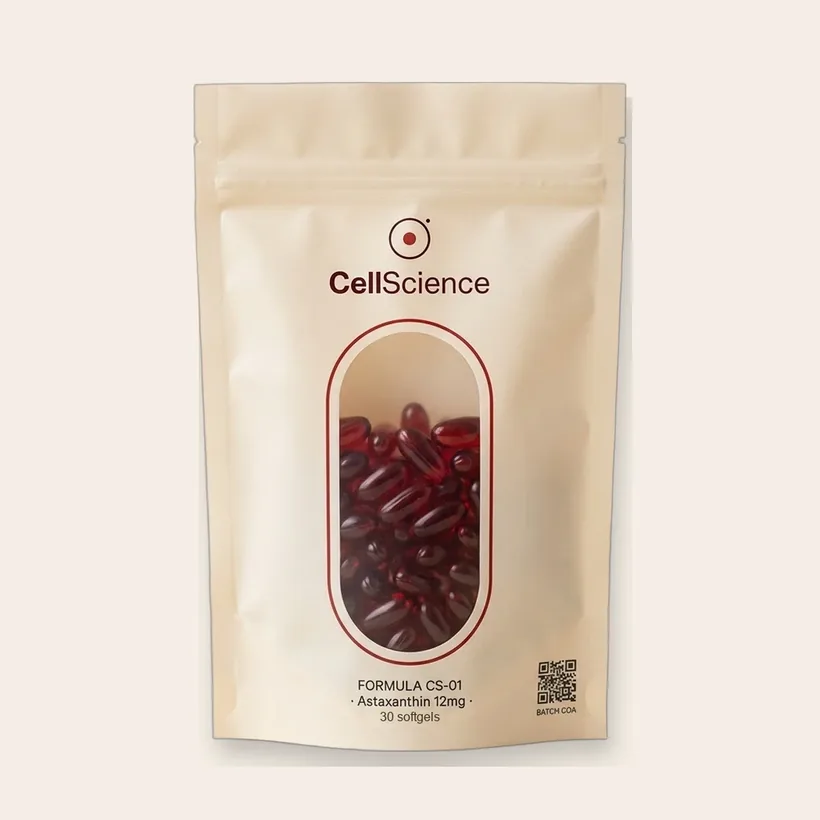
A bag of CellScience Astaxanthin 12 mg softgels
CellScience Astaxanthin, 12 mg in one softgel. Mine sits on the shelf next to the collagen.
The product is namedtheirs at 58% of the words · ours at 62%
Theirs, in our words
#52at 58%●●●●○2× p · 38 words

The daughter, cast as the family's researcher, listens for a month, spends two days comparing every option against the Japanese standard, and returns with a single bottle.

Why it works. Outsources the due diligence: someone who loves the narrator did the comparing, so the reader need not. story-transportborrowed-authorityease

Why it sits here, and how it is written

Just before the brand name. A daughter's recommendation is the most trusted channel this reader has, and it contradicts nothing she believes about advertising.

A contradiction: the byline sells a researcher of thirty years, and here the daughter holds that role in the family. The motif was planted at 1%, where a commenter in the hero collage orders because her daughter insisted.

Planned for ours, before we wrote: our proof in its place. The comparing is done in public, by third-party tests we publish for every batch, not by an invented relative. Our reader spans 35 to 65, so she may be the daughter as easily as the mother. c3c1

See these lines on their page ↗
Ours, word for word

I did the comparing the slow way. The same legal pad, three columns, a row for every brand, and two evenings at the dining room table.

One row ended up with a mark in every column.

The product is namedtheirs at 59% of the words · ours at 63%
Theirs, in our words
#53at 59%●●●●●4× p · 42 words

The product is named for the first time, Rovina Natural Astaxanthin, followed by ticked lines that answer the three tests in order: 12 mg, microalgae source, coconut-oil softgel, each with a bracketed jab at the failing alternative.

Why it works. Reveals the brand as the scorecard that passes. loop-closedspecificitycontrastreason-why

Why it sits here, and how it is written

At 59%. She holds the cause (21%), the criteria (38%), the ingredient (46%) and the tests (53%). The brand comes last, as the single product that meets all of them, laid out as a specification and not as a pitch.

Label style: a field name, ticks, a repeated one-word confirmation. The bracketed asides carry the voice. The store link behind the buttons gives the product a different name (Sunglow), a small inconsistency.

Planned for ours, before we wrote: rewritten to our claims. Our scorecard: CellScience Astaxanthin 12 mg, softgel, natural Haematococcus pluvialis, closed bioreactor, a certificate for every batch. The carrier-oil tick is dropped (b8), and so is any talk of the bag (c6). b7c4c5c3r16

See these lines on their page ↗
Ours, word for word

CellScience Astaxanthin.

b7c4c3 row 96

12 mg in one softgel. The higher dose from the trial, with no counting out three.

b7 row 97

Natural, from microalgae. The algae are raised in closed tanks, never in open ponds. Never synthetic.

c4c5r16 row 98

Tested by an outside lab, batch by batch. Not a gold seal. A lab.

c3 row 99
The product is namedtheirs at 61% of the words · ours at 65%
Theirs, in our words
#54at 61%●●●○○3× p · 28 words

Two more ticks (independent testing; non-GMO and American-made), then a line positioning the bottle as the nearest American equivalent of what a Tokyo pharmacy stocks.

Why it works. Adds trust marks and ties the brand back to the Japan story. borrowed-authorityspecificityloop-closed

Why it sits here, and how it is written

The three tests are passed; the extra ticks answer the quieter question of safety. The closing line joins the brand to the desire built at 42 to 50%.

The ticks thin out to bare labels with no asides. The comparison is hedged (nearest, not the same), a rare modest claim.

Planned for ours, before we wrote: our proof in its place. Our badges as the gate lists them: cGMP, made in USA, gluten-free, no stimulants, and the certificate behind the QR code. r18c3

See these lines on their page ↗
Ours, word for word

No heavy metals. One active ingredient, astaxanthin. Everything else in the softgel is there to hold the astaxanthin in place.

c5 row 100

The work astaxanthin does in the cell wall has a name at CellScience. The Cell Shield. To me, The Cell Shield is the guard my skin routine never had.

m2m1 row 101
The guaranteeours at 66%ours only
Theirs, in our words

Nothing on their page does this job here.

Ours, word for word
These rows do the job of their part #65 a second time. That part is paired with our other rows that answer it.

On the CellScience page I went straight to the guarantee. It's the 30-Day Money-Back Guarantee, and the bag stays with you either way.

r22 row 102
The buttontheirs at 82% of the words · ours at 67%in a different place on their page
Theirs, in our words
#69at 81%●●●●○cta · 7 words

The first button, at 81% of the page: it names the brand, the ingredient and the 90-day guarantee, and links to the product page.

Why it works. Asks for the click with the risk reversal inside the label. risk-reversalcommitment

Why it sits here, and how it is written

The page withholds every button until cause, ingredient, brand, story, terms and guarantee are all delivered. It is late: four fifths of the page pass without a way to act.

Six words, with the guarantee doing the persuading. No price and no quantity on the label.

Planned for ours, before we wrote: kept the move. Our button goes to the PDP with its tracking and package parameters kept (L-06), and carries the 30-day guarantee. We place an earlier one after the scorecard.

Open on their page ↗
Ours, word for word
Try The Cell Shield
30-Day Money-Back Guarantee · Free US shipping
How to take ittheirs at 62% of the words · ours at 67%
Theirs, in our words
#55at 62%●●●○○p · 14 words

She begins the same morning: a single softgel and a water rinse, nothing else.

Why it works. Shows the whole regimen in four short sentences. easecommitmentloop-closed

Why it sits here, and how it is written

Between reveal and timeline. It repeats the Osaka vignette (water, one softgel), so the narrator steps into the life the reader was shown at 50%.

Four fragments. The callback is exact and unannounced. It implies she put her routine aside, which works against a reader who means to keep hers.

Planned for ours, before we wrote: rewritten to our claims. One softgel a day with a meal that has some fat. Ours must never suggest she drops her routine: The Cell Shield is what makes it hold. b9r31

See these lines on their page ↗
Ours, word for word

The bag came on a Thursday. I took the first softgel with my eggs, then did my whole skin routine, sunscreen included.

b9r31m4 row 104
What happens, week by weektheirs at 62% of the words · ours at 68%
Theirs, in our words
#56at 62%●●●●○2× h2 · 2× p · 61 words

The timeline opens on an admission: two days in, almost nothing, and she nearly doubts, recalling that it has to accumulate. By days three to seven dryness eases; a forgotten night cream and skin still soft next morning.

Why it works. Sets honest expectations and supplies the first small proof. candorspecificityreason-whyfuture-pacing

Why it sits here, and how it is written

Directly after she starts. The admission of nothing comes first so that a buyer who feels nothing in her first days keeps going instead of asking for a refund. The accumulation idea planted at 48% is the excuse.

The admission is the most trust-building line in the timeline. The accidental skipped cream works as an unplanned experiment, which persuades more than a claimed result would.

Planned for ours, before we wrote: rewritten to our claims. The honest slow start transfers. The dates do not: our skin results are those of the human trials, measured over weeks. Missing claim: any skin change in the first seven days. b1

See these lines on their page ↗
Ours, word for word
What my skin did, week by week

I've been oversold before, so I'll give you these weeks the way they went.

Days one and two: nothing. I checked the mirror both mornings. Then I remembered the trial ran sixteen weeks, and I felt a little silly.

Weeks one and two: still nothing in the mirror. My afternoons felt a little steadier, which I hadn't expected.

r7 row 108
What happens, week by weektheirs at 64% of the words · ours at 70%
Theirs, in our words
#57at 64%●●●●○2× h2 · 2× p · 58 words

Weeks three to four: the daughter notices first and remarks on radiance; the tone once faked with makeup is simply present. Week six: the mirror no longer makes her wince, the grey has gone, cheeks look fuller, eyes feel clearer.

Why it works. Moves the proof from touch to sight and brings in a witness. social-proofspecificityloop-closedhope

Why it sits here, and how it is written

The tone symptom, third in the cause section, improves first in the story, and someone else reports it before she does, which guards against the charge of wishful seeing. The dread of the mirror from the opening is resolved here.

One quoted line from the daughter, the only speech she gets. A stray benefit (eyes) slips in from the ingredient's other uses.

Planned for ours, before we wrote: rewritten to our claims. The Astaxanthin Glow and the measured trial outcomes; a reviewer's voice only when the review is real. b5b1

See these lines on their page ↗
Ours, word for word

Week four. My skin stopped feeling tight by evening, which told me it was holding moisture through the day.

b1 row 109

Week six was the first time anyone else said a word.

“You look rested,” my sister said at lunch. “Did you go somewhere?”

I had not gone anywhere. I had added one softgel to breakfast.

b9 row 112
What happens, week by weektheirs at 66% of the words · ours at 71%
Theirs, in our words
#58at 66%●●●●○h2 · p · 33 words

Weeks eight to ten: the slackness at her jaw is firmer without having vanished, soft and tight in the right places, and the tired look has lifted.

Why it works. Delivers the feared symptom last, with a limit admitted. candorspecificityhope

Why it sits here, and how it is written

Sagging was the first symptom explained and is the last to improve: the hardest promise is held for the point where trust is highest, and is stated as partial.

The concession at the start of the first sentence is what makes the rest credible. One balanced sentence of paired opposites is more written than spoken.

Planned for ours, before we wrote: rewritten to our claims. Elasticity improved against placebo in the human trials; we say that, in those terms. b1

See these lines on their page ↗
Ours, word for word

Week eight. The lines beside my eyes looked softer in the morning light, and my cheek had some spring back. Softer, not gone. I'm 57, and I look 57.

b1 row 113
What happens, week by weektheirs at 68% of the words · ours at 72%
Theirs, in our words
#59at 67%●●●●●h2 · 3× p · 41 words

Under a week label repeated out of sequence, a stranger at a market takes mother and daughter for sisters; she gives both ages, 60 and 38, lets the mistake stand, and takes her softgel the following day as ever.

Why it works. Delivers the emotional peak as a stranger's verdict. social-proofstory-transportspecificityloop-closed

Why it sits here, and how it is written

Last item of the timeline. It cashes the picture the researcher planted at 44%. A third party is needed because the narrator's own mirror proves nothing.

A heading error: the label goes back to week six after weeks eight to ten, and the closing letter dates the same scene at twelve weeks. The two-sentence line of ages is the best rhythm on the page. Fabrication: an anecdote nobody could verify, carrying the page's largest implied claim.

Planned for ours, before we wrote: rewritten to our claims. The move transfers (someone else notices); the claim of looking 22 years younger does not. Ours waits for a true customer remark from the panel. Missing claim: any years-younger outcome. r17b1

See these lines on their page ↗
#60at 68%●●○○○img · 0 wordsThe picture

An image slot after the market scene; by position it most likely shows mother and daughter, or a before and after.

Why it works. Would put a face on the result. social-proof

Why it sits here, and how it is written

It follows the peak, where the reader most wants to see her.

No alt text. Content inferred from position, not seen: our local capture ends at 7% of the page. If it is a before and after, it is one nobody could verify.

Planned for ours, before we wrote: left out. No before-and-after imagery: a policy risk the angle file names. The softgel and its colour carry the visual.

Open on their page ↗
Ours, word for word

Week ten. A faint warm color came into my face, as if I'd spent the weekend outside. Astaxanthin is known for that glow.

b5 row 114

The woman who has cut my hair for twelve years tipped my chin toward the window and asked what I'd changed.

Not one jar, I told her. It's a softgel I take with my eggs.

b9 row 116
The scene aheadtheirs at 69% of the words · ours at 74%
Theirs, in our words
#61at 70%●●●●○h2 · 3× p · 102 words

The narrator turns to the reader: the hope-and-wait routine can end; age is no bar and nothing is beyond repair; once cells are guarded from within they recover, with collagen, barrier and radiance returning; aging is halted and undone.

Why it works. Transfers the narrator's result to the reader and answers whether it is too late for her. hopefuture-pacingobjection-preemptvindication

Why it sits here, and how it is written

Directly after the story's peak, while the reader is moved. Too late is the first objection of a sixty-year-old, so it is answered before any terms.

The subhead quotes the patience speech from entry 7, a loop closed on a phrase. Three short sentences in a row promise outcomes. The claim climbs from protecting to undoing, the strongest and least defensible on the page, and it contradicts the partial result admitted in entry 58.

Planned for ours, before we wrote: rewritten to our claims. We promise what the trials measured: wrinkle depth, elasticity, hydration. Never reversal, never collagen rebuilding; ours holds what she builds. Our reader spans 35 to 65, so the objection is too early as often as too late. Missing claim: any reversal of damage. b1m1r24

See these lines on their page ↗
Ours, word for word
To the woman who has done everything right for her skin

If you're standing where I stood, here's what I wish a friend had told me. You can stop auditioning jars.

r23 row 118

You're not too late at 62, and you're not too early at 41. A skin cell has the same wall at either age.

i1i2 row 119

Don't expect a younger face. One softgel is not a facelift, and it is not a medicine. The human skin trials measured plainer things: wrinkle depth, moisture, and how well skin springs back.

b1 row 120

It does not replace your sunscreen, either. Mine stays by the door.

m4 row 121

What The Cell Shield does is guard what the rest of your skin routine builds.

m1b9 row 122
The picturetheirs at 73% of the words · ours at 77%
Theirs, in our words
#62at 72%●○○○○img · 0 words

An image slot between the promise and the two paths; its content cannot be inferred from the lines around it.

Why it works. Gives the eye a rest before the close begins.

Why it sits here, and how it is written

A visual pause marks the border between story and selling.

No alt text. Content inferred from position, not seen: our local capture ends at 7% of the page.

Planned for ours, before we wrote: kept the move. A product photograph at the border between story and close.

Open on their page ↗
Ours, word for word
Deep red astaxanthin softgels on a small plate.
Astaxanthin softgels. The deep red comes from the algae that make it.
The closetheirs at 73% of the words · ours at 78%
Theirs, in our words
#63at 74%●●●●○h2 · 2× p · 103 words

A two-path close. One: more top-layer serums, the same mirror, and half a year on the same face with several hundred dollars gone. Two: try what reaches the right depth, allow 8 to 12 weeks, learn the Japanese habit.

Why it works. Frames not buying as an active choice with a cost. contrastloss-aversionfuture-pacingcommitment

Why it sits here, and how it is written

After the promise and before the terms: she decides in principle first and hears the deal after. A half-year horizon for doing nothing is set against a shorter one for trying.

Path one repeats one opening verb four times. The wall-and-foundation picture returns. Path two is worded as curiosity, not commitment. The count in the heading is a false binary.

Planned for ours, before we wrote: rewritten to our claims. Our two paths cannot be her serums against our softgel. Ours: the same routine with and without The Cell Shield under it, and the weeks the trials took. b9m1b1

See these lines on their page ↗
Ours, word for word
Add another step to your skin routine, or protect the steps you have

The first way is the one I know by heart. A new serum in the spring, and a richer cream in the fall. The same lean into the mirror at seven, and the same sum at the end of the year.

p6 row 125

The second way leaves your shelf the way it is and puts a guard under it. You swallow one softgel with a meal, and that's the whole change. The trials ran twelve to sixteen weeks, so give your mirror time. I felt it in my skin at night, weeks before I saw it in the mirror.

b9b1r31 row 126
The offertheirs at 76% of the words · ours at 81%
Theirs, in our words
#64at 76%●●●●○h2 · p · 41 words

A subhead promises the order steps; the paragraph instead states the deal: a second bottle free with the first, justified as the supply needed for it to have time to work.

Why it works. States the offer with a reason tied to the timeline. reason-whyanchoringease

Why it sits here, and how it is written

At 76%, the first commercial terms, after the choice is made in principle. The reason (it needs time) converts the slow start into an argument for the larger quantity.

No price appears anywhere on the page. The heading is inherited from the sibling, where a step-by-step list follows; here nothing of the kind follows, a promise broken at heading level. A distancing phrase keeps the narrator outside the company.

Planned for ours, before we wrote: our offer in its place. BRAND.md §3: 1 bag $29.99, 3 bags $59.97 (buy 2, get 1 free), 5 bags $89.95 (buy 3, get 2 free, the lowest price ever), free shipping, three free guides. On a prelander the tiers live on the PDP; the page names the deal and sends her there. x4r20

See these lines on their page ↗
Ours, word for word
Why I ordered three bags of astaxanthin for my skin

One bag holds thirty softgels, a month of breakfasts. The trials ran three and four months, so I ordered three bags. The more bags in the order, the less each bag costs, and mine shipped free.

b9 row 128

You don't have to start with three. The button on this page opens two ways: one bag, or a free trial that turns into a monthly plan until you cancel it.

The guaranteetheirs at 78% of the words · ours at 83%
Theirs, in our words
#65at 77%●●●●●p · 66 words

A refund promise running 90 days, with three named outcomes as the test, returnable even as an empty bottle; it ends by telling the reader she has come this far and has only another identical year to lose.

Why it works. Removes the money risk and uses her reading time as a sunk cost. risk-reversalcommitmentloss-aversion

Why it sits here, and how it is written

Immediately after the terms and before any button: the risk is removed ahead of the first ask.

The conditions are sensory (how her skin feels and looks), not procedural. The remark about having read this far is a consistency nudge. At 66 words, the densest selling paragraph.

Planned for ours, before we wrote: our offer in its place. Ours is the 30-Day Money-Back Guarantee, by that name and that number everywhere (BRAND.md §3, CL-09): 30 days, full refund, keep the bag. Never 90.

See these lines on their page ↗
Ours, word for word

I could order three because of the 30-Day Money-Back Guarantee. The thirty days start when the bag arrives. Take the softgel every day and judge it in week four. If you can't feel a difference, send one email before day thirty. You get your money back, and the bag you opened is yours to keep. And if you're on the monthly plan, one click ends it.

r22 row 130
The doubt, answeredtheirs at 80% of the words · ours at 85%
Theirs, in our words
#66at 79%●●●○○h2 · 8 words

A subhead says the product is not sold on Amazon and that production runs in small batches, in the first person plural.

Why it works. Answers the reader who plans to look for it cheaper elsewhere. exclusivityscarcityobjection-preempt

Why it sits here, and how it is written

It follows the guarantee because the next thought of a persuaded reader is where to buy.

A pronoun slip: the narrator has been a customer throughout, and this heading speaks as the maker. The founder voice of the sibling page leaks through.

Planned for ours, before we wrote: kept the move. Sold on the official site only, said in the brand's voice and not the narrator's. r29

See these lines on their page ↗
#67at 79%●○○○○img · 0 wordsThe picture

An image slot under that subhead; by position it most likely shows production or the bottle.

Why it works. Would make small-batch production visible. exclusivity

Why it sits here, and how it is written

It sits between the claim of scarcity and its explanation.

No alt text. Content inferred from position, not seen: our local capture ends at 7% of the page.

Planned for ours, before we wrote: our proof in its place. A real photograph of cultivation or of the certificate. c5c3

Open on their page ↗
Ours, word for word
Why the softgel I take for my skin isn't sold on Amazon
The doubt, answeredtheirs at 80% of the words · ours at 86%
Theirs, in our words
#68at 80%●●●●○p · 33 words

The paragraph sets marketplace products (synthetic, weak, petroleum-derived) against the brand's version, and says it sells direct only to guarantee authenticity: a single source and no fakes.

Why it works. Turns a limited sales channel into a quality assurance. common-enemyexclusivityreason-whyobjection-preempt

Why it sits here, and how it is written

It restates the three tests one row before the first button, so the last thing read before the ask is why no other bottle will do.

Three disparaging modifiers pile onto one dismissive noun. It ends on three short noun phrases, a triad that carries the position.

Planned for ours, before we wrote: rewritten to our claims. Official site only, natural not petrochemical, 12 mg. No mention of the carrier oil. r29r16b7

See these lines on their page ↗
Ours, word for word

Out of habit, I looked for CellScience Astaxanthin on Amazon. It isn't sold there. CellScience says it sells only through its own site. That's how it controls freshness and stands behind the 12 mg in every softgel.

r29r16b7 row 132
Urgencytheirs at 82% of the wordstheirs only
Theirs, in our words
#70at 82%●●●○○4× p · 49 words

A postscript-style turn: the thread from the opening gains 200 women weekly, all searching for what the reader now has; then the single catch, that stock runs out and latecomers wait.

Why it works. Reopens the story's first scene as demand pressure, then states the scarcity. scarcitysocial-proofloop-closedurgency

Why it sits here, and how it is written

It follows the first button, for the reader who did not click. The thread returns as a crowd competing for stock, and the reader is told she is ahead of them.

A two-word sentence rewards her for reading. Fabrication: here the thread lives on Facebook; on the sibling page the same numbered comment lives on Reddit. The scarcity has no count and no date.

Planned for ours, before we wrote: left out. An invented thread and an unevidenced stock-out do not transfer. Our only urgency is a true one: the launch-week code while it runs.

See these lines on their page ↗
Ours, word for word

Nothing on our page. The plan on the left says why.

Why this one (theirs: urgency)theirs at 84% of the words · ours at 87%
Theirs, in our words
#71at 83%●●●○○2× p · 107 words

She relays the company's answer on why it does not produce more: algae-grown astaxanthin resists mass production, every batch is verified, and they prefer delay to shipping a weak one. If it shows as available, that is the opening.

Why it works. Gives the scarcity a quality reason, so a stock-out reads as proof of care. reason-whyscarcityborrowed-authority

Why it sits here, and how it is written

Scarcity without a reason reads as a trick. The reason is supplied in the very next paragraph, in the company's quoted words, so the narrator stays a witness.

At 96 words the longest paragraph on the page, at the point where speed matters most. It sags. It holds the only direct quotation from the brand, and nobody could verify it.

Planned for ours, before we wrote: rewritten to our claims. Our quality reason is documented and needs no stock-out: closed-bioreactor cultivation and a third-party certificate for every batch. c5c3

See these lines on their page ↗
#72at 85%●○○○○img · 0 wordsThe picture

A taller image slot before the closing letter; by position it most likely shows the bottle.

Why it works. Would show the thing that is said to be running out. scarcity

Why it sits here, and how it is written

It divides the urgency block from the letter.

No alt text. Content inferred from position, not seen: our local capture ends at 7% of the page.

Planned for ours, before we wrote: kept the move. A pack shot.

Open on their page ↗
Ours, word for word

CellScience doesn't make its softgel the cheap way. Growing algae in sealed tanks costs more than mixing a synthetic. Sending every batch to an outside lab costs more again. It does both, and I'd sooner pay for that than for a prettier jar.

c5c3 row 133
The doubt, answeredtheirs at 87% of the words · ours at 88%
Theirs, in our words
#73at 87%●●●●●h2 · 2× p · quote · 56 words

A closing letter starts. 127 days earlier she hovered over this button for twenty minutes; a quoted thought says she always falls for things and cannot take another letdown; then the sum spent and her dermatologist's laser suggestions.

Why it works. Names the reader's last objection, the fear of being fooled again, as the narrator's own, at the button. identificationmirroringobjection-preemptspecificity

Why it sits here, and how it is written

After terms, guarantee and scarcity, what remains is neither price nor logic but self-protection. The page addresses it only now because it only becomes live with her finger near the button.

The twenty minutes echo entry 17. The day count is awkward and credible, yet it comes to about eighteen weeks, which fits none of the dates in the timeline. The dermatologist returns as the one urging laser, the first time the authority figure is used for pressure.

Planned for ours, before we wrote: kept the move. The fear of one more disappointment is the true centre of skincare fatigue. We answer it with the guarantee and with proof, and her doctor stays an ally. p6

See these lines on their page ↗
Ours, word for word
If you have a drawer of skin products like mine

Four months ago I sat with my thumb over a button like the one on this page. I sat there a good while.

“You fall for it every time, Linda. You can't take one more letdown.”

I thought about the drawer of things that promised. I thought about the twelve thousand dollars, and the laser brochure in my purse.

p6 row 137
The closetheirs at 89% of the words · ours at 90%
Theirs, in our words
#74at 89%●●●●○2× p · 22 words

She sets a second thought beside the fear, that she cannot go on as before, and clicks anyway with shaking hands, sure she is making an error.

Why it works. Models the act of buying while still in doubt. commitmentstory-transportidentification

Why it sits here, and how it is written

The reader does not need to be convinced, only to act unconvinced. The narrator shows that doubt and purchase can sit together.

Fragments. One adverb pairing is a wrong note that no speaker would produce.

Planned for ours, before we wrote: kept the move. Permission to try while unsure, backed by the 30-Day Money-Back Guarantee.

See these lines on their page ↗
Ours, word for word

Then I had a second thought. I couldn't face a twentieth year of the same shelf and the same mirror. I pressed the button with my heart going, half sure I'd be sorry.

What happens, week by weektheirs at 90% of the words · ours at 91%
Theirs, in our words
#75at 89%●●●●○3× p · 134 words

The results retold in three dated scenes: day seven, the skipped moisturizer; week six, her own image in a store window at her skin's worst hour, and a text to her daughter; twelve weeks, the sisters remark.

Why it works. Re-runs the proof for the reader who jumped to the end. specificitystory-transportsocial-prooffuture-pacing

Why it sits here, and how it is written

Many readers scroll straight to the bottom. The letter is a page within the page: objection, decision, results, invitation.

The store-window scene is new and is the best-observed moment on the page, because it names the hour of day her skin looked worst. The rest repeats entries 56 to 59 beat for beat, and its dates conflict with the first telling.

Planned for ours, before we wrote: rewritten to our claims. A short recap for the bottom-scroller, in trial terms and the Glow; one felt line she can say. b1b5

See these lines on their page ↗
Ours, word for word

Here's the short version, if you skipped down here.

Week four, a Tuesday. I got home from work and touched my cheek out of habit. It wasn't tight. I stood in the hall with my coat still on.

b1 row 140

Week six. My sister, across a lunch table, asking where I'd been.

Week ten. A chin tipped toward the salon window, and a question I was glad to answer.

b5 row 142

It didn't come all at once. It came in weeks, and a sixteen-week trial had taught me to wait.

b1 row 143
The closetheirs at 95% of the words · ours at 94%
Theirs, in our words
#76at 92%●●●●○4× p · 82 words

She lists quiet gains: no dread at the mirror, no planning the next purchase, no three-front fight; then meets the reader's suspicion that she was merely lucky, admits she shared it, and now sees a face she had forgotten.

Why it works. Sells relief from the search itself, then disarms the belief that it will not work for the reader. reliefidentificationobjection-preemptfuture-pacing

Why it sits here, and how it is written

After the results, the last objection standing is that the narrator is an exception. It is the last one answered.

Three fragments define relief by what is absent. The luck objection is put in the reader's own words. Largely shared with the sibling page.

Planned for ours, before we wrote: kept the move. Relief from the juggling: one softgel in place of the next new thing, and a routine she can stop second-guessing. p6r23

See these lines on their page ↗
Ours, word for word

My mornings are shorter now. I don't lean into the mirror. I don't read up on every new launch. I threw the laser brochure away.

p6r23 row 144

Maybe you're thinking I got lucky. I thought so too, until I read that trial again. Those women weren't lucky. They had a guard.

b1 row 145

My shelf still costs a little over two hundred dollars a month. Now it has a guard under it, and my mirror has heard.

b9 row 146

My scoop of collagen still goes into my coffee every morning. When your bag arrives, put one softgel next to your cup, and let your collagen hold.

m1b9 row 147
The closetheirs at 98% of the words · ours at 97%
Theirs, in our words
#77at 94%●●●○○2× p · 9 words

A one-line sign-off tells the reader the narrator will be there whichever way she decides, then a first-name signature.

Why it works. Releases the pressure at the last moment, so the decision feels like her own. easeidentification

Why it sits here, and how it is written

After two closes and a scarcity block, a line without pressure lowers resistance right above the button.

Seven words and a dash before the name: a letter's ending on a web page. The line is identical on the sibling, under a different name.

Planned for ours, before we wrote: kept the move. A signed ending only under a disclosed composite or a real person (CL-14).

See these lines on their page ↗
Ours, word for word

Whichever way you go, wear your sunscreen.

Linda

The buttontheirs at 98% of the words · ours at 97%
Theirs, in our words
#78at 95%●●●●○cta · 3 words

The second button, at 95%, invites her to check whether stock is available, in capitals with an arrow.

Why it works. Asks for a smaller yes than buying: a look. commitmentscarcitycuriosity-gap

Why it sits here, and how it is written

It follows the letter, and its label depends on the stock-out claim made 12% earlier.

Two words and an arrow. The label names an action with no cost, which is why it is easy to press.

Planned for ours, before we wrote: rewritten to our claims. A small-yes label that is true for us: see the offer on the official site. No availability claim. r29

Open on their page ↗
Ours, word for word
Answer 3 questions and SAVE UP TO $210!
  1. What do you most want to protect?
  2. How do most afternoons feel?
  3. What do you take every day now?
Save up to $210 →
Save $210 is the 5-bag price: $17.99 a bag instead of $59.99. Every order has the 30-Day Money-Back Guarantee.
Urgencytheirs at 98% of the wordstheirs only
Theirs, in our words
#79at 95%●●○○○p · 23 words

An update line reports a surge in demand, stock moving quickly, and the two-for-one deal running while supplies last.

Why it works. Repeats deal and scarcity as news, for the reader who reached the bottom undecided. scarcityurgencysocial-proof

Why it sits here, and how it is written

It sits under the second button, where a news site puts a late addition, and reads as fresher than the article.

A capitalized label makes it look like an editor's note. It has no date, which an update needs.

Planned for ours, before we wrote: left out. No undated demand claims.

See these lines on their page ↗
#80at 96%●○○○○img · 0 wordsThe picture

A small square image slot (210 by 210) above the badge lines; by size and position it is most likely a guarantee seal.

Why it works. Would stamp the guarantee as an emblem. risk-reversal

Why it sits here, and how it is written

It heads the trust block at the foot of the page.

No alt text. Content inferred from position, not seen: our local capture ends at 7% of the page.

Planned for ours, before we wrote: our offer in its place. Our own 30-day seal.

Open on their page ↗
Ours, word for word

Nothing on our page. The plan on the left says why.

What the page admits (theirs: the guarantee)theirs at 99% of the words · ours at 97%
Theirs, in our words
#81at 98%●●○○○4× p · 17 words

Four badge lines: the 90-day refund promise, quick shipping at no charge, a secure checkout, and simple returns.

Why it works. Answers the four checkout worries in a glance. risk-reversalease

Why it sits here, and how it is written

It sits at the foot, between the second and third buttons, for the reader who is deciding on logistics alone.

Template strings, largely the same on the sibling page.

Planned for ours, before we wrote: our offer in its place. 30-Day Money-Back Guarantee, free shipping on every tier, and the gate's badges. r18

See these lines on their page ↗
Ours, word for word

A word on safety before you go. Ask your doctor first if you're pregnant or nursing, or if you take blood thinners or any other medication.

r27r28 row 151
What I read
  1. Review. Oxidative stress in aging human skin. Biomolecules, 2015. PubMed 25906193
  2. Trial in 65 women, 16 weeks, against a placebo. Astaxanthin and skin that holds its moisture and its lines. Journal of Clinical Biochemistry and Nutrition, 2017. Paid for by a maker of astaxanthin. PubMed 28751807
  3. Trial in 44 people, 12 weeks, against a placebo. Astaxanthin taken together with collagen. Journal of Medicinal Food, 2014. PubMed 24955642
The buttontheirs at 100% of the wordstheirs only
Theirs, in our words
#82at 99%●●●○○cta · 5 words

The third button, at 99%, frames the purchase as beginning a 90-day trial.

Why it works. Recasts buying as testing. risk-reversalcommitment

Why it sits here, and how it is written

It is the last ask. The three button labels escalate in a line: get the product, check the stock, begin the trial.

Four words and an arrow. The possessive makes the trial hers.

Planned for ours, before we wrote: our offer in its place. Same recasting with our number: a 30-day trial under the 30-Day Money-Back Guarantee.

Open on their page ↗
Ours, word for word

Nothing on our page. The plan on the left says why.