← prelander teardowns

Side by side · CS-P3 skin story

Our page on the right, word for word. The kept page on the left, part by part, described in our words, with a link that opens their live page at those lines (their text and pictures are not copied here). The plan under each of their parts was written from the teardown, before our page: where our page went another way, the right column is what stands. Mark each part and leave a note. It saves as you go, and a mark on a part of ours shows on every comparison of that page.
Compare CS-P3 with
Theirs

Nurelux · listicle

Her routine is fine but aimed at the wrong damage, and only the trial dose of a membrane-spanning molecule reaches the damage that is ageing her skin.

2,236 words · brand named 38.3% down the page · 5 buttons, the first at 27.9% · house chief 7/10 · craft chief REVISE

Open their live page ↗ · the full teardown

Ours

I spent nineteen years doing everything right for my skin. It kept looking older anyway. Then I found the one layer my creams and serums never reach.

CS-P3 · angle CS-A08 · 3,149 words · version 2 (2026-09-29): rebuilt on the kept page's angle and order, in our own words. Both chiefs, round 2: 7.5/10 as drafted, 8.5/10 with the fixes (all 48 applied)

Open our live page ↗ · comment line by line in the Copy Studio

The order, at a glance

Each bar is one page from first word to last. Width is the share of the page's words. Click a block to jump to that part.

Theirs
astaxanthin named · 3%brand named · 24%first button · 19%
Ours
astaxanthin named · 40%brand named · 62%first button · 67%
OpeningHer storyWhat she triedThe turnThe cause and the reason whyProofThe productResultsDoubts and limitsThe askThe close

What we took from this page

  • Reasons ordered as a belief chain, each answering the question the last one raised: her routine, the molecule, the trials, why she never heard of it, why it failed when tried, who else, can the seller be trusted.
  • Her routine first: reason one is about what she already owns, not about the new ingredient, and the picture for it draws her whole shelf (entries 5 to 7).
  • Evidence used twice: the trials prove the outcome and set the buying standard (dose, source) two reasons before any product is named (entries 13, 21).
  • The brand held back to 38% and named as the product that passes a test the reader already holds (entry 21).
  • The first button only after problem, mechanism and proof (27%), offering a try under guarantee, not a purchase (entries 14, 15).
  • Objections promoted to numbered reasons (four and five) instead of being left to the FAQ.
  • The mechanism built as picture, then geometry, then number, with the number qualified (entry 10).
  • Expectation-setting as a selling tool: a roadmap whose first step promises nothing visible, and a review that nearly gave up (entries 40, 30).
  • One idea carried through the social proof: the review block and the thread are framed by the dose argument, and the thread replays the reasons in the page's own order.
  • The guarantee's condition written in the page's two signature outcome words, so the promise and the refund test are one sentence (entry 35).

What we left on it

  • The wrong-target framing of reason one as written (entries 3, 6, 7): for us it sits too close to telling her the routine failed, and it lists collagen among the things that fall short. Any collagen-broken-faster line is p2, any stalled-collagen story is p1; both stay banned.
  • Claims outside the gate: the only-one absolute (entry 7), the perimenopause speed claim and the HRT statement (entries 7, 61), redness (entry 41), side-effect thresholds (entries 59, 62).
  • The carrier-oil absorption claim (entries 21, 55): b8 is banned.
  • The citations as printed: trial lengths and study types need re-reading from the papers before any are used (entries 13, 42, 43, 55).
  • Source and testing details that contradict each other or look wrong: a Hawaiian origin for the named ingredient, a certificate published in one place and on request in another (entries 27, 58).
  • Fabricated or unverifiable proof: a reviewer whose name carries two stories (entries 29, 47), a comment thread dressed as a social feed with timestamps that disagree (entries 47 to 49), reviewer photos nobody can verify, all-five-star against a 4.8 average (entries 1, 24), a logo strip worded to imply coverage (entries 45, 63).
  • Lines that turn on her routine: one softgel replacing her stack (entry 34) and the instruction to stop covering damage with creams (entry 36). Ours adds to her routine and replaces nothing.
  • The return-window argument (entry 27) and the 60-day window: ours is the 30-Day Money-Back Guarantee, which closes before skin outcomes are due, and it may not be called risk-free.
  • A page with no price in text and no close: no button after the FAQ, a placeholder answer left live (entry 54), the roadmap and two reasons reprinted in the FAQ.
  • The sentence habit: a dash in nearly every paragraph, the not-this-but-that pivot, and a run of fragments to end a paragraph. Our copy uses none of them.

Part by part · 18 paired · 12 theirs only · 37 ours only

I am
Proof: other peopletheirs at 0% of the wordstheirs only
Theirs, in our words
#1at 3%●●●○○fine · 4 words

A row of five stars and a claim of more than 10,000 five-star customer reviews, set as an eyebrow directly above the headline.

Why it works. Attach a crowd's verdict to the page before its first claim. social-proofconsensus

Why it sits here, and how it is written

It precedes the headline because the headline names an ingredient most of this market has never bought; a rating tells her the unfamiliar thing is already widely used. It also tells her at once that a product stands behind the article.

Ten thousand five-star reviews here becomes a 4.8 average over 10,000 reviews in entries 24 and 28. Both cannot be true: if every review had five stars the average would be five.

Planned for ours, before we wrote: our proof in its place. Our real rating, stated once and identically everywhere, or the study count (r14) as the eyebrow while reviews are still few. r14

See these lines on their page ↗
Ours, word for word

Nothing on our page. The plan on the left says why.

The headlinetheirs at 0% of the words · ours at 0%
Theirs, in our words
#2at 3%●●●●●p · 15 words

Headline: seven reasons the named ingredient is the supplement that women over 40 wish they had come across a decade sooner.

Why it works. Name the audience and sell the ingredient through other women's regret. curiosity-gaploss-aversionidentificationspecificity

Why it sits here, and how it is written

The headline names the ingredient and hides the brand. To a reader who has been sold to by every skincare brand, a claim about a category reads as information and a claim about a brand as an ad. The brand is held back to reason five, 38% down, after the dose argument has made it the logical answer.

Fifteen words and no adjective. The regret is borrowed from women slightly older than the reader, which turns ten lost years into a reason to read now. The plus sign after 40 lets a woman of 58 count herself in.

Planned for ours, before we wrote: kept the move. A number, the ingredient named, the reader named. Our version carries the CS-A08 idea: what she already takes for her skin holds (m1), and most of her peers have not met astaxanthin yet (p7). Regret is usable only as wishing she had known sooner, never as years of product wasted (p1 and p2 stay banned). m1p7

See these lines on their page ↗
Ours, word for word
I spent nineteen years doing everything right for my skin. It kept looking older anyway. Then I found the one layer my creams and serums never reach.
p6p3 row 0
The picturetheirs at 2% of the words · ours at 1%in a different place on their page
Theirs, in our words
#4at 0%●●●●○img · 0 words

Hero picture, at the very top on screen: a woman in her forties in a cream jumper, in a bathroom, framed like a selfie, holding the pouch beside her face. Its alt text repeats the headline.

Why it works. Show a woman of the reader's age with the product in hand. identificationsocial-proof

Why it sits here, and how it is written

In the page's code it follows the deck; on screen it is what she sees first (0.2% down), above the stars. The pouch in her hand shows the brand name from the first screen, although the copy will not name the brand until reason five.

Same pouch design and same selfie device as the Rovina page's hero, with the brand name changed and a younger woman: the two stores appear to sell one white-label product to two ages. The alt text is a second copy of the headline, not a description. The picture has the smoothness of a generated image.

Planned for ours, before we wrote: kept the move. A woman of 35 to 65 with the CellScience bag, in her own bathroom with her own products in view and in colour. Shot-list first; never presented as a named customer. Alt text written as copy, not as a repeat of the headline.

Open on their page ↗
#5at 6%●●●●○img · 0 words

Picture for reason one: a flat-lay of a whole skincare routine (serums, retinol, collagen powder, creams, rollers, a sheet mask, SPF) rendered in grey, with the pouch in full colour at the centre. Alt text repeats the reason's heading.

Why it works. Show her whole routine at a glance and mark the one thing missing from it. mirroringcontrastidentification

Why it sits here, and how it is written

On this page the picture comes before the heading, the reverse of the Rovina order, so she recognises her own bathroom shelf before she is told anything about it. The grey treatment makes reason one's argument without words.

The strongest image on either page: the copy's claim, drawn. Greying her products tells her they are lifeless, though, which the body copy then has to walk back.

Planned for ours, before we wrote: kept the move. Close to the frame already written for CS-A08: her shelf of collagen and serums with one red softgel in front. Ours keeps her products in full colour, because our message is that they work and The Cell Shield protects what they do (m1, p6). m1p6

Open on their page ↗
Ours, word for word
A woman in her fifties at a bathroom shelf of skincare bottles, a cup of coffee in her hand
Who is speakingours at 1%ours only
Theirs, in our words

Nothing on their page does this job here.

Ours, word for word
By Linda Marsh · Dental office manager, 57
What the page admitsours at 1%ours only
Theirs, in our words

Nothing on their page does this job here.

Ours, word for word
Ours alone. The kept pages present the narrator as a real person. Ours says she is a composite before the first claim, and again in the footer.
Sponsored. Linda is a composite character. Her story is drawn from what real people have written about their skin routines and about astaxanthin.
The line under the headlinetheirs at 1% of the words · ours at 2%
Theirs, in our words
#3at 5%●●●●●p · 33 words

Deck: a daily softgel aimed at a kind of skin damage three named staples (vitamin C, retinol, collagen) are said to miss; three ordeals spared (needles, peeling, a settling-in period); the result: brighter-looking, calmer skin.

Why it works. Open the gap: a kind of damage her current products miss. open-loopcontrasteasenew-mechanism

Why it sits here, and how it is written

The deck plants the page's single open question (which damage?) before reason one answers it. The three spared ordeals are chosen from what this reader has actually been through with retinol and procedures, so ease is defined against her own history.

Two sentences, 33 words. The triple negative works because each item is a real memory of hers (vendor point 022, the negation test). The word calmer is unusual and accurate for a skin result, and it recurs through the page as its signature outcome.

Planned for ours, before we wrote: rewritten to our claims. The gap is ours to open from p3: ordinary antioxidants guard part of the cell. But we add, we do not fault: her collagen and serums are doing their job, and The Cell Shield is what lets the result hold (m1, b9). Collagen is never listed among things that fall short. p3m1b9

See these lines on their page ↗
Ours, word for word

The answer wasn't in a jar. It was in a 16-week trial of 65 women, and in a red nutrient most of us have never heard of.

r14p7 row 2
“That is me”ours at 3%ours only
Theirs, in our words

Nothing on their page does this job here.

Ours, word for word

The shelf that grows by a jar a year, and the mirror that never seems to hear about it.

p6 row 3

The flat color at seven in the morning. The tight, dry feeling by four in the afternoon. The cheek that takes a second longer to spring back.

The label that says give it twelve weeks, on the jar that replaced the last one.

p6 row 5
What she already triedtheirs at 2% of the words · ours at 4%
Theirs, in our words
#6at 8%●●●●●p · 13 words

Reason 1 heading: the ingredient repairs something that three named staples of her routine were never built to repair.

Why it works. Excuse her existing products and claim the ground they leave uncovered. vindicationcontrastopen-loop

Why it sits here, and how it is written

Reason one is about her products, not about astaxanthin, because this reader's first thought on meeting any new skin product is that she has tried things before. The page has to deal with the cupboard before it can add to it. It does so by design intent, not by failure, which spares her from admitting a mistake.

Thirteen words, one idea. The hinge is the phrase about what the products were built for: it moves the blame from her judgement to the products' job description.

Planned for ours, before we wrote: rewritten to our claims. Our first reason keeps the order (her routine first) and changes the claim: what she takes is doing its work, and one softgel makes it hold (m1, b9). We do not say her products fall short of anything, and collagen is never on a list of things being corrected. Her fatigue with the routine is p6. m1b9p6

See these lines on their page ↗
Ours, word for word

If that's your shelf, I know it well. It's mine too.

I did every step, in the right order, morning and night. I still couldn't point to the mirror and say what the money had done.

p6 row 7

For years I blamed my mother's side of the family. Then I blamed plain bad luck.

What is at stakeours at 6%ours only
Theirs, in our words

Nothing on their page does this job here.

Ours, word for word

It's an odd kind of lonely. At the dental office I manage, I'm the one the hygienists ask about sunscreen.

Anyone else looks at me and sees a woman of 57 with a few lines. I see nineteen years of homework, and no grade.

I got tired in a way sleep doesn't fix. Tired of leaning into the mirror every morning to see what had changed overnight.

p6 row 11

Nineteen years of that.

The turnours at 8%ours only
Theirs, in our words

Nothing on their page does this job here.

Ours, word for word

Then I found out I had company.

I found them on a skincare forum. The women there were my age, give or take ten years.

i1 row 14

I went in braced for the usual three. Drink more water. Wear your sunscreen. Get your sleep.

The first post I opened listed a routine, step by step. It was mine, down to the order.

One used a nine-dollar drugstore cream. One flew to another city for her facials.

Different shelves, different budgets. And the same sentence, post after post: I'm doing everything right.

p6 row 18

When that many routines end in the same sentence, the routines aren't the cause.

Three weeks later I found the cause, in a paper from a university in Austria.

The paper on aging skin that I read four times

It was a review of the research on how skin ages, forty-five pages long.

Most of it was over my head. The title and the first line were not.

Proof: the researchtheirs at 13% of the words · ours at 13%in a different place on their page
Theirs, in our words
#12at 22%●●●●○p · 11 words

Reason 3 heading: three fragments: a count of three trials in people, a measured fall in wrinkles, and results that can be seen by week eight.

Why it works. Announce human evidence with a number, an outcome and a date. borrowed-authorityspecificity

Why it sits here, and how it is written

Proof is third, straight after the mechanism, while the explanation is fresh: the trials are presented as the mechanism observed in women. It comes before the first button, so that the earliest exit is taken by a reader who has seen problem, explanation and evidence.

Three fragments with full stops, a staccato that suits a results line. Every fragment carries a number or a measurement.

Planned for ours, before we wrote: our proof in its place. Human trials named by author and year with their real length (b1; the trial our brand file verified ran sixteen weeks in 65 women), the MMP-1 and UV-inflammation findings (b2), and x3 only alongside the real citations. b1b2x3

See these lines on their page ↗
#13at 23%●●●●●p · 95 words

Three named trials: a 2017 one on wrinkle depth, moisture and elasticity at 12 mg, where placebo moisture fell; one on age spots and collagen at nine weeks; one on UV resistance. All, it stresses, used 12 mg natural.

Why it works. Prove the outcome and, in the same breath, set the buying standard. borrowed-authorityspecificitycontrastopen-loop

Why it sits here, and how it is written

The evidence is used twice. First it supports the claim; then its dose and source become the standard every product will be judged by, two reasons before any product is named. By reason five she is holding a ruler that only one kind of product fits.

The placebo detail (the untreated group got worse) is the most persuasive fact on the page. The trials are named as Tominaga 2017, Nishida and Camera, and the citations need checking before anything is borrowed: our brand file records the 2017 trial at sixteen weeks, not eight, and one of the three papers is, to our knowledge, a cell study and not a trial in people.

Planned for ours, before we wrote: our proof in its place. b1 and b2, with citations re-read from the papers themselves and a PubMed screenshot in the block. 12 mg as clinical strength against the 4 to 6 mg brands (b7); natural against synthetic (r16, c4). Every number re-measured from its source. b1b2b7r16c4

See these lines on their page ↗
Ours, word for word
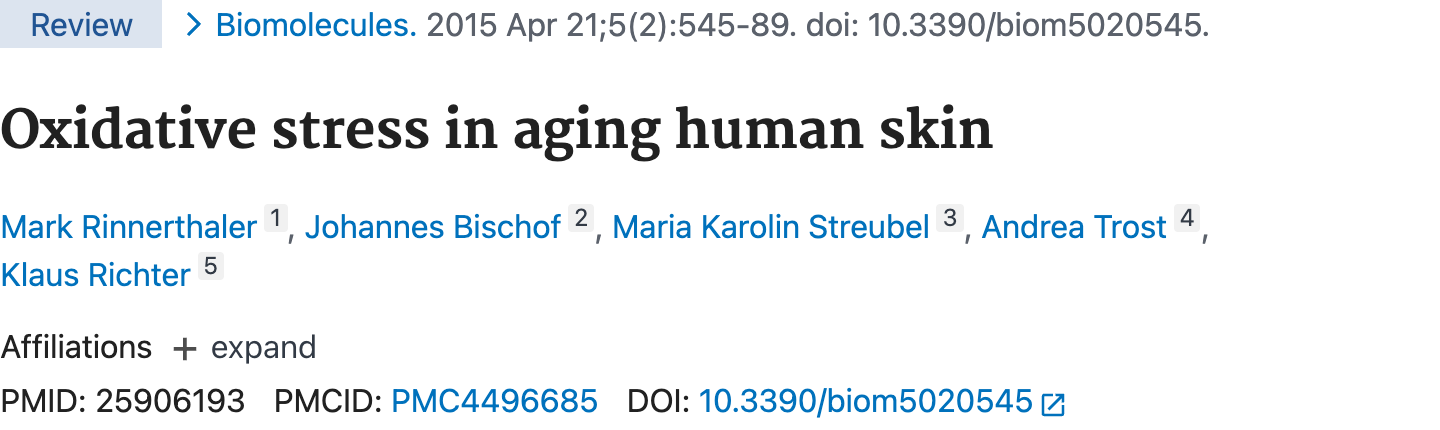
PubMed record: Oxidative stress in aging human skin. Rinnerthaler M, Bischof J, Streubel MK, Trost A, Richter K. Biomolecules, 2015.
On PubMed: a review of how oxidative stress ages human skin, from the University of Salzburg. PMID 25906193.

That first line says oxidative stress plays a major part in how skin ages. I had to look the term up. It means wear from unstable oxygen.

r1 row 25

The review follows that wear into the skin's proteins, its oils and its barrier. For the aging that comes from outside the body, it points mostly at sunlight.

r1 row 26
The turnours at 15%ours only
Theirs, in our words

Nothing on their page does this job here.

Ours, word for word

Nobody in that paper was selling a jar. It didn't name one product. You can read it yourself, with the number under the picture.

I read the summary four times, in my car, in the parking lot at work.

The causetheirs at 3% of the words · ours at 16%
Theirs, in our words
#7at 10%●●●●●p · 95 words

Three short paragraphs: her products are not failing, only aimed elsewhere; the missed damage is named (singlet oxygen) and said to break collagen fastest around perimenopause; astaxanthin is called the one antioxidant that neutralises it.

Why it works. Name a hidden cause, tie it to her life stage, and make the ingredient its only answer. vindicationcommon-enemynew-mechanismspecificity

Why it sits here, and how it is written

Vindication opens and closes the paragraph with the villain in the middle, so the new information arrives wrapped in reassurance. The villain is a named chemical species, which makes the claim sound measured, not sold. Perimenopause is dropped in as a clause and left undeveloped until the FAQ: a marker that tells the reader of 40-plus the page knows her.

Short declaratives, most under thirteen words and the longest seventeen. The paragraph turns three times on one not-this-but-that pivot (vendor point 015); read aloud it persuades and sounds slightly mechanical. The absolute (the only one) is softened to a multiple by the page's own reason two.

Planned for ours, before we wrote: rewritten to our claims. Usable: ordinary antioxidants guard part of the cell (p3), and astaxanthin's singlet-oxygen quenching is about 6,000 times vitamin C's (m3). Not usable: the only-one absolute, the perimenopause speed claim (not in the gate), and any line in which collagen is broken down faster than she can replace it (p2). Ours says what The Cell Shield protects (m1), not what is being lost. p3m3m1

See these lines on their page ↗
#8at 13%●●○○○img · 0 wordsThe picture

Picture for reason two. Its content was not captured; the alt text is the reason's heading, word for word.

Why it works. Let her see the molecule's source before reading about it. curiosity-gap

Why it sits here, and how it is written

Picture, heading, body again. Given the heading, this is where the salmon would be shown, giving an unfamiliar ingredient a familiar animal.

Alt text is used on every reason image as a duplicate of the heading, so a screen reader hears each heading twice and learns nothing about the picture (vendor point 011).

Planned for ours, before we wrote: kept the move. Our picture here shows the softgel and its colour (b5 lives in photography) or the microalgae source (c4). Alt text describes the picture. b5c4

Open on their page ↗
Ours, word for word

Wear from oxygen?

r1 row 29

Inside my own skin?

Under every cream I owned?

What she already triedours at 16%ours only
Theirs, in our words

Nothing on their page does this job here.

Ours, word for word

I thought about the nineteen years. The last five alone had cost me a little over twelve thousand dollars.

p6 row 32

I had a brochure for a laser package in my purse.

Was it possible my shelf was fine, and the trouble sat where no jar was built to go?

p3 row 34
The turnours at 18%ours only
Theirs, in our words

Nothing on their page does this job here.

Ours, word for word

That night I read until one in the morning.

When I shut the laptop, my shelf looked different to me.

The causeours at 18%ours only
Theirs, in our words

Nothing on their page does this job here.

Ours, word for word
My skin routine was never the problem. Nobody had told me where skin ages.
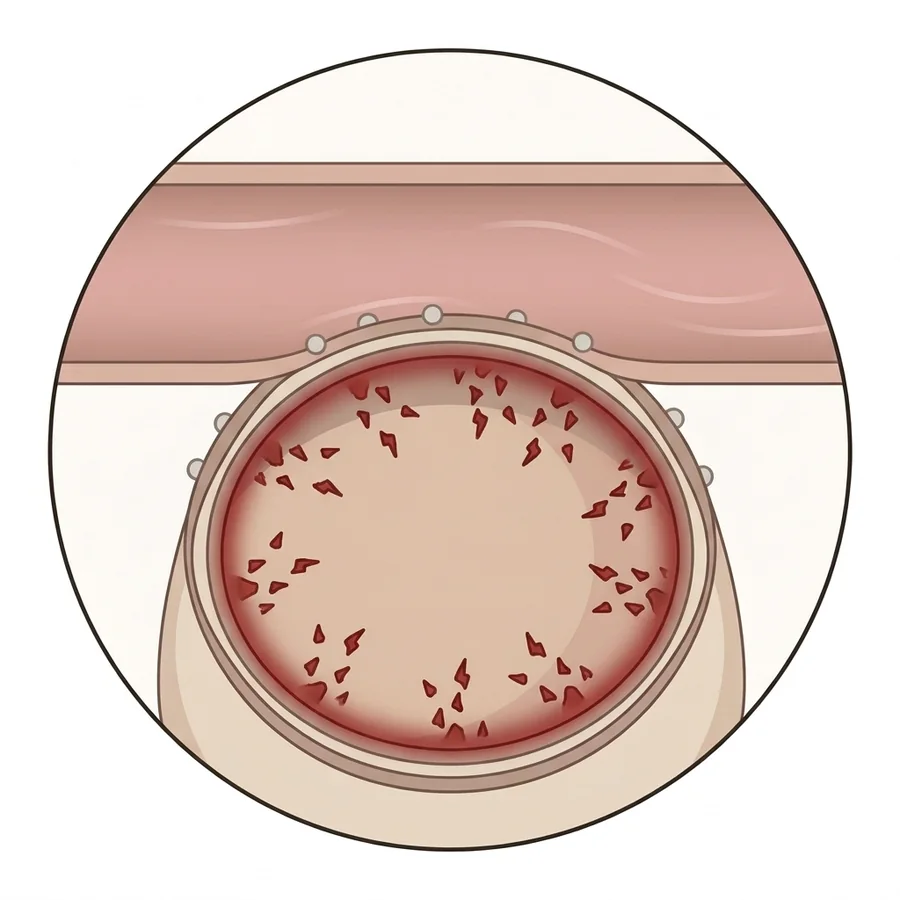
A drawing of one cell. Small red marks of wear collect along the inner face of the cell wall.
One cell, up close. The red marks are wear, and they collect on the inner face of the wall.

Your skin is built of cells, and every cell is wrapped in a thin wall of fat. Sunlight makes unstable oxygen molecules in your skin. So do city air, sugar, short nights and plain worry. Those molecules wear on the cell wall, and the wear shows up later as the three things in your mirror.

r1b2p3 row 39
What she already triedours at 21%ours only
Theirs, in our words

Nothing on their page does this job here.

Ours, word for word

Every jar I owned worked from the outside in. The wear I was reading about starts on the inside.

p3 row 40

So that was the layer my creams and serums never reach. My whole routine was on the other side of the wall.

p3 row 41
The doctor's answerours at 22%ours only
Theirs, in our words

Nothing on their page does this job here.

Ours, word for word

My dermatologist went over my routine last year, jar by jar, and told me not to change a thing. She was right. Retinol, vitamin C, sunscreen: each one does its job. Not one of them was built to guard the inside of a cell wall.

p3 row 42
The reason whytheirs at 7% of the words · ours at 24%
Theirs, in our words
#9at 15%●●●●○p · 20 words

Reason 2 heading: the ingredient is the molecule that colours wild salmon pink, and it is said to be forming a shield within her skin at this moment.

Why it works. Give the ingredient a picture she already knows. specificitycuriosity-gapnew-mechanism

Why it sits here, and how it is written

Second, because reason one left her with a chemical name and a bare assertion. Before she will accept that one molecule does what three products cannot, she has to be able to picture it. Salmon gives the unfamiliar word a colour and an animal she has eaten.

Twenty words with a dash in the middle. The first half is fact; the second is a present-tense claim about her skin that cannot be true of a reader who has not yet bought. The shield image is what the page rests on, and our brand already owns that noun.

Planned for ours, before we wrote: our own explanation in its place. The Cell Shield is named here, after the explanation: natural astaxanthin from microalgae (c4) that spans the cell membrane (m2). The salmon link is usable as a story about where the molecule is found; the present-tense claim about her own skin is not. m2c4

See these lines on their page ↗
#10at 16%●●●●●p · 102 words

Three paragraphs: why wild salmon have pink flesh (algae that make a crimson, cell-shielding molecule); its shape, spanning the cell's membrane, with vitamin C outside and E inside; then a lab figure of up to 6,000 times vitamin C.

Why it works. Give the mechanism a picture, a geometry and a number, in that order. story-transportnew-mechanismcontrastspecificityreason-why

Why it sits here, and how it is written

Picture, then geometry, then number: each step needs the one before. The number would mean nothing without knowing what is measured, and the geometry is abstract until the salmon makes the molecule real. The final clause ties the figure back to her collagen, which closes the loop opened by reason one.

The best-built paragraph on either page. The figure is qualified twice (as a laboratory measurement, and for one damage type), which is unusually careful for this market and makes it more believable. The run of four very short sentences about vitamins C and E is the page's rhythm at its best.

Planned for ours, before we wrote: our own explanation in its place. Transfers almost whole: m2 (spans the membrane), p3 (vitamin C outside, vitamin E at the membrane surface; the gate's wording on E differs from theirs), m3 (about 6,000 times vitamin C and about 550 times vitamin E), c4 (natural, from microalgae). Keep both qualifiers on the number. End on what holds (m1), not on collagen breaking. m2p3m3c4m1

See these lines on their page ↗
#11at 20%●●○○○img · 0 wordsThe picture

Picture for reason three. Content not captured; the alt text is again the reason's heading.

Why it works. Give the evidence a visual. borrowed-authority

Why it sits here, and how it is written

Picture, heading, body. A proof reason is where a reader expects a chart or a journal page.

Not judgeable from the working copy.

Planned for ours, before we wrote: our proof in its place. A screenshot of the PubMed record or the journal page for the skin trial (b1): a house habit on science sections and better than any illustration. b1

Open on their page ↗
Ours, word for word
Three changes in my skin, and the one cause under all three

The cheek that lost its spring. Collagen is the frame under your skin. Your body keeps enzymes whose job is to clear away old collagen, and unstable oxygen switches those enzymes on. Sunlight is a big part of that.

r1b2m1 row 44

The tight, dry feeling by evening. Your skin keeps its water behind a thin seal of natural oils. Unstable oxygen wears on oils the way air turns butter. A worn seal lets water out sooner. My moisturizer adds water from the outside, and it does that well. Guarding the seal from the inside was never its job.

r1b1 row 45

The flat color. Skin gets its warmth from the smallest blood vessels underneath it. When those vessels are under the same wear, less blood gets through. Then a face looks tired after eight good hours of sleep. Makeup can paint that warmth on from the outside. The real thing comes from underneath.

m5b5 row 46

Three changes. One cause under all three. They got worse together because they share a root. And there I was, buying a different jar for each one.

r1 row 47
The guaranteetheirs at 17% of the wordstheirs only
Theirs, in our words
#14at 26%●●●●○2× p · 34 words

A panel heading inviting her to join women who have already switched, then one line: a softgel a day, three outcomes, and a 60-day money-back guarantee under which she pays nothing if she sees no difference.

Why it works. Turn belief into a low-risk first step. consensusrisk-reversalease

Why it sits here, and how it is written

The first ask comes at 27%, after problem, mechanism and proof and before the objections. The guarantee is the only offer term shown, so she is asked to try, not to buy. The brand is still unnamed in the copy: the panel sells a switch to the ingredient.

The switching verb assumes she is leaving something behind, which fits reason one's framing. No price here, or anywhere in the captured copy.

Planned for ours, before we wrote: our offer in its place. Our first panel after the proof: one softgel a day (b9) and the 30-Day Money-Back Guarantee by name. She adds; she does not switch. Her routine stays. b9

See these lines on their page ↗
Ours, word for word

Nothing on our page. The plan on the left says why.

The buttontheirs at 19% of the wordstheirs only
Theirs, in our words
#15at 28%●●●●○cta · 3 words

First button: a three-word invitation to try with no risk, today. It jumps to the product card lower on the same page. All five buttons carry this one label.

Why it works. Offer the first exit to the reader already convinced. risk-reversaleaseurgency

Why it sits here, and how it is written

It comes after three reasons, not before the first as on the Rovina page: this page assumes a colder reader who needs the argument before the exit.

The label sells the absence of risk, not the product; for a reader burned before, that is the right thing to sell. Using one label five times makes the button furniture by the third sighting.

Planned for ours, before we wrote: kept the move. A button after the first proof. Our guarantee may not be called risk-free (the house naming gate forbids it); the label names what she gets.

Open on their page ↗
#16at 29%●○○○○img · 0 wordsThe picture

Picture for reason four. Content not captured; alt text repeats the heading.

Why it works. Illustrate the supply story. curiosity-gap

Why it sits here, and how it is written

Picture, heading, body. After the button panel it restarts the list for the reader who did not click.

Not judgeable from the working copy.

Planned for ours, before we wrote: kept the move. A picture of the microalgae source or the softgel (c4); alt text describes it. c4

Open on their page ↗
Ours, word for word

Nothing on our page. The plan on the left says why.

The doubt, answeredtheirs at 19% of the wordstheirs only
Theirs, in our words
#17at 31%●●●●○p · 18 words

Reason 4 heading: the ingredient has spent thirty years hidden in fish feed, and a bracketed second sentence says that is why she is only hearing of it now.

Why it works. Voice the doubt of a convinced reader: why has nobody told me? curiosity-gapobjection-preemptpattern-interrupt

Why it sits here, and how it is written

With the case made, the page turns to the first doubt a convinced reader has: if it is this good, why has nobody told me. It is placed after the first button, so only readers who did not click (the doubters) meet it.

Animal feed is a deliberately unglamorous phrase on a beauty page; it interrupts. The bracketed aside reads as the writer leaning in, and it voices her objection for her.

Planned for ours, before we wrote: kept the move. The same doubt exists for our reader and the gate answers it as p7: most of this market has never met astaxanthin. The thirty-year feed-supply history is not in the gate; verify it before using it as more than a light story. p7

See these lines on their page ↗
#18at 32%●●●●○p · 75 words

Supply story: farmed salmon, grey by nature, are dyed pink with the ingredient, so it went to fish farms for thirty years; supplement makers sold synthetic low doses; women blamed the molecule. It closes by promising a right product, unnamed.

Why it works. Explain her ignorance as a supply story and blame the category, not the ingredient. reason-whycommon-enemyvindicationopen-loop

Why it sits here, and how it is written

It answers why she has not heard of it and, in its last third, quietly opens the next objection (it did nothing when women tried it), so reason five arrives as a continuation. Its closing words promise a product without naming one: the reveal is set up a full reason ahead.

Grey salmon is the fact a reader repeats to a friend. The closing pair of short sentences is the page's tic (a balanced contrast, then a dash), though here it does real work as a hand-off.

Planned for ours, before we wrote: rewritten to our claims. p7 (undiscovered by this market), r16 (synthetic astaxanthin comes from petrochemicals; ours does not) and c1 (about 64% of unverified products fail potency testing) as the reason earlier tries disappointed. No claim that ours is the first right product. p7r16c1

See these lines on their page ↗
#19at 35%●○○○○img · 0 wordsThe picture

Picture for reason five. Content not captured; alt text repeats the heading.

Why it works. Illustrate the dose comparison. contrast

Why it sits here, and how it is written

Picture, heading, body. Given the heading, a comparison of doses or bottles would be expected here.

Not judgeable from the working copy.

Planned for ours, before we wrote: kept the move. If a dose comparison is drawn (b7), rival cells carry a reason and no rival brand is named or pictured. b7

Open on their page ↗
Ours, word for word

Nothing on our page. The plan on the left says why.

What she already triedtheirs at 23% of the words · ours at 29%
Theirs, in our words
#20at 37%●●●●○p · 16 words

Reason 5 heading: addressed to the woman who has already tried the ingredient and felt nothing; she is told the dose she was given was the wrong one.

Why it works. Turn a past disappointment into evidence for the page. vindicationobjection-preemptmirroring

Why it sits here, and how it is written

Fifth, because it speaks to the smallest and most resistant group: the reader who has tried astaxanthin. It needs reason three (the dose in the trials) and reason four (the trade underdosed) already in place. With them her bad experience becomes evidence for the page instead of against it.

A conditional addressed to one reader; everyone else reads it as proof that the page is honest about failures. The passive verb puts the fault on the seller.

Planned for ours, before we wrote: kept the move. b7 makes this ours: 12 mg clinical strength against the 4 to 6 mg brands, addressed to the woman who tried a low-dose product. c1 supports it. b7c1

See these lines on their page ↗
Ours, word for word
What every product on my skin shelf does, and where each one stops

My retinol keeps the surface of my skin turning over, and I wouldn't give it up. Renewal is its job. Standing guard in a cell wall was never on its label.

p3 row 49

My vitamin C serum is a true antioxidant. But vitamin C dissolves in water, and the wall of a cell is fat. The two don't mix.

p3 row 50

My moisturizer holds water in for the day. My collagen hands my skin its building blocks. Neither one is a guard.

m1 row 51

None of it was wrong. I want to say that plainly. Each thing on that shelf does what it says.

I went to buy an antioxidant for my skin, and came home with the wrong three

The next morning I did the obvious thing and drove to the drugstore.

Vitamin C. Vitamin E. A hair, skin and nails multivitamin with a sunburst on the box.

Sixty-one dollars, and I felt very clever all the way home.

The product is namedtheirs at 24% of the wordstheirs only
Theirs, in our words
#21at 38%●●●●●p · 97 words

Marketplace astaxanthin is described as 4 mg, synthetic, petrochemical and never trialled in people, and low dosing is put down to cost. Then the brand is first named: 12 mg of a branded natural ingredient in an MCT-oil softgel.

Why it works. Disqualify the cheap alternatives, then name the product as the one that meets the standard. contrastcommon-enemyspecificityloop-closedreason-why

Why it sits here, and how it is written

The brand appears at 38%, in the last third of the fifth reason, as the answer to a standard she has held since reason three. She is not introduced to a product; she is shown which product passes her own test. Named earlier, it would have made reasons one to four read as a pitch.

The paragraph closes on three verbless fragments, a staccato ending of the kind already used in reasons three and four, and wearing thin. Naming the ingredient's supplier (AstaReal) borrows a second brand's credibility. The carrier-oil absorption claim is the weakest link in the paragraph.

Planned for ours, before we wrote: rewritten to our claims. CellScience Astaxanthin 12 mg is named here, as what meets the standard: 12 mg (b7), natural from microalgae (c4), not petrochemical (r16), grown in closed bioreactors (c5), third-party lab tested (c3). No carrier-oil absorption claim (b8 is banned); the permitted line is to take it with a meal that has some fat (r31). b7c4r16c5c3r31

See these lines on their page ↗
#22at 41%●○○○○img · 0 wordsThe picture

Picture for reason six. Content not captured; alt text repeats the heading.

Why it works. Show the crowd. social-proof

Why it sits here, and how it is written

Picture, heading, body. A consensus reason is where faces are expected.

Not judgeable from the working copy.

Planned for ours, before we wrote: kept the move. Real customers only, once we have their permission; otherwise no faces here.

Open on their page ↗
Ours, word for word

Nothing on our page. The plan on the left says why.

Proof: other peopletheirs at 28% of the wordstheirs only
Theirs, in our words
#23at 44%●●●○○p · 11 words

Reason 6 heading: over 10,000 women are said to have switched already, with a promise to tell what they notice.

Why it works. Announce the crowd and what it reports. social-proofconsensuscuriosity-gap

Why it sits here, and how it is written

Consensus is sixth, after the product is named, so the crowd is a crowd of this product's buyers. Placed before the reveal it would have been a crowd for the ingredient, which sells rivals too.

The second sentence opens a small loop (what do they notice) that the body closes at once. The count matches the eyebrow of entry 1.

Planned for ours, before we wrote: our proof in its place. Our own customer count and what they report, once real and signed off (r17). r17

See these lines on their page ↗
#24at 45%●●●●○p · 73 words

Composite timeline: calmer skin by week four, colleagues asking by week eight, the hunt for another product over by month three. Then unexpected extras (joints, tired eyes), a 4.8 rating over 10,000 reviews, and a denial of paid partnerships.

Why it works. Tell her what to expect and when, in the voice of a crowd. social-prooffuture-pacingspecificityconsensusrelief

Why it sits here, and how it is written

The timeline tells her what to expect and when, which protects the sale from disappointment in week two. Month three's outcome (she stops shopping) is the emotional resolution of reason one's crowded shelf: the page ends her search, not just her wrinkles.

Three parallel sentences, one per step, and each step names a different kind of evidence: her own eye, other people, her own behaviour. It is the strongest rhythm on the page. The paragraph then ends on a stock pair about real women and real results.

Planned for ours, before we wrote: rewritten to our claims. The expectation timeline is worth keeping, written from the trial record (b1) and not as customer fact. Extras from the gate only, benefit-forward: eyes (b3, b6) and joints (b4). Panel numbers only when signed off (r17). The month-three idea suits us exactly: she stops adding jars because what she has holds (m1, p6). b1b3b6b4r17m1p6

See these lines on their page ↗
#25at 47%●○○○○img · 0 wordsThe picture

Picture for reason seven. Content not captured; alt text repeats the heading.

Why it works. Illustrate purity and openness. candor

Why it sits here, and how it is written

Picture, heading, body, for the last time. It is the final picture before the review block and the product card.

Not judgeable from the working copy.

Planned for ours, before we wrote: kept the move. The softgel, the bag and a lab report in one frame would say third-party lab tested (c3) without a caption. c3

Open on their page ↗
Ours, word for word

Nothing on our page. The plan on the left says why.

The turnours at 34%ours only
Theirs, in our words

Nothing on their page does this job here.

Ours, word for word

Two months later, I couldn't name one thing those bottles had done for my face.

I began to wonder if I'd talked myself into a theory.

So I went back to the research with one question. Where does each antioxidant end up?

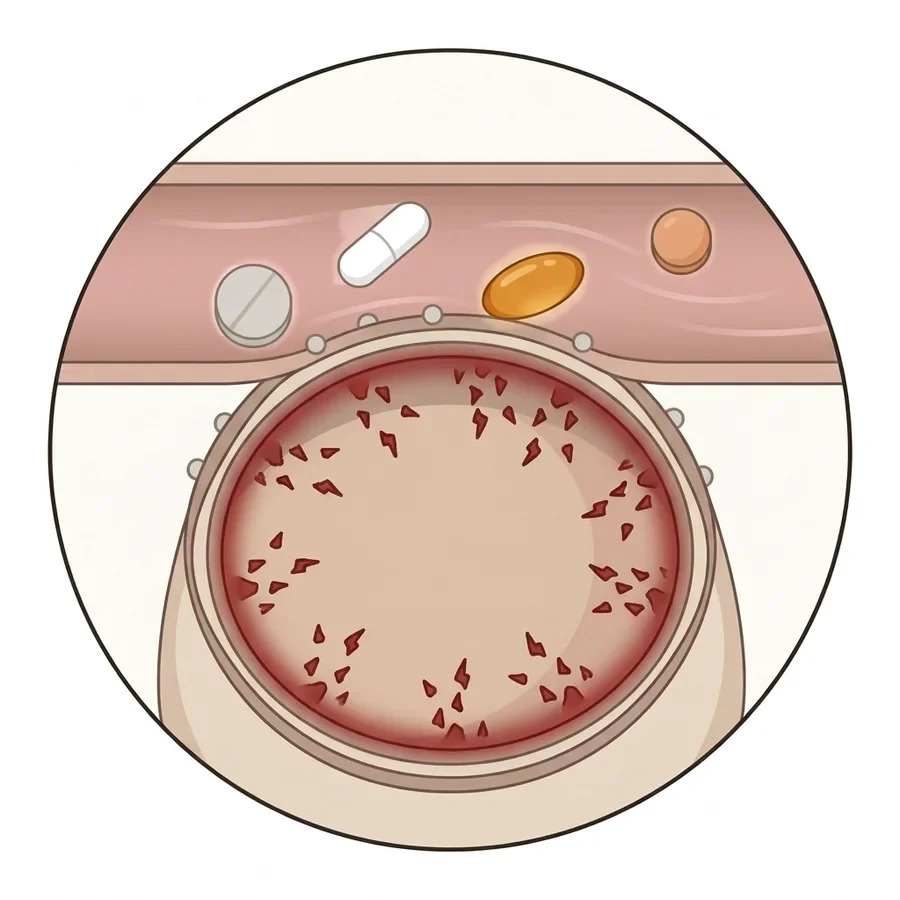
A drawing of a blood vessel beside one cell. Four ordinary pills drift past in the blood. Inside the cell, the red marks of wear are still there.
The vitamins I had bought travel in the blood and the water around a cell. None of them settles inside the cell wall.
The reason whyours at 36%ours only
Theirs, in our words

Nothing on their page does this job here.

Ours, word for word

The vitamin C stayed out in the water, between the cells. The vitamin E came to rest on the outer face of the cell wall. The multivitamin had a pinch of each.

p3r3r5 row 61

So I took a legal pad and wrote three lines. One, it had to dissolve in fat, because the cell wall is fat. Two, it had to reach through that wall, from one face to the other. Three, it had to come in an amount that had been tested in people.

m2r5b7 row 62
Proof: an expertours at 39%ours only
Theirs, in our words

Nothing on their page does this job here.

Ours, word for word

I'm no scientist. I manage a dental office, and when a supplier makes a big claim, I ask for the paperwork.

The paperwork was a trial in women. Its title had a word in it I couldn't say.

Proof: the researchours at 40%ours only
Theirs, in our words

Nothing on their page does this job here.

Ours, word for word
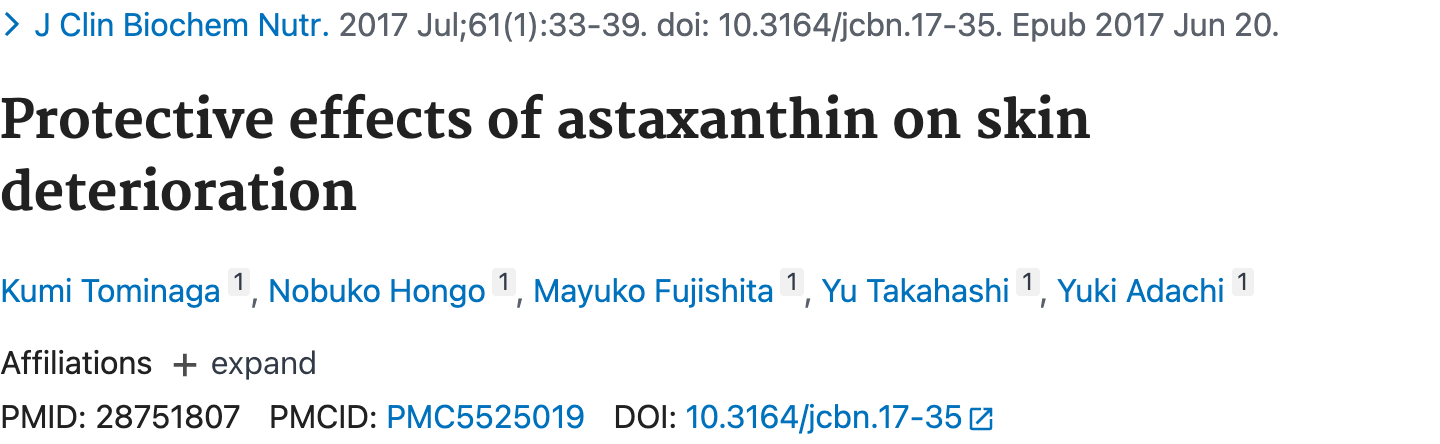
PubMed record: Protective effects of astaxanthin on skin deterioration. Tominaga K, Hongo N, Fujishita M, Takahashi Y, Adachi Y. Journal of Clinical Biochemistry and Nutrition, 2017.
On PubMed: a 16-week study of 65 women. On placebo, wrinkles and skin moisture got worse. On 6 mg or 12 mg of astaxanthin a day, they held. PMID 28751807.

Sixty-five healthy women between 35 and 60. Sixteen weeks, from late summer into winter, when sun and dry air are hardest on skin.

b1 row 66

Some swallowed a softgel with the red nutrient in it. The rest got a dummy softgel that looked the same.

b1 row 67

By the end, the women on the dummy softgel had deeper lines and drier skin. The women on the real one held.

b1b2 row 68

I'd read enough by then to be careful. Antioxidants in food are real, and I'm not giving up my blueberries. But the women were put in their groups by chance, so good eaters landed on both sides. One thing was different.

p3 row 69
The reason whyours at 44%ours only
Theirs, in our words

Nothing on their page does this job here.

Ours, word for word

The women who held had taken one small red softgel a day. That was all. No new cream, and no new step.

b9b1 row 70

One nutrient, taken with a meal, built to settle into the wall of a cell and stay there.

m2r31 row 71
Astaxanthin, the red nutrient that guards your skin cells from the inside
m1 row 72
The turnours at 45%ours only
Theirs, in our words

Nothing on their page does this job here.

Ours, word for word

I sounded it out at my desk, one piece at a time. Asta-ZAN-thin.

I'd read ingredient lists for nineteen years and had never once met that word. Most women haven't. Yet astaxanthin has been through more than 60 clinical studies, on skin and on the rest of the body.

p7r14 row 74
The reason whyours at 47%ours only
Theirs, in our words

Nothing on their page does this job here.

Ours, word for word

It's the pigment that turns freshwater algae a deep red. Against one kind of unstable oxygen, lab tests put astaxanthin at 6,000 times the strength of vitamin C. Against vitamin E, 550 times. And it dissolves in fat, which was the first thing on my list.

c4m3r15 row 75

Astaxanthin is a long molecule. It reaches through the cell wall, so it guards the inner side as well as the outer. And it calms the enzymes that eat collagen. None of that happens by lunch. The trial ran sixteen weeks for a reason.

m2m1x1 row 76
Proof: the researchours at 50%ours only
Theirs, in our words

Nothing on their page does this job here.

Ours, word for word

The 16-week trial was paid for by a company that makes astaxanthin. That's common, and I still wanted a second opinion.

I found one run by skin doctors at a university in Seoul. Forty-four people took a small dose of astaxanthin together with collagen, or a dummy, for twelve weeks.

b1 row 78

On the real thing, skin sprang back better and lost less water. In their skin samples, the signal to clear collagen went down, and the signal to build it went up.

b1b2m1 row 79

I'd been putting collagen in my coffee for three years. I already had half of that study in my cup.

p6 row 80
The reason whyours at 53%ours only
Theirs, in our words

Nothing on their page does this job here.

Ours, word for word

Astaxanthin was the other half, the half that guards. So the collagen you build holds. So does the collagen you buy.

m1 row 81
The scene aheadours at 53%ours only
Theirs, in our words

Nothing on their page does this job here.

Ours, word for word

One softgel with breakfast. Nothing on my shelf had to move.

b9 row 82
The causeours at 54%ours only
Theirs, in our words

Nothing on their page does this job here.

Ours, word for word

That was nineteen years, explained. My routine was one layer short. Every jar worked on its own layer, and one layer had been left with no guard at all.

m2b9p3 row 83
Why this onetheirs at 32% of the words · ours at 55%
Theirs, in our words
#26at 50%●●●●○p · 10 words

Reason 7 heading: four fragments: a pure ingredient, then three refusals: synthetics, auto-ship traps, small print.

Why it works. Separate this seller from the sellers she distrusts. contrastobjection-preemptcandorcommon-enemy

Why it sits here, and how it is written

Last, because the final barrier for this reader is distrust of supplement sellers, not doubt about the ingredient. The refusals name what she fears from the checkout, not from the product, immediately before the page takes her there.

All three refusals pass the negation test (vendor point 022): each names something a supplement buyer has actually been burned by.

Planned for ours, before we wrote: kept the move. Our refusals must be true of our own checkout: one-time bags with no plan behind these tiers, third-party lab tested (c3), not synthetic (r16). No promise about small print if a trial lane is on the page. c3r16

See these lines on their page ↗
Ours, word for word
The first astaxanthin I bought for my skin failed three checks

I drove back to the drugstore, found a bottle with astaxanthin on the front, and carried it to the register like a trophy.

In the car I turned it over and read the back, the way I read a supplier's invoice. A bottle can come up short three ways. Mine managed all three.

One: where it comes from. The natural kind is made by microalgae. The synthetic kind is built from petrochemicals. The 16-week trial used the natural kind, and my bottle didn't say which one it was.

c4r16 row 87

Two: how much is in it. My bottle had 4 mg in each softgel. The 16-week trial used 6 mg and 12 mg. One sign of stress in the skin's top layer rose on the dummy and on 6 mg, and stayed put on 12. So 12 was the dose I wanted, and that meant three softgels a day.

b7 row 88

Three: whether anyone checked. One independent review checked astaxanthin products that had never been tested by an outside lab. About 64% fell short on potency. My bottle had a gold seal on the front and no lab named anywhere.

c1 row 89

By that count, about two bottles in three would fail a test nobody made them take.

c1 row 90

I put the bottle in the drawer with the rest, and I nearly gave up on the whole idea.

The guaranteetheirs at 32% of the wordstheirs only
Theirs, in our words
#27at 51%●●●●○p · 75 words

Sourcing and testing claims (branded natural ingredient, Hawaiian microalgae, no synthetic solvents, every batch independently tested, certificate published); two refusals (forced auto-ship, short return windows); a direct address to the reader burned before; a 60-day guarantee.

Why it works. End the list on the seller's conduct and the removal of risk. risk-reversalcandorvindicationcommon-enemyspecificity

Why it sits here, and how it is written

The list ends where the Rovina list ends, on the guarantee, but reaches it through the seller's conduct, not through her age. The remark about return windows that close before the molecule can work turns the guarantee's length into an argument that follows from the eight-week timeline.

The burned-before sentence is the page's most direct moment of empathy. Two details need checking before anyone borrows them: the branded ingredient named is not, to our knowledge, grown in Hawaii, and the certificate said here to be published is available only on request in entry 58.

Planned for ours, before we wrote: our offer in its place. 30-Day Money-Back Guarantee, by name. c3 worded as third-party lab tested, c5 closed bioreactors, c4 natural source. Our window is shorter than the skin-trial timeline, so we do not borrow their argument about return windows. c3c5c4

See these lines on their page ↗
Ours, word for word

Nothing on our page. The plan on the left says why.

Proof: other peopletheirs at 36% of the wordstheirs only
Theirs, in our words
#28at 53%●●●○○fine · 2× p · 30 words

A rating line (4.8 of 5 from over 10,000), a heading calling the clinical 12 mg difference beyond dispute, and a sub-line setting most brands' 4 mg synthetic product against what women see on the trial dose.

Why it works. Frame the reviews as evidence for the dose. social-proofcontrastcommon-enemy

Why it sits here, and how it is written

The review block is framed by the dose argument, not by the brand: the reviews are offered as evidence for the 12 mg thesis. That keeps the page's single idea running through its social proof.

Calling a rival's product filler is the page's only sneer. The heading's adjective is a claim about the reader's own reaction, which readers resist.

Planned for ours, before we wrote: our proof in its place. Frame our reviews by our idea (what she takes holds, m1) and by the dose (b7). Real rating only. m1b7

See these lines on their page ↗
#29at 55%●●●●○img · p · 3× fine · 53 words

Review card with a named photo: six weeks in, low expectations, her aesthetician asked whether she had changed her routine, and she had only added the softgel; skin smoother, less tired. No miracle, she says, just clearly better.

Why it works. Offer a witness who looks at her skin for a living. social-proofcandorspecificityidentification

Why it sits here, and how it is written

It is the first review after the list and is chosen for its third-party witness: a professional who noticed unprompted. That is stronger proof than her own opinion, and it echoes the week-eight step of entry 24, where other people start to ask.

Short, flat sentences and an admitted limit make it sound like a person. But the same first name and initial returns in entry 47 with a different backstory and a different number of weeks: one reviewer, two stories. Treat as written in-house; the photo cannot be verified either.

Planned for ours, before we wrote: left out. No invented reviewers. The pattern to keep once reviews are real: a witness who sees her skin professionally, and an admitted limit.

See these lines on their page ↗
#30at 55%●●●●○img · p · 2× fine · 55 words

Second review card, with photo: she nearly quit at three weeks having seen nothing, stayed, and by week five or six dry patches on her cheeks had settled and her skin looked livelier. Worth it, she says, but slow.

Why it works. Inoculate against early disappointment. social-proofcandorobjection-preemptcommitment

Why it sits here, and how it is written

It is paired with the first review as its slow counterpart. A buyer who sees nothing in week two now has a named precedent for waiting, which matters commercially: the guarantee runs sixty days and the promised result arrives at eight weeks.

The most useful review on either page, because it sells patience. It carries no verification tag although the first card has one: the template was filled unevenly.

Planned for ours, before we wrote: left out. No invented reviewers. When ours are real, lead with the slow-result review: with a 30-day guarantee and skin outcomes measured in weeks, setting honest expectations is our job too.

See these lines on their page ↗
Ours, word for word

Nothing on our page. The plan on the left says why.

The buttontheirs at 42% of the wordstheirs only
Theirs, in our words
#31at 59%●●○○○cta · 3 words

Second button, same three-word label, under the two review cards.

Why it works. Offer the exit after the reviews. risk-reversal

Why it sits here, and how it is written

Reviews, then button: it takes the reader persuaded by other women straight to the product card that begins one screen below.

Identical to the first button.

Planned for ours, before we wrote: kept the move. As entry 15.

Open on their page ↗
#32at 60%●●●○○2× img · 0 wordsThe picture

Two product pictures back to back, a gallery; both carry the product's name as alt text.

Why it works. Show the thing itself.

Why it sits here, and how it is written

At 60% the page becomes a product page. Every button above jumps to this point.

Alt text is the product title.

Planned for ours, before we wrote: kept the move. Our pack shot, the opaque bag, with alt text written as customer copy. The bag is shown and never argued for (c6 stays banned).

Open on their page ↗
Ours, word for word

Nothing on our page. The plan on the left says why.

The product is namedtheirs at 42% of the words · ours at 62%
Theirs, in our words
#33at 64%●●●○○fine · h1 · 7 words

The product card opens with a rating line (4.8 of 5, over 10,000 reviews) and the product's name, a plain descriptor of strength with no brand word in it.

Why it works. Name what is for sale in the terms of the argument. social-proofspecificity

Why it sits here, and how it is written

The name is generic on purpose. After seven reasons about dose, the product title is the dose argument compressed into three words.

The only top-level heading on the page is the product name, so to a search engine the page is about the product, not about the seven reasons.

Planned for ours, before we wrote: kept the move. Our card: CellScience Astaxanthin 12 mg, with The Cell Shield named beside it and 12 mg stated as clinical strength (b7). b7

See these lines on their page ↗
#34at 64%●●●●○4× p · 59 words

Four benefit lines, each a label and a dash: smoother, firmer skin with a clinical claim; hydration from inside the cell; a daily shield with the 6,000-times figure; and one softgel said to replace her whole antioxidant stack.

Why it works. Compress the argument into four lines beside the buy form. specificityborrowed-authorityease

Why it sits here, and how it is written

The card restates the argument for the reader who arrived by button. It runs outcome, outcome, mechanism, ease, which is the order of a product page, not of the list above it.

The fourth bullet contradicts reason one: there her products were fine and aimed elsewhere; here one capsule replaces them. The 6,000 figure has lost both qualifiers it carried in entry 10.

Planned for ours, before we wrote: rewritten to our claims. Four rows, one line each: wrinkle depth and elasticity measured in trials (b1); hydration (b1); about 6,000 times vitamin C against singlet oxygen, with its qualifier (m3); one softgel a day that replaces nothing (b9). Never a line about replacing her stack. b1m3b9

See these lines on their page ↗
Ours, word for word
The astaxanthin I take for my skin passed all three checks
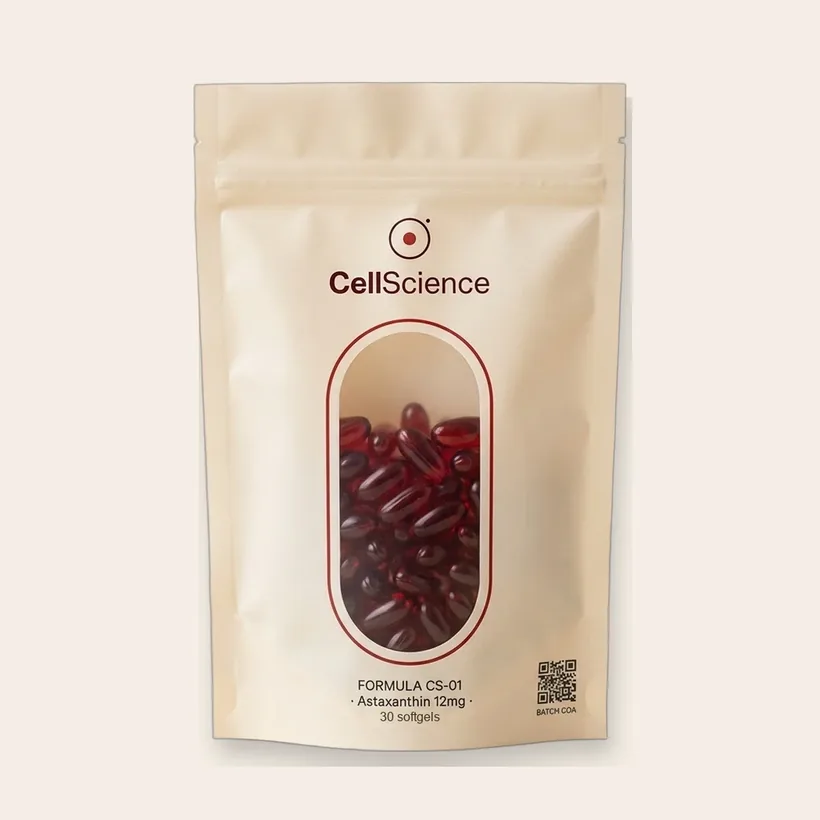
A bag of CellScience Astaxanthin 12 mg softgels
CellScience Astaxanthin, 12 mg in one softgel. Mine sits on the shelf next to the collagen.

I did the comparing the slow way. The same legal pad, three columns, a row for every brand, and two evenings at the dining room table.

One row ended up with a mark in every column.

CellScience Astaxanthin.

b7c4c3 row 96

12 mg in one softgel. The higher dose from the trial, with no counting out three.

b7 row 97

Natural, from microalgae. The algae are raised in closed tanks, never in open ponds. Never synthetic.

c4c5r16 row 98

Tested by an outside lab, batch by batch. Not a gold seal. A lab.

c3 row 99

No heavy metals. One active ingredient, astaxanthin. Everything else in the softgel is there to hold the astaxanthin in place.

c5 row 100

The work astaxanthin does in the cell wall has a name at CellScience. The Cell Shield. To me, The Cell Shield is the guard my skin routine never had.

m2m1 row 101
The guaranteetheirs at 45% of the words · ours at 66%
Theirs, in our words
#35at 67%●●●●○p · fine · 23 words

The guarantee, named after the outcome as a 60-day glow guarantee: a refund unless she sees brighter skin and feels it calmer; traps and awkward returns are ruled out.

Why it works. Remove the risk at the buy form. risk-reversalcandorspecificity

Why it sits here, and how it is written

It is the last element of the card, directly under the bullets. No price, bundle or bonus appears in the captured copy around it, so in text the guarantee is the whole offer.

The guarantee's condition is written in the page's two signature outcome words, so the promise and the refund test are one sentence. Naming the guarantee after the result makes it memorable.

Planned for ours, before we wrote: our offer in its place. 30-Day Money-Back Guarantee: house naming is fixed, so no outcome-branded name. Full refund, she keeps the bag. Our price tiers are stated in text beside it.

See these lines on their page ↗
Ours, word for word

On the CellScience page I went straight to the guarantee. It's the 30-Day Money-Back Guarantee, and the bag stays with you either way.

r22 row 102
Proof: other peopletheirs at 46% of the wordstheirs only
Theirs, in our words
#36at 68%●●○○○2× p · 27 words

A heading inviting her to join thousands said to glow from inside, then a line urging her to quit covering damage with creams and pointing to the 10,000-plus women said to rely on the 12 mg formula.

Why it works. Introduce the customer clips. consensuscontrastsocial-proof

Why it sits here, and how it is written

Below the product card the page starts again for the reader who did not buy, and its first move is more faces. The heading introduces two video clips.

It tells her to stop covering damage with creams: the first line on the page to criticise what she does, and a break with the promise of reason one.

Planned for ours, before we wrote: rewritten to our claims. A heading for customer clips in our voice: women adding one softgel to the routine they already have (b9). Nothing that calls her creams a cover-up. b9

See these lines on their page ↗
#37at 70%●●●○○2× video · 0 wordsThe picture

Two portrait videos side by side, phone-shaped; nothing of their content was captured. By position they are customer clips.

Why it works. Let customers speak on camera. social-proofidentification

Why it sits here, and how it is written

Video sits directly below the product card, where a hesitant reader looks for someone like herself using it.

Not judgeable from the working copy.

Planned for ours, before we wrote: kept the move. Real customer clips only, in spoken register; none until we have them.

Open on their page ↗
Ours, word for word

Nothing on our page. The plan on the left says why.

The buttontheirs at 47% of the words · ours at 67%
Theirs, in our words
#38at 74%●●○○○cta · 3 words

Third button, same label, under the clips.

Why it works. Offer the exit after the clips. risk-reversal

Why it sits here, and how it is written

Clips, then button: every proof block below the card ends on the same exit, which sends her back up to the card.

Identical to the first button.

Planned for ours, before we wrote: kept the move. As entry 15.

Open on their page ↗
Ours, word for word
Try The Cell Shield
30-Day Money-Back Guarantee · Free US shipping
How to take itours at 67%ours only
Theirs, in our words

Nothing on their page does this job here.

Ours, word for word

The bag came on a Thursday. I took the first softgel with my eggs, then did my whole skin routine, sunscreen included.

b9r31m4 row 104
What happens, week by weektheirs at 47% of the words · ours at 68%
Theirs, in our words
#39at 75%●●●○○img · 2× p · 16 words

An image and heading that call what follows her path to resilience, and a sub-line: ageing can't be avoided, accumulated damage can, and here is the route.

Why it works. Introduce the week-by-week expectation. future-pacinghopecandor

Why it sits here, and how it is written

The roadmap comes after the card and the clips because it answers the hesitant buyer's next question: how long before I know. It expands the three-step timeline of entry 24 into four dated steps.

Conceding that ageing cannot be avoided is a candid note that buys belief for what follows.

Planned for ours, before we wrote: kept the move. A dated expectation strip suits us, headed plainly. The concession about ageing is fine; resilience is our word too (m4). m4

See these lines on their page ↗
#40at 79%●●●○○2× fine · p · 16 words

Week 1, labelled as cellular defence: protection is said to begin inside and oxidative stress to steady across the body. Nothing visible is promised.

Why it works. Make the first week count without promising anything she can check. future-pacingcandor

Why it sits here, and how it is written

The first step is invisible on purpose. It gives week one a meaning (something has started) while asking her to expect nothing in the mirror, which protects the later steps from an early verdict.

The honest part of the roadmap. Stress levels steadying in a week is asserted, not sourced.

Planned for ours, before we wrote: rewritten to our claims. A first step that admits nothing is visible yet is worth keeping. We describe what the softgel does (m2, m3), not a measured change in her own stress levels. m2m3

See these lines on their page ↗
#41at 80%●●●○○2× fine · p · 19 words

Week 4, labelled as a calmer complexion: redness and irritation are said to begin easing once the molecule has built up fully.

Why it works. Name the first visible sign. future-pacingspecificity

Why it sits here, and how it is written

The first visible step is the modest one, calm and not yet youth, and it is dated inside a single bag's supply so the first purchase has a checkpoint.

The build-up clause supplies a reason for the four-week wait, which is what makes the wait tolerable.

Planned for ours, before we wrote: rewritten to our claims. We hold no redness claim. If an early marker is wanted, the gate's is eyes at 14 to 28 days (b6); skin outcomes follow the trial record (b1). b6b1

See these lines on their page ↗
#42at 80%●●●○○2× fine · p · 27 words

Week 6, labelled as even tone: age spots and lines are said to look softer, with a named trial (Nishida) cited for a reduction seen at week nine; skin is said to feel more hydrated.

Why it works. Attach a citation to a step. future-pacingborrowed-authorityspecificity

Why it sits here, and how it is written

Citations enter the roadmap at the third step, where the claims become ones she can check in a mirror. Evidence is attached exactly where doubt would start.

A week-six claim is supported by a nine-week measurement: the citation does not cover the step it is attached to.

Planned for ours, before we wrote: rewritten to our claims. Steps dated from the trial record only (b1), each step carrying the citation that actually covers it. b1

See these lines on their page ↗
#43at 81%●●●●○2× fine · p · 41 words

Week 8 on, labelled as a full transformation: visibly better elasticity, described as in line with a named trial (Tominaga) at eight weeks; brighter, more even skin; and the point at which other people start to ask what has changed.

Why it works. Name the finish line and tie it to a trial and to other people noticing. future-pacingborrowed-authoritysocial-proof

Why it sits here, and how it is written

The last step is dated at the trial's claimed length and inside the 60-day guarantee by days, so the full result and the refund deadline arrive together. It ends on other people noticing, the page's recurring picture of success.

The phrase tying the step to the trial is a careful hedge. The label for this step is the one overclaim in the roadmap. The closing social cue is the third appearance of that idea.

Planned for ours, before we wrote: rewritten to our claims. Elasticity and wrinkle depth from b1, at the trial's real length (our brand file records sixteen weeks for the 2017 trial). Our 30-day guarantee closes before skin outcomes are due, so the strip must say plainly what she can expect inside 30 days and what comes later. b1

See these lines on their page ↗
Ours, word for word
What my skin did, week by week

I've been oversold before, so I'll give you these weeks the way they went.

Days one and two: nothing. I checked the mirror both mornings. Then I remembered the trial ran sixteen weeks, and I felt a little silly.

Weeks one and two: still nothing in the mirror. My afternoons felt a little steadier, which I hadn't expected.

r7 row 108

Week four. My skin stopped feeling tight by evening, which told me it was holding moisture through the day.

b1 row 109

Week six was the first time anyone else said a word.

The buttontheirs at 53% of the wordstheirs only
Theirs, in our words
#44at 82%●●○○○cta · 3 words

Fourth button, same label, under the roadmap.

Why it works. Offer the exit after the timeline. risk-reversal

Why it sits here, and how it is written

Roadmap, then button: once she knows how long it takes, she is invited to start the clock.

Identical to the first button.

Planned for ours, before we wrote: kept the move. As entry 15.

Open on their page ↗
Ours, word for word

Nothing on our page. The plan on the left says why.

Who is speakingtheirs at 53% of the wordstheirs only
Theirs, in our words
#45at 83%●●○○○p · 6 words

A one-line lead-in to a strip of publication logos, worded so that it is research on the ingredient, not the product, that was featured. The logos themselves were not captured.

Why it works. Borrow the standing of publications without claiming coverage of the brand. borrowed-authority

Why it sits here, and how it is written

Press credibility is held back to 83%, among the late reassurances. Coming after the roadmap's citations, it turns named trials into a general impression that the ingredient is established.

Carefully worded: it claims nothing for the brand. A reader skimming logos will not make that distinction, which is the point.

Planned for ours, before we wrote: our proof in its place. Name the journals the trials were published in (x3 paired with its citations, r14). No press-logo strip unless the coverage is of us. x3r14

See these lines on their page ↗
Ours, word for word

Nothing on our page. The plan on the left says why.

Proof: other peopletheirs at 53% of the words · ours at 71%
Theirs, in our words
#46at 84%●●○○○fine · 2× p · 19 words

A trust line (10,000-plus), a heading placing the proof in a glow at eight weeks, and a sub-line inviting her to see how women fare on the dose the research used.

Why it works. Introduce the comment thread. social-proofspecificity

Why it sits here, and how it is written

It frames the comment thread by the dose argument and the eight-week mark, as the review block was framed in entry 28. The sub-line is nearly the same sentence as that block's sub-line.

The same framing sentence in two blocks is a cloned line (vendor point 020).

Planned for ours, before we wrote: our proof in its place. One framing line for social proof, used once.

See these lines on their page ↗
Ours, word for word
“You look rested,” my sister said at lunch. “Did you go somewhere?”
What happens, week by weekours at 71%ours only
Theirs, in our words

Nothing on their page does this job here.

Ours, word for word

I had not gone anywhere. I had added one softgel to breakfast.

b9 row 112

Week eight. The lines beside my eyes looked softer in the morning light, and my cheek had some spring back. Softer, not gone. I'm 57, and I look 57.

b1 row 113

Week ten. A faint warm color came into my face, as if I'd spent the weekend outside. Astaxanthin is known for that glow.

b5 row 114
Proof: other people (theirs: reader comments)theirs at 54% of the words · ours at 73%
Theirs, in our words
#47at 86%●●●○○5× fine · 51 words

First comment, three days old: a woman who had tried everything (two years of retinol, three vitamin C serums, microneedling) and still looked tired says that after eight weeks on 12 mg her aesthetician asked what had changed.

Why it works. Replay reason one in a customer's mouth. social-proofidentificationmirroringspecificity

Why it sits here, and how it is written

The three comments replay the page's three arguments in customers' mouths and in the page's own order. This one is reason one: the full routine that was not enough. Its list of what she tried is the reader's own shelf.

The thread is dressed as a social feed, with like and reply links and ages of posts. The name and the aesthetician anecdote are those of the review card in entry 29, with eight weeks in place of six and a new backstory. Treat the thread as written in-house.

Planned for ours, before we wrote: left out. No fabricated comment threads. If real comments exist they are shown as what they are, with their source.

See these lines on their page ↗
#48at 87%●●●○○5× fine · 46 words

Second comment, a week old: three months on a cheap marketplace version did nothing; she switched for the higher dose and the microalgae origin, and at week six her husband said she looked as if she had been on holiday.

Why it works. Replay reason five in a customer's mouth. social-proofcontrastvindication

Why it sits here, and how it is written

This is reason five as testimony: the low-dose product that failed, then the switch. It speaks to the reader who has already had one go at astaxanthin and needs permission for a second.

A customer citing dose and source as her reasons for switching speaks in the page's own argument, not in a customer's words. The holiday compliment is the same social cue the Rovina page builds a whole reason on.

Planned for ours, before we wrote: left out. No fabricated comments. The switching story is only usable from a real customer.

See these lines on their page ↗
#49at 88%●●●○○5× fine · 47 words

Third comment: a woman in perimenopause says everything changed at once, nothing she had relied on for a decade still worked, and she reports the first visible difference since; her skin has structure again. Its two timestamps disagree.

Why it works. Speak for the life stage the page is aimed at. social-proofidentificationmirroringhope

Why it sits here, and how it is written

The last comment carries the perimenopause marker that reason one planted in a clause and the list never developed. It is the page's most specific address to the woman of 40-plus, and it comes last so that she leaves the thread on her own situation.

The word structure is a good, unusual one for how skin feels. The post is dated two days old in its header and five hours old in its footer: a template filled in carelessly.

Planned for ours, before we wrote: left out. No fabricated comments and no life-stage claim the gate does not hold. The gate's nearest id is r12, which is not a skin claim.

See these lines on their page ↗
Ours, word for word

The woman who has cut my hair for twelve years tipped my chin toward the window and asked what I'd changed.

What happens, week by weekours at 74%ours only
Theirs, in our words

Nothing on their page does this job here.

Ours, word for word

Not one jar, I told her. It's a softgel I take with my eggs.

b9 row 116
The scene aheadours at 74%ours only
Theirs, in our words

Nothing on their page does this job here.

Ours, word for word
To the woman who has done everything right for her skin

If you're standing where I stood, here's what I wish a friend had told me. You can stop auditioning jars.

r23 row 118

You're not too late at 62, and you're not too early at 41. A skin cell has the same wall at either age.

i1i2 row 119
What the page admitsours at 76%ours only
Theirs, in our words

Nothing on their page does this job here.

Ours, word for word

Don't expect a younger face. One softgel is not a facelift, and it is not a medicine. The human skin trials measured plainer things: wrinkle depth, moisture, and how well skin springs back.

b1 row 120

It does not replace your sunscreen, either. Mine stays by the door.

m4 row 121
The scene aheadours at 77%ours only
Theirs, in our words

Nothing on their page does this job here.

Ours, word for word

What The Cell Shield does is guard what the rest of your skin routine builds.

m1b9 row 122
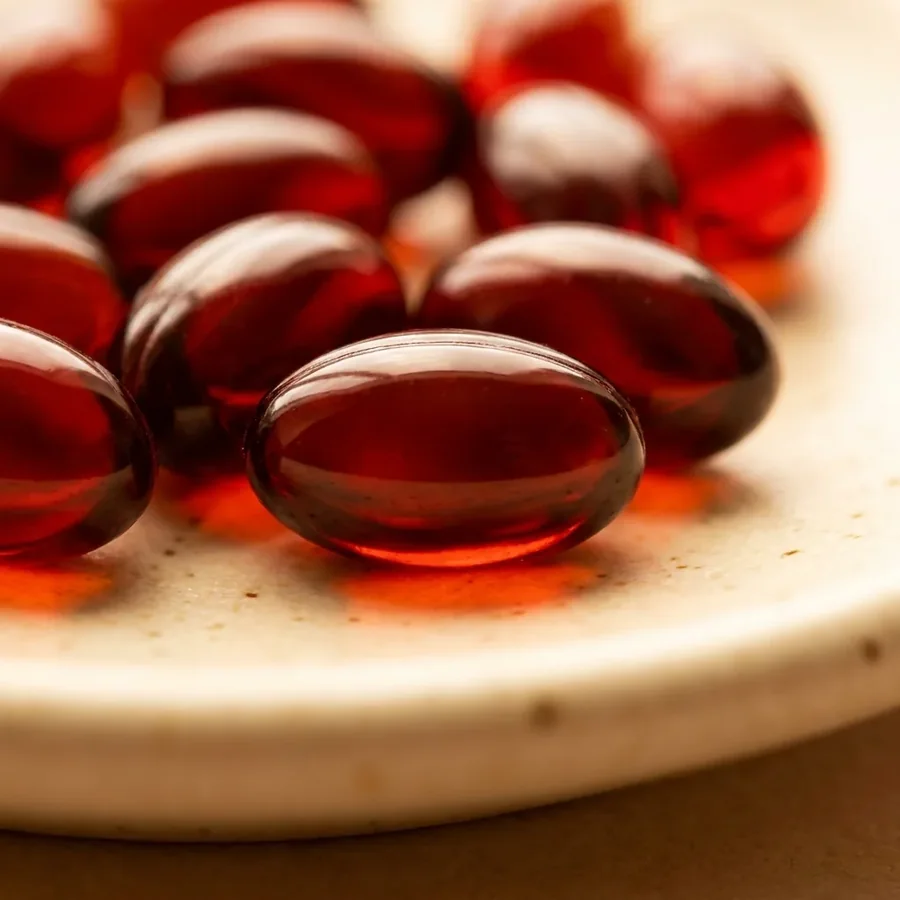
Deep red astaxanthin softgels on a small plate.
Astaxanthin softgels. The deep red comes from the algae that make it.
The closeours at 78%ours only
Theirs, in our words

Nothing on their page does this job here.

Ours, word for word
Add another step to your skin routine, or protect the steps you have

The first way is the one I know by heart. A new serum in the spring, and a richer cream in the fall. The same lean into the mirror at seven, and the same sum at the end of the year.

p6 row 125

The second way leaves your shelf the way it is and puts a guard under it. You swallow one softgel with a meal, and that's the whole change. The trials ran twelve to sixteen weeks, so give your mirror time. I felt it in my skin at night, weeks before I saw it in the mirror.

b9b1r31 row 126
The offer (theirs: the button)theirs at 60% of the words · ours at 81%
Theirs, in our words
#50at 90%●●●○○cta · 3 words

Fifth and last button, same label, under the thread.

Why it works. Offer the last exit before the questions. risk-reversal

Why it sits here, and how it is written

It is the final button, at 90%. Nothing below it asks for the sale again: the FAQ and the closing line run on with no exit.

Identical to the first button. A page that ends without a button under its FAQ leaves the answered reader nowhere to go.

Planned for ours, before we wrote: kept the move. As entry 15, and one more button after our FAQ.

Open on their page ↗
Ours, word for word
Why I ordered three bags of astaxanthin for my skin

One bag holds thirty softgels, a month of breakfasts. The trials ran three and four months, so I ordered three bags. The more bags in the order, the less each bag costs, and mine shipped free.

b9 row 128

You don't have to start with three. The button on this page opens two ways: one bag, or a free trial that turns into a monthly plan until you cancel it.

The guaranteeours at 83%ours only
Theirs, in our words

Nothing on their page does this job here.

Ours, word for word

I could order three because of the 30-Day Money-Back Guarantee. The thirty days start when the bag arrives. Take the softgel every day and judge it in week four. If you can't feel a difference, send one email before day thirty. You get your money back, and the bag you opened is yours to keep. And if you're on the monthly plan, one click ends it.

r22 row 130
The doubt, answered (theirs: questions and answers)theirs at 61% of the words · ours at 85%
Theirs, in our words
#51at 91%●●○○○2× p · 20 words

The FAQ heading, phrased as questions the brand encouraged her to ask, and a sub-line: the brand knows she has been burned before and offers to be honest about itself.

Why it works. Frame the questions as candour. candorvindicationmirroring

Why it sits here, and how it is written

The FAQ opens at 91% and holds 39% of the page's words in 7% of its height, so the answers sit in closed accordions. The heading recasts objections as questions the seller welcomes, in keeping with reason seven.

The burned-before line returns from entry 27; a second use weakens the first.

Planned for ours, before we wrote: kept the move. An FAQ framed as straight answers. Our PDP section is already named for honest answers.

See these lines on their page ↗
#52at 92%●●○○○p · fine · 97 words

Question: why is it new to her. The answer retells reason four at length (fish farms took the supply for thirty years), adds Japanese researchers publishing human trials from the early 2000s, and hints that the silence was deliberate.

Why it works. Answer the unfamiliarity objection for the reader who skipped the list. objection-preemptreason-whycommon-enemy

Why it sits here, and how it is written

The first two questions are reasons four and five again, for the reader who jumped past the list to the card. The FAQ is a second, compressed copy of the argument and begins with the two objections.

It repeats reason four almost sentence for sentence (vendor point 020). The closing hint that the gap was deliberate is an insinuation with nothing behind it.

Planned for ours, before we wrote: rewritten to our claims. Answer from p7 in two sentences. No supply-conspiracy hint. p7

See these lines on their page ↗
#53at 93%●●●○○p · fine · 92 words

Question: an earlier try that did nothing. The answer blames dose and source and clears the molecule: most products are 4 mg synthetic from petroleum, the trials used 12 mg from microalgae, and an underdosed bottle tested an imitation.

Why it works. Answer the it-failed objection for the reader who skipped the list. vindicationobjection-preemptcontrast

Why it sits here, and how it is written

It is reason five again, placed second, so the two objections that opened the second half of the list also open the FAQ.

The last sentence, separating the molecule from a cheap copy of it, is the sharpest line in the FAQ. The remainder duplicates the list.

Planned for ours, before we wrote: rewritten to our claims. b7 (12 mg against 4 to 6 mg), r16 (synthetic is petrochemical; ours is not), c1 (the category's failure rate). Said once on our page, not twice. b7r16c1

See these lines on their page ↗
#54at 93%●○○○○p · fine · 18 words

Question: why dose matters and how this differs from marketplace products. The answer is the page editor's two-word placeholder; it was never written.

Why it works. None: the answer is missing.

Why it sits here, and how it is written

The question restates the page's central argument, which makes the missing answer the most exposed gap on the page. It has presumably survived because the accordion is closed by default.

A software default left live (vendor point 012). Any reader who opens it learns how the page was assembled.

Planned for ours, before we wrote: rewritten to our claims. If we ask the dose question we answer it: b7, with the trial dose cited from the paper (b1). b7b1

See these lines on their page ↗
#55at 94%●●●○○p · fine · 91 words

Question: softgel against cream. Answer: creams work at the surface; the damage sits within the membrane of the cell; a fat-soluble molecule swallowed with fat reaches skin cells through the blood. A 2012 paper (Tominaga) is cited for oral use.

Why it works. Justify swallowing something for a skin problem. reason-whycontrastborrowed-authority

Why it sits here, and how it is written

This reader's habit is topical, and the format itself needs defending. The question is held back to the FAQ because the list made the same point by geometry in reason two; here it is restated for the literal-minded.

Clear cause and effect in four steps. The carrier named here is coconut oil; in entry 21 it is MCT oil. A second paper from the same author appears, dated 2012, which the list never mentioned.

Planned for ours, before we wrote: rewritten to our claims. From within: it spans the membrane (m2) and restores the small-vessel flow that carries nutrients to skin (m5). Her creams stay; the softgel works where they do not reach (p3). No carrier-oil claim (b8 is banned); with a meal that has some fat (r31). m2m5p3r31

See these lines on their page ↗
#56at 94%●●●○○p · fine · 117 words

Question: how soon. The answer reprints the four-step roadmap (weeks 1, 4, 6 and 8-plus) nearly unchanged, adds that results vary, and asks her to hold her verdict until she has taken the full dose for the full time.

Why it works. Repeat the timeline and ask for patience. future-pacingcandorcommitment

Why it sits here, and how it is written

It repeats the roadmap of entries 40 to 43 for the reader who met the FAQ first. Its new final sentence is the real message: judge only after the full dose for the full time, which carries her to the edge of the guarantee window.

At 111 words the longest answer on the page, and four fifths of it is a reprint (vendor point 020). The results-vary clause is the only hedge of its kind on the page.

Planned for ours, before we wrote: rewritten to our claims. One timeline, stated once on the page, from the trial record (b1); early sign from b6 if used. b1b6

See these lines on their page ↗
#57at 95%●●●●○p · fine · 78 words

Question: what if nothing happens. The answer: a refund, unconditional, with no forms and nothing to post back; then a jab at brands that hide behind hard returns and do not believe in their product.

Why it works. Restate the guarantee as proof of confidence. risk-reversalcandorcommon-enemycontrast

Why it sits here, and how it is written

The refund question comes straight after the timeline because a reader told to wait eight weeks next asks what happens if the wait was for nothing. The guarantee is argued as evidence of belief, not only as insurance.

The answer ends on the page's shortest sentence, two words, which lands. The three refusals are concrete and checkable.

Planned for ours, before we wrote: our offer in its place. 30-Day Money-Back Guarantee: full refund, she keeps the bag. We state our terms and make no remark about other brands' returns.

See these lines on their page ↗
#58at 95%●●●○○p · fine · 60 words

Question: is it tested by a third-party lab. The answer: yes, each batch, independently, for purity, potency, contaminants and heavy metals; a certificate can be requested; dose and source are said to match the published trials.

Why it works. Answer the quality question. objection-preemptspecificityborrowed-authority

Why it sits here, and how it is written

Testing comes after the refund question: once the money is safe, she asks whether the product is. It repeats reason seven's claims for the reader who skipped the list.

Here the certificate can be requested; in entry 27 it is published with every product. One of the two is wrong, and a reader who opens this answer after reading reason seven will notice.

Planned for ours, before we wrote: our proof in its place. c3 worded as third-party lab tested, with results published per batch once the first certificate exists; c5 for purity (no heavy metals, no environmental contaminants); c4 for the source. c3c5c4

See these lines on their page ↗
#59at 96%●●●○○p · fine · 77 words

Question: is daily use safe. The answer: yes, studied at 6 to 12 mg without notable side effects; above 16 mg some report orange-tinted urine, called harmless; pregnant or nursing women and anyone on prescriptions should consult a doctor.

Why it works. Answer the safety question with a range and a caveat. objection-preemptcandorspecificityborrowed-authority

Why it sits here, and how it is written

Safety is the eighth question, among the late, careful ones. A reader this far down is reading the label, and the answer treats her as someone who does.

Volunteering a side effect at a higher dose is candour that buys belief for the dose being sold. The doctor caveat is standard and well placed at the end.

Planned for ours, before we wrote: kept the move. r27 (allergen and age safety) and r28 (medication, with the blood-thinner caution). We do not quote side-effect thresholds the gate does not hold. r27r28

See these lines on their page ↗
#60at 96%●●○○○p · fine · 70 words

Question: what if she has health concerns. The answer: see her doctor, above all if she takes anticoagulants, immune-suppressing drugs or hormones; the safety record is called strong; she is invited to email and promised candour, not selling.

Why it works. Defer to her doctor and offer a human contact. candorobjection-preemptrisk-reversal

Why it sits here, and how it is written

It overlaps the safety question before it and exists for its last sentence: an invitation to write in. For a wary buyer an address to write to is itself proof that someone is there.

The deference to her doctor's fuller knowledge of her is respectful without being timid. Nearly a duplicate of the previous question.

Planned for ours, before we wrote: kept the move. r28, including the blood-thinner caution, and our support address. One safety question, not two. r28

See these lines on their page ↗
#61at 97%●●●○○p · fine · 91 words

Question: perimenopause or HRT. The answer: hormone shifts are said to speed oxidative stress and collagen loss; the product was built for that window; it is no hormone and is said not to interfere with HRT; ask the doctor.

Why it works. Speak to the life stage by name. identificationmirroringobjection-preemptcandor

Why it sits here, and how it is written

Perimenopause was planted as a clause in reason one and voiced in the last comment; only here, second to last in the FAQ, is it addressed head on. The page's most specific audience marker is kept in the least-read place, where it cannot narrow the headline's reach.

The claim that the product was built for this window is positioning with nothing on the page to support it. The no-interference statement is a medical assertion made flatly.

Planned for ours, before we wrote: rewritten to our claims. The gate holds no perimenopause or HRT claim. The nearest id is r12, a pillar claim and not a skin one. Our answer is r28: talk to her doctor. If the life stage is to be addressed it needs its own gate entry first. r28

See these lines on their page ↗
#62at 97%●●○○○p · fine · 65 words

Question: will it stain teeth or turn skin orange. The answer: no; above 16 mg a faint orange colouring of urine is reported, rarely at 12 mg; the colour stays inside the body.

Why it works. Remove a cosmetic worry about a red pigment. objection-preemptcandorspecificity

Why it sits here, and how it is written

The last question is the smallest worry, and an odd one to end on. It also shows the distance between the two pages: here skin colour from the softgel is a fear to be denied, while the Rovina page sells it as the headline benefit.

Repeats the urine detail of entry 59. A flat denial first, then the detail.

Planned for ours, before we wrote: kept the move. Fair to answer if asked; r27 covers safety. We promise no colour change to skin in either direction; the glow (b5) is shown in pictures. r27b5

See these lines on their page ↗
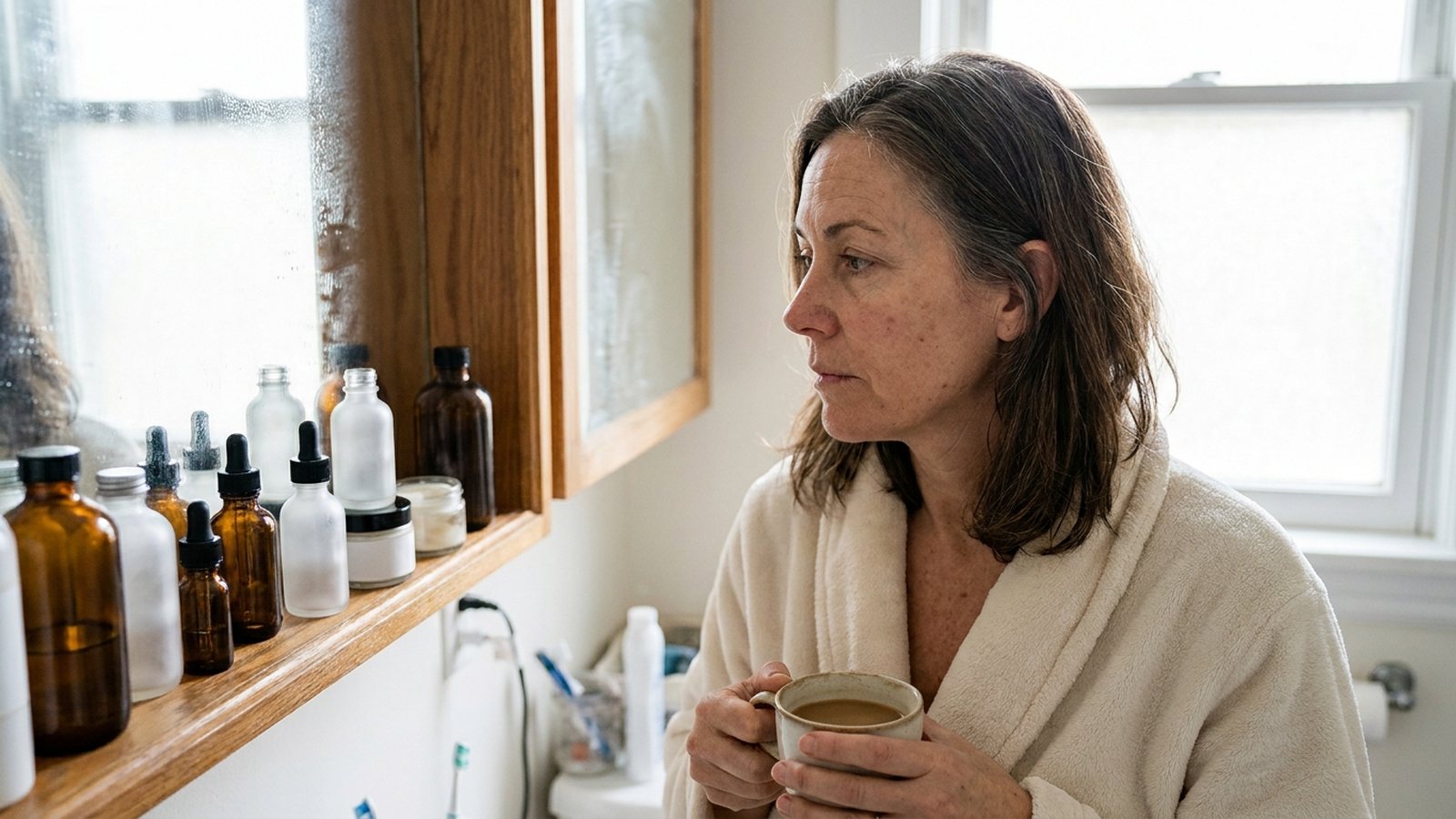

Ours, word for word
Why the softgel I take for my skin isn't sold on Amazon

Out of habit, I looked for CellScience Astaxanthin on Amazon. It isn't sold there. CellScience says it sells only through its own site. That's how it controls freshness and stands behind the 12 mg in every softgel.

r29r16b7 row 132
Why this oneours at 87%ours only
Theirs, in our words

Nothing on their page does this job here.

Ours, word for word

CellScience doesn't make its softgel the cheap way. Growing algae in sealed tanks costs more than mixing a synthetic. Sending every batch to an outside lab costs more again. It does both, and I'd sooner pay for that than for a prettier jar.

c5c3 row 133
The doubt, answeredours at 88%ours only
Theirs, in our words

Nothing on their page does this job here.

Ours, word for word
If you have a drawer of skin products like mine

Four months ago I sat with my thumb over a button like the one on this page. I sat there a good while.

“You fall for it every time, Linda. You can't take one more letdown.”

I thought about the drawer of things that promised. I thought about the twelve thousand dollars, and the laser brochure in my purse.

p6 row 137
The closeours at 90%ours only
Theirs, in our words

Nothing on their page does this job here.

Ours, word for word

Then I had a second thought. I couldn't face a twentieth year of the same shelf and the same mirror. I pressed the button with my heart going, half sure I'd be sorry.

What happens, week by weekours at 91%ours only
Theirs, in our words

Nothing on their page does this job here.

Ours, word for word

Here's the short version, if you skipped down here.

Week four, a Tuesday. I got home from work and touched my cheek out of habit. It wasn't tight. I stood in the hall with my coat still on.

b1 row 140

Week six. My sister, across a lunch table, asking where I'd been.

Week ten. A chin tipped toward the salon window, and a question I was glad to answer.

b5 row 142

It didn't come all at once. It came in weeks, and a sixteen-week trial had taught me to wait.

b1 row 143
The closeours at 94%ours only
Theirs, in our words

Nothing on their page does this job here.

Ours, word for word

My mornings are shorter now. I don't lean into the mirror. I don't read up on every new launch. I threw the laser brochure away.

p6r23 row 144

Maybe you're thinking I got lucky. I thought so too, until I read that trial again. Those women weren't lucky. They had a guard.

b1 row 145

My shelf still costs a little over two hundred dollars a month. Now it has a guard under it, and my mirror has heard.

b9 row 146

My scoop of collagen still goes into my coffee every morning. When your bag arrives, put one softgel next to your cup, and let your collagen hold.

m1b9 row 147

Whichever way you go, wear your sunscreen.

Linda

The buttonours at 97%ours only
Theirs, in our words

Nothing on their page does this job here.

Ours, word for word
Ours closes on the 3-step quiz. The kept page closes on a buy button.
Answer 3 questions and SAVE UP TO $210!
  1. What do you most want to protect?
  2. How do most afternoons feel?
  3. What do you take every day now?
Save up to $210 →
Save $210 is the 5-bag price: $17.99 a bag instead of $59.99. Every order has the 30-Day Money-Back Guarantee.
What the page admits (theirs: who is speaking)theirs at 100% of the words · ours at 97%
Theirs, in our words
#63at 98%●○○○○p · 6 words

The lead-in to the logo strip again, the same line as entry 45, as the page's last words. Logos not captured.

Why it works. End the page on borrowed standing. borrowed-authority

Why it sits here, and how it is written

The page ends on the logo strip, with no closing argument and no button after the FAQ. Whatever she decided, she decided above.

A repeated line as the last line (vendor point 020). The page has no close.

Planned for ours, before we wrote: left out. Our page ends on a short close and a button, not on a logo strip.

See these lines on their page ↗
Ours, word for word

A word on safety before you go. Ask your doctor first if you're pregnant or nursing, or if you take blood thinners or any other medication.

r27r28 row 151
Proof: the researchours at 98%ours only
Theirs, in our words

Nothing on their page does this job here.

Ours, word for word
Ours alone. Every study the story leans on, with what kind of evidence it is and who paid for it.
What I read
  1. Review. Oxidative stress in aging human skin. Biomolecules, 2015. PubMed 25906193
  2. Trial in 65 women, 16 weeks, against a placebo. Astaxanthin and skin that holds its moisture and its lines. Journal of Clinical Biochemistry and Nutrition, 2017. Paid for by a maker of astaxanthin. PubMed 28751807
  3. Trial in 44 people, 12 weeks, against a placebo. Astaxanthin taken together with collagen. Journal of Medicinal Food, 2014. PubMed 24955642