← prelander teardowns

Side by side · CS-P2 kidney story

Our page on the right, word for word. The kept page on the left, part by part, described in our words, with a link that opens their live page at those lines (their text and pictures are not copied here). The plan under each of their parts was written from the teardown, before our page: where our page went another way, the right column is what stands. Mark each part and leave a note. It saves as you go, and a mark on a part of ours shows on every comparison of that page.
Compare CS-P2 with
Theirs

Clarity MD · top-N ranking

For a reader watching their kidney numbers: the ingredient is sound, most bottles fail to deliver it to the organs, and one product passes the three label checks.

1,925 words · brand named 16% down the page · 3 buttons, the first at 34% · house chief 6/10 · craft chief REVISE

Open their live page ↗ · the full teardown

Ours

“Let's keep an eye on your kidney numbers,” my doctor said. So I read the research myself, and found what my kidneys are up against.

CS-P2 · angle CS-A03 · 2,790 words · version 2 (2026-09-29): rebuilt on the kept page's angle and order, in our own words. Both chiefs, round 2: 7/10 as drafted, 8.5/10 with the fixes (all 49 applied)

Open our live page ↗ · comment line by line in the Copy Studio

The order, at a glance

Each bar is one page from first word to last. Width is the share of the page's words. Click a block to jump to that part.

Theirs
astaxanthin named · 3%brand named · 14%first button · 0%
Ours
astaxanthin named · 47%brand named · 63%first button · 70%
OpeningHer storyWhat she triedThe turnThe cause and the reason whyProofThe productResultsDoubts and limitsThe askThe close

What we took from this page

  • The organ overlay: 14 rows out of 152 (headline, deck, intro, method line, one sentence each in the winner's verdict and bottom line, recap, motive line) carry a single organ through an unchanged ranking. Cheap to build, and testable organ by organ.
  • A deck that starts at the lab report and bridges to the ingredient in one sentence (entry 3).
  • The organ named at each point where the seller speaks in its own voice (entries 16, 24, 27, 56, 61), never inside a rival card.
  • Criteria before candidates: problem (entries 7-11), three named tests (12-15), one line of method (16), then the cards. The reader accepts the yardstick before learning who benefits from it.
  • Winner first, about a sixth of the way down (entry 17), not held back for a countdown; every later card is read against it.
  • The winner's first three pros mirror the three criteria in the same order (entry 18); trust points next, then guarantee, crowd and price last (entries 19-22).
  • Generous rival cards: each rival is granted what it truly passes and is marked down on price and terms (entry 34). Only the last rival fails a criterion outright (entries 52-54), which proves the yardstick bites.
  • Rival cards that send the reader back to rank one: the fallback line at the foot of the runner-up's card (entry 36) and the upward pointer at the foot of the value card (entry 42).
  • The link ladder: two soft links (entries 31, 63) and one hard link with the guarantee in its wording (entry 66); no link inside any rival card.
  • A re-crowning recap directly under the last rival (entries 56-60): heading, ticks in criteria order, the name last.
  • Proportion as argument: nine pros and two cons for the winner, three pros and seven cons for last place.
  • A three-beat second-person mirror of the failed purchase (entry 9), placed after the ingredient is cleared and before any blame is assigned.

What we left on it

  • An organ promise with no organ evidence: no kidney study named (entry 8), no kidney criterion, no card that mentions kidneys. Our kidney wording rests on r10, r11 and r26, in support language only.
  • The claimed months of testing (entry 3); treat as invented.
  • A splice left by find-and-replace (entry 11).
  • The tester: a byline with no credential or trace (entry 4), a test with no data, dates or photographs (entry 16), a pool that grows from five to more than fifty (entry 56). Treat all three as invented.
  • Letter grades with no scoring sheet (entries 17, 32, 38), missing altogether on cards four and five (entries 44, 50).
  • Another publisher's small print under the rival cards (entries 37, 43 and 49) and a publication named only in the footer (entry 67).
  • Cosmetic and contradictory cons: plain packaging and no bonus ingredients (entry 40); the standard dose listed as a drawback (entry 46).
  • Their delivery criterion (entry 15): an oil-against-powder superiority claim is banned for us (b8).
  • Crowd and doctor claims with no source (entries 21, 26); our numbers wait for a measured panel (r17) and a named quote (r19).
  • Their ninety-day window and first-order discount wording: our offer is BRAND section 3 and the 30-Day Money-Back Guarantee.
  • Sold-out scarcity (entries 23, 36) unless a true stock statement exists.
  • A verdict with no point of view and praise that contradicts placement (entries 47, 48).
  • An unnamed felt result (entry 62): we name what the reader notices and in which weeks, from the gate.

Part by part · 21 paired · 19 theirs only · 31 ours only

I am
The headlinetheirs at 0% of the words · ours at 0%
Theirs, in our words
#2at 1%●●●●●h1 · 13 words

The same first-person test of five, now of astaxanthin products chosen for kidney support, with the payoff changed from which factors count to which products held up.

Why it works. Pick out the reader who takes, or is weighing, the ingredient for their kidneys, and promise a verdict from someone who checked. curiosity-gapearned-authorityspecificityidentification

Why it sits here, and how it is written

The click comes from kidney-themed creative or a kidney search. Naming the organ in the first line confirms the reader is in the right place before anything else is said; the rest of the page can then stay generic.

Thirteen words against the base page's ten. The organ sits mid-line as a purpose clause, and the new ending trades a promise of criteria for a promise of survivors, which is more concrete. The line still hinges on a colon.

Planned for ours, before we wrote: rewritten to our claims. CS-P1's H1 names four organs at once, kidneys first. This twin is the single-organ version of the same page. For us the kidney wording rests on r10 (kidney cells, kidney numbers) and r26 (fat-soluble, so less for the kidneys to handle): support language only, no disease words. r10r26

See these lines on their page ↗
Ours, word for word
“Let's keep an eye on your kidney numbers,” my doctor said. So I read the research myself, and found what my kidneys are up against.
r10r1 row 0
The line under the headlinetheirs at 1% of the wordstheirs only
Theirs, in our words
#3at 2%●●●●○p · 37 words

The deck opens on the reader's own lab results as the reason for their attention, says a single antioxidant recurs in the research, and claims months of brand testing to sort working products from costly duds.

Why it works. Meet the reader at the lab report, bridge to the ingredient in one sentence, and restate the tester's claim with a duration. mirroringcuriosity-gapearned-authorityloss-aversion

Why it sits here, and how it is written

The headline named the organ; the deck names the moment that sent the reader searching. It comes before the byline so the worry is acknowledged before the writer is introduced, and it makes the generic intro below read as being about kidneys.

Two sentences, thirty-seven words. The first is the only line on the page that starts from the reader's situation and not the writer's. The ingredient is held back for a beat as the one that keeps recurring. The duration is new and unsupported; treat it as invented.

Planned for ours, before we wrote: rewritten to our claims. The gate clears 'kidney numbers' language (r10) and what follows from it (r11), plus oxidative stress as the named enemy (r1). CS-P1's subhead lists kidneys among four organs and never speaks to the lab report. A kidney-led variant of CS-P1 would open here. r10r11r1

See these lines on their page ↗
Ours, word for word

Nothing on our page. The plan on the left says why.

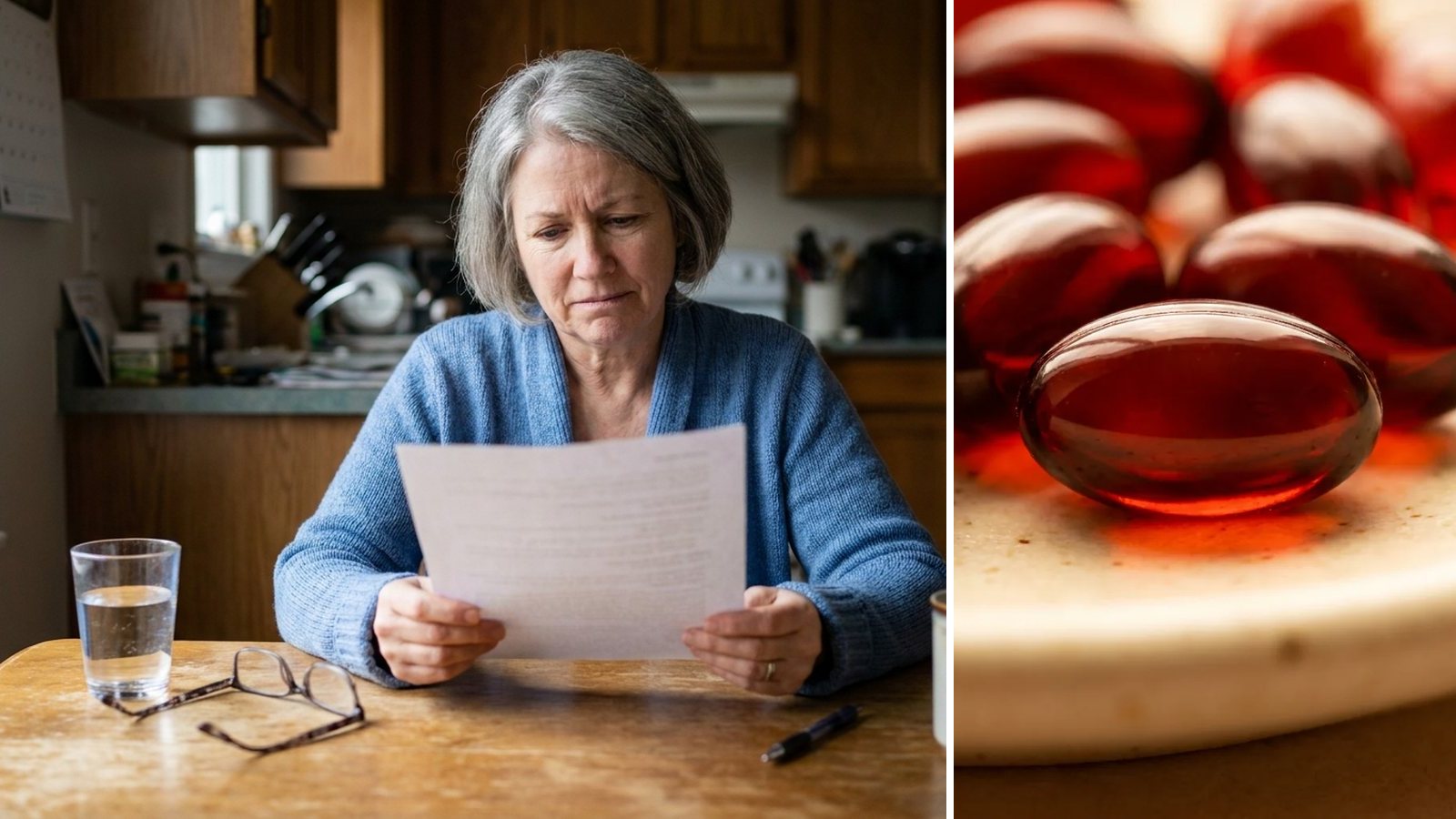
The picturetheirs at 3% of the words · ours at 1%in a different place on their page
Theirs, in our words
#6at 5%●●○○○img · 0 words

A wide, shallow hero picture spans the column. It has no alt text, so the rows cannot say what it shows.

Why it works. Break the text before the argument starts, as a news article would.

Why it sits here, and how it is written

It follows the byline and tabs and comes before the first subhead, the usual place for an article's lead picture. The opening argument therefore begins below the first screen.

It is the only picture in the extract. No product photograph in the five cards was large enough to be captured, if any exists. For a page that claims hands-on testing, no picture of a product in hand is the loudest gap.

Planned for ours, before we wrote: kept the move. CS-P1's hero is our own bag with a caption calling it the top pick, so our winner is revealed on the first screen; this page keeps its hero neutral and holds the winner back until the list. A neutral hero (the five rivals side by side) is a test worth boarding. CS-P1 already shows a branded still in every rival card.

Open on their page ↗
Ours, word for word
A woman in her sixties at a kitchen table reads a lab report. Beside her, a plate of deep red astaxanthin softgels.
Who is speakingtheirs at 3% of the words · ours at 1%
Theirs, in our words
#4at 4%●●○○○2× p · 12 words

A bare byline with a woman's name, then an updated date in July 2026 and a four-minute reading time. No title, no credential, no publication beside the name.

Why it works. Give the first-person voice an owner and a recent date, and promise a short read. earned-authorityease

Why it sits here, and how it is written

It follows the deck because the 'I' of the headline needs a name before the argument starts. The date tells the shopper the ranking is current for the year in the page title.

Thin. A name with nothing behind it asks for trust in a stranger, and the reading time undersells a page of about 1,900 words. No bio, no link, no trace of her elsewhere: treat the tester as an invented persona.

Planned for ours, before we wrote: kept the move. CS-P1 already carries a heavier stamp: a named health editor with sixteen years on the beat, a headshot, a date, a nine-minute read and a press strip. Our editor is a generated persona as well (BRAND log 2026-09-14), so the same question of disclosure applies to us.

See these lines on their page ↗
Ours, word for word
By Carol Whitfield · Retired school secretary, 66
What the page admitstheirs at 0% of the words · ours at 1%in a different place on their page
Theirs, in our words
#1at 0%●●○○○cta · 2 words

A two-word link at the very top marks the page as advertiser-funded. The terms sit behind the click; nothing on the page itself says who pays or who owns the winner.

Why it works. Meet the disclosure duty in the spot readers skip, and borrow the look of an independent review site, where such a link is standard. candor

Why it sits here, and how it is written

It stands above the headline because that is where review publishers put theirs. A reader who meets it first files the page under comparison sites before any claim is made; placed after the pitch it would read as a confession.

Two words, no sentence. It works as costume more than as disclosure: the store that publishes the page also sells the product ranked first, and no line says so in plain words.

Planned for ours, before we wrote: store chrome. CS-P1 has no disclosure link at the top; its 'Advertorial' byline tag was removed on 2026-09-15 and the supplement disclaimer sits in the footer. Whether a top-of-page disclosure returns is David's call. If it does, it names CellScience in plain words.

Open on their page ↗
Ours, word for word
Sponsored. Carol is a composite character. Her story is drawn from what real people have written about their kidney numbers and about astaxanthin.
The opening sceneours at 2%ours only
Theirs, in our words

Nothing on their page does this job here.

Ours, word for word

I found out on a Tuesday, from a sheet of paper. My yearly blood panel had a flag on it.

My kidney numbers had moved the wrong way, and I felt fine. Nothing hurt. My body had not said a word.

r10 row 3

What finally explained that flag did not come from my doctor. It came from one paragraph in a kidney study, which I read at my kitchen table long after midnight.

I rolled my eyes the first time through. Then I read it twice more. I'll give you that paragraph in plain words further down, because it changed what I do every morning.

“That is me”ours at 5%ours only
Theirs, in our words

Nothing on their page does this job here.

Ours, word for word
I felt fine. So why had my kidney numbers moved?

I'm 66. I walk two miles most mornings. I gave up soda years ago, I drink my water, and I watch my salt.

I take what I'm prescribed, and I haven't missed a checkup in eleven years. Sit beside me at church and you'd never guess a thing.

What is at stakeours at 7%ours only
Theirs, in our words

Nothing on their page does this job here.

Ours, word for word

So I sat at my kitchen table with that sheet in my hands, and I felt cheated. If this happens to people who do it right, why do it right?

A sore knee tells you. A bad tooth tells you. Kidneys say nothing, so you find out from a number that has already moved.

The doctor's answerours at 9%ours only
Theirs, in our words

Nothing on their page does this job here.

Ours, word for word
The plan for my kidney numbers: “Let's keep an eye on it.”

My doctor is a good one, and I've seen her for eleven years. She read the sheet and said we'd keep an eye on it. We'd test again in six months.

I had brought a list of questions. I left with a date on a card.

I don't blame her. Watching is her job, and she does it well. But six months is a long time to do nothing about a thing you can't feel.

What she already triedtheirs at 3% of the words · ours at 12%
Theirs, in our words
#7at 6%●●●●○h3 · 9 words

The first subhead says the bulk of astaxanthin products do nothing for the reader's kidneys, and implies the reason is coming.

Why it works. Name the disappointment and tie it to the organ. curiosity-gapidentificationfear-of-decline

Why it sits here, and how it is written

Before any science, the page tells the reader that a flat result is normal and ties it to the organ they came for. It has to come ahead of the criteria, because the criteria are sold as the explanation.

Nine words. The blame moves from people (the base page) to products, and the possessive makes it personal. It promises a kidney-specific reason that the criteria below never give.

Planned for ours, before we wrote: rewritten to our claims. Our version can give the organ-specific reason this page lacks: water-soluble vitamins are flushed through the kidneys, while astaxanthin is fat-soluble and settles into cell membranes (r26, r5). CS-P1 says this in its winner card and FAQ, not in a subhead. r26r5r10

See these lines on their page ↗
Ours, word for word
What I tried for my kidneys while I waited

I went home and did what people do. I tried harder.

More water. Eight glasses a day, then ten. I was up all night, and that was the only thing that changed.

Less salt. I read every label in my kitchen. Dinner got dull. And I had no way to know if my kidneys noticed.

A multivitamin, because the bottle said “complete.” Then a kidney blend with nine herbs I could not pronounce. Forty dollars a month, to feel like I was doing something.

“That is me”ours at 15%ours only
Theirs, in our words

Nothing on their page does this job here.

Ours, word for word

Then an email would come from the patient portal, and I'd feel it in my stomach before I read a word. I doubt I'm the only one who opens those with one eye shut.

Proof: other peopletheirs at 19% of the words · ours at 17%in a different place on their page
Theirs, in our words
#21at 22%●●●○○p · 12 words

Plus point eight joins an unnamed medical endorsement to a customer count above 142,000 and a rating of 4.8 on a five-point scale.

Why it works. Show the crowd and an authority in a single row. social-proofborrowed-authorityspecificity

Why it sits here, and how it is written

Crowd proof lands after the guarantee and just before price: the reader has the facts and the exit and now learns they would not be alone. It is the only social proof until the verdict repeats it.

Label and reason do not match: the label promises doctors, the reason gives customers. No doctor is named and no review platform cited. Count and rating have no source; treat both as unverified.

Planned for ours, before we wrote: our proof in its place. CS-P1 shows a customer count and rating in its sidebar and a comment thread that is still placeholder text (a launch blocker). Our cleared routes are the consumer-panel block once it has run (r17) and the longevity-doctor quote (r19). No number before it is measured. r17r19

See these lines on their page ↗
Ours, word for word
I wasn't the only one with kidney numbers like mine

One night I couldn't sleep. I carried my laptop to the kitchen table and typed my question into a search box.

I landed on a message board. Page after page, people I had never met were writing out my own thoughts.

A man of 71 who walked every day. A retired nurse. A woman younger than my daughter.

What she already triedours at 19%ours only
Theirs, in our words

Nothing on their page does this job here.

Ours, word for word

They were kind to each other, and I was glad of the company. But by the third page I saw what was missing. Everybody had the worry. Nobody had the reason.

The turnours at 20%ours only
Theirs, in our words

Nothing on their page does this job here.

Ours, word for word
The night I read the kidney research for myself

So I left the message board and went looking for the studies themselves.

I read slowly, with a dictionary open in another window. I did not follow all of it. I followed enough.

All my effort had gone into my plate and my water glass. The research was about something smaller, the kidney cell itself.

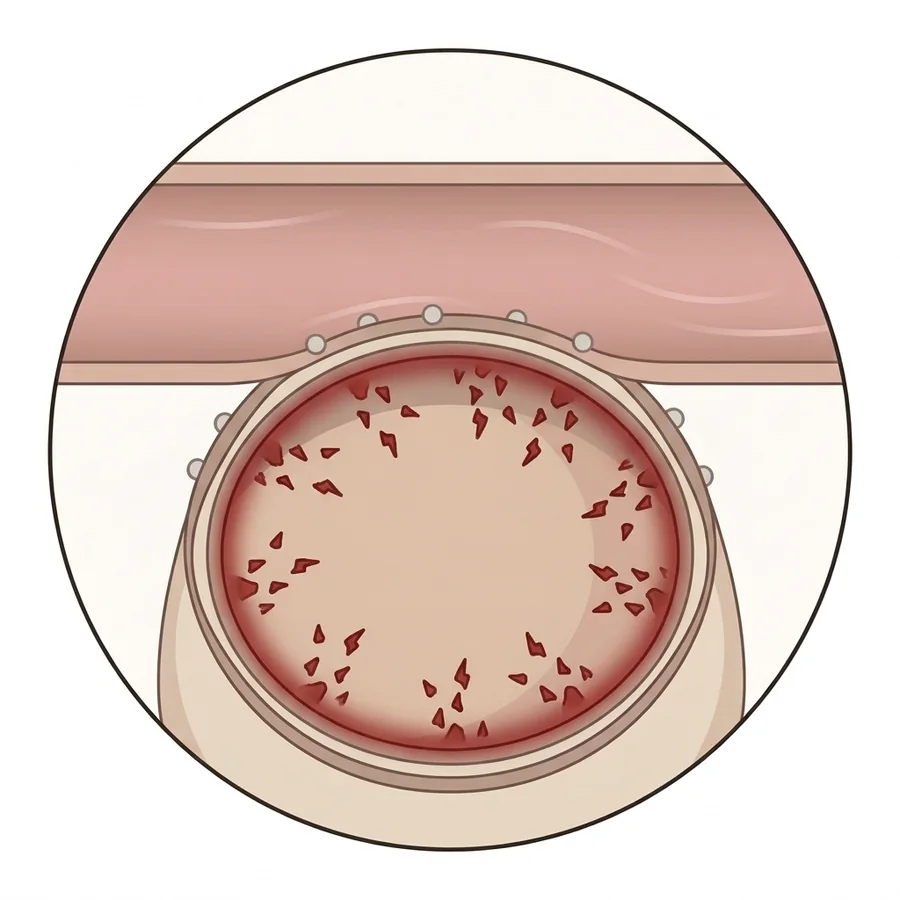
Here's the picture I wish somebody had drawn for me that first Tuesday.

A drawing of one cell. Small red marks of wear gather along the inside of the cell wall.
Where the wear gathers: along the inside of the cell wall.
The causeours at 23%ours only
Theirs, in our words

Nothing on their page does this job here.

Ours, word for word
What wears on your kidneys as you age

All day long, your body makes unstable oxygen molecules. They come from food, from stress, from being alive. They knock into your cells and wear them down, a little at a time.

r1 row 33

When you are young, your body cleans up after them. After 50, the cleanup falls behind.

r1 row 34

Doctors call that wear oxidative stress. It works the way rust does. Slowly, and without a sound.

r1 row 35

Your kidneys filter your blood around the clock, through vessels thinner than a hair. That much work means that much wear, and the lining of those vessels takes it.

r1r10 row 36
Proof: the researchtheirs at 4% of the words · ours at 27%
Theirs, in our words
#8at 7%●●●●○p · 48 words

The writer grants the ingredient's reputation, repeats the count of more than 70 studies, and now ties them to oxidative stress, described as gradual damage to the kidneys and other organs.

Why it works. Protect the ingredient and give the kidney reader a cause to hold on to. borrowed-authorityfear-of-declinenew-mechanism

Why it sits here, and how it is written

Same slot as on the base page, ahead of the flat-result line. Swapping five benefit nouns for one process gives the kidney reader a reason the ingredient concerns them, which the cards never supply.

The benefit list of the base page is gone; a single cause replaces it and the last sentence lengthens to thirty-one words. No kidney study is named. The count is about the ingredient in general, placed beside the organ so the reader makes the link alone.

Planned for ours, before we wrote: our proof in its place. We have the same enemy cleared (r1, reactive oxygen species) and the kidney pillar (r10), with 60+ studies as the count (r14). The same care applies to us: the count is for the ingredient, not for kidneys. CS-P1's intro names the organs studied but not oxidative stress. r1r10r14

See these lines on their page ↗
Ours, word for word
PubMed record: The aging kidney: role of endothelial oxidative stress and inflammation. Csiszar A, Toth J, Peti-Peterdi J, Ungvari Z. Acta Physiologica Hungarica, 2007.
On PubMed: a review of the part that oxidative stress and inflammation in the lining of blood vessels play in the aging kidney. PMID 17444279.

That is the study. The paragraph I promised you is written for scientists, which is why I rolled my eyes. In plain words, the authors make this case. As we age, oxidative stress in the blood vessels has a large part in how a kidney changes.

r1r10 row 38
The doctor's answerours at 29%ours only
Theirs, in our words

Nothing on their page does this job here.

Ours, word for word

In eleven years of checkups, I had never heard those two words. Nobody was hiding them from me. A fifteen-minute visit can only hold so much.

The reason whyours at 30%ours only
Theirs, in our words

Nothing on their page does this job here.

Ours, word for word
Why my vitamins never reached my kidney cells

What I read next sent me to my kitchen counter, to look at every bottle I owned.

The wear starts inside the cell, and no glass of water can rinse in there.

p3 row 42

Vitamin C stays in the fluid around the cell, and vitamin E settles on the surface of the cell wall. Neither one guards the inside.

p3 row 43

Most pills never get even that far. They ride around in your blood. The water-soluble ones get filtered and flushed by the same kidneys you're trying to help.

r5r26 row 44

It's like waxing a car door that's rusting from the inside. The wax is real. It's just on the wrong side.

p3 row 45

By two in the morning I had my own name for it. Rust on the inside. Once you've pictured it, you never look at a vitamin bottle the same way.

p3 row 46
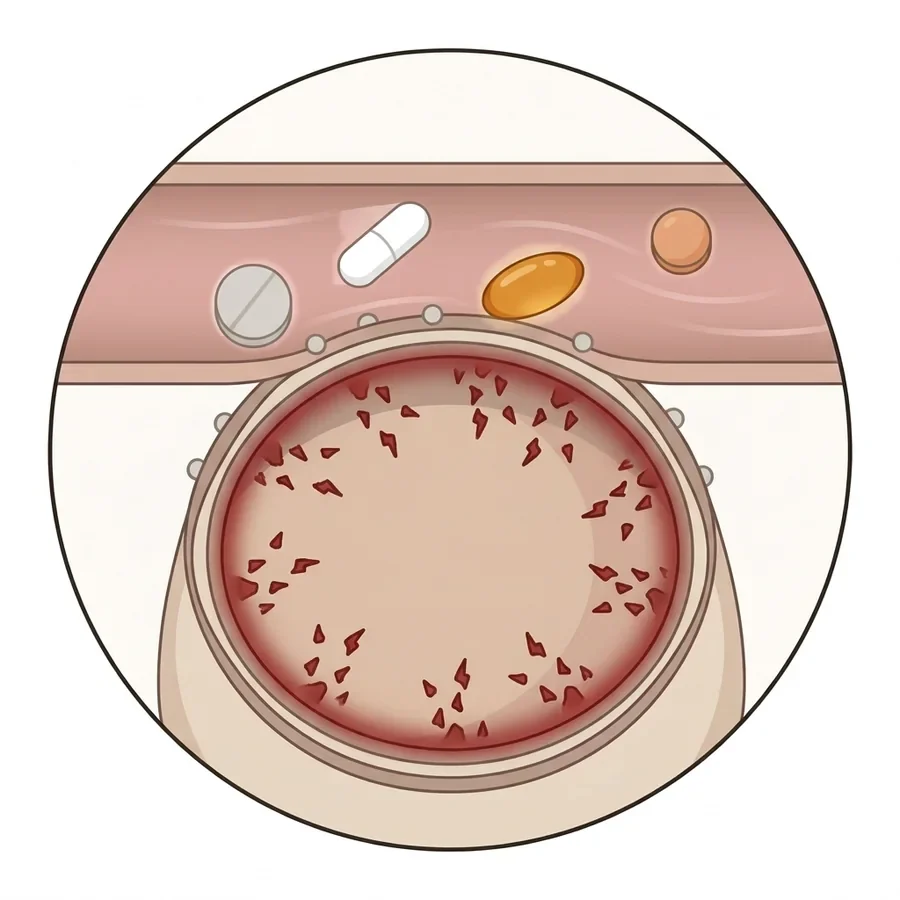
A drawing of a blood vessel beside one cell. Four ordinary pills drift past in the blood. Inside the cell, the red marks of wear are still there.
Ordinary vitamins ride along in the blood. The inside of the cell stays open.
What she already triedours at 35%ours only
Theirs, in our words

Nothing on their page does this job here.

Ours, word for word
Everything I had tried for my kidneys, looked at again

Once I knew where the wear starts, my whole list made sense.

The water and the salt. Good habits, and I've kept both. The water rinsed my blood, but it couldn't rinse the inside of a cell. The low-salt dinners were good for my blood pressure, and that was their whole job.

r5 row 50

The multivitamin and the herbs. The multivitamin was mostly water-soluble, so my kidneys had to filter it out. The nine herbs were nine more things for them to handle.

r26r3 row 51

The vitamin C and the vitamin E in my multivitamin. Real antioxidants, and I still take them. Good as they are, both stop at the door. Every bottle on my counter was wax.

p3 row 52

I don't regret one of those bottles. Each one did the job it was built for.

“That is me”theirs at 6% of the words · ours at 40%
Theirs, in our words
#9at 8%●●●●○p · 20 words

Four clipped second-person beats replay the reader's purchase: the bottle, the months, the waiting, the flat result.

Why it works. Win the first small yes: the reader recognises their own story. mirroringidentificationcommitment

Why it sits here, and how it is written

With the ingredient cleared, the page turns to the reader's experience, so the gap between a proven ingredient and a flat result becomes a puzzle. One line earlier it would have read as an attack on the ingredient.

One beat longer than the base page and weaker for it: the added wait delays the letdown and the trailing pause is gone. Twenty words. Still the most spoken line on the page.

Planned for ours, before we wrote: kept the move. CS-P1 has no second-person replay of a failed purchase; its intro speaks of what the reader was told to take. A three-beat mirror about the cabinet of vitamins fits our reader in their 60s and 70s (r3, r23). r3r23

See these lines on their page ↗
Ours, word for word

Now I'll tell you something I had never said out loud. When that number moved, I thought it was me. A dinner out. A walk I skipped. Some weakness of mine.

That night, at my kitchen table, with a cup of tea gone cold, I felt my shoulders come down. It was the first time in months.

The causetheirs at 7% of the words · ours at 42%
Theirs, in our words
#10at 9%●●●●○p · 40 words

The writer clears the ingredient and blames products whose dose or form the body cannot take up, adding that the ingredient then never arrives at the organs.

Why it works. Name the villain (the way most bottles are made) and carry the fault through to the organ. vindicationcommon-enemyreason-why

Why it sits here, and how it is written

It answers the puzzle the previous line opened. Criteria can only be introduced now, because a test needs a fault to look for. The blame falls on a whole category, so every rival below starts under suspicion.

Longer and more causal than the base version: dose joins form as a fault, and a consequence clause carries the blame to the organs. Forty words in two sentences; the second runs long.

Planned for ours, before we wrote: rewritten to our claims. Our honest villain is the unverified label: about 64% of unverified astaxanthin products fail potency testing (c1), and many brands sell 4 to 6 mg (b7). What reaches the cell is ours to explain (r5). CS-P1 holds the first two in its method box and the third in its intro. c1b7r5

See these lines on their page ↗
Ours, word for word
My kidney numbers were never about how hard I tried

The whole thing was about where my trying could reach.

p3m2 row 57

For months I thought I was failing. I was not. I had been waxing the outside of a door that rusts from the inside. I'll admit I was a little cross about all that blame.

The turntheirs at 10% of the words · ours at 44%
Theirs, in our words
#11at 10%●●●●○p · 24 words

The writer says her own reading of the studies yields three deciding factors, and frames the choice as reaching the kidneys or passing through the body.

Why it works. Hand over from problem to criteria, with the writer's homework as their source. earned-authorityopen-loopspecificity

Why it sits here, and how it is written

It is the hinge of the top third. The villain is named, so the reader now wants the test for it, and the count of three promises the test is short. It has to precede the list or the grades would have no yardstick.

The edit removed the clause that joined the two halves, so the sentence now reads as a splice: a sign of quick find-and-replace. The closing bodily image survives and now has an organ as its opposite.

Planned for ours, before we wrote: kept the move. CS-P1 has this hinge in the editorial plural: five products bought, every label read, three things ranked. Ours rests on reading each rival's own page on a stated date, which is true. One mismatch to fix: CS-P1's subhead says three tests and its method box lists five things; this page holds the count at three until the scoring line.

See these lines on their page ↗
Ours, word for word

By breakfast I had a new question. What works from the inside?

How the list was rankedtheirs at 11% of the wordstheirs only
Theirs, in our words
#12at 11%●●●●○h2 · 9 words

A section heading presents three factors as requirements for any product in the category.

Why it works. Turn the writer's view into a rule that the products below can pass or fail. specificityreason-why

Why it sits here, and how it is written

It sits between the problem and the list, so the yardstick is accepted before the reader knows who profits from it. A reader who agrees here has half agreed with the ranking.

Nine words with a number and a verb of obligation: the register of a buyer's guide.

Planned for ours, before we wrote: kept the move. CS-P1 has a method box headed as five deciding things. Keep it, but let the heading count match the three score bars on every card (the full 12 mg in one softgel, third-party lab tested, cost per day). b7c1

See these lines on their page ↗
#13at 12%●●●●○h3 · h4 · 7 words

Criterion one is dose, with 12 mg named as the amount clinical work uses. Only the title shows; the explanation is folded away.

Why it works. Set the number every product will be measured against, a number that happens to be printed on the seller's own label. anchoringborrowed-authorityspecificity

Why it sits here, and how it is written

Dose goes first because it is the easiest thing to check on a label and the one test the last-placed rival will fail. The first criterion frames how the other two are read.

Six words. The phrase borrows the authority of trials without citing one. With the body collapsed, the claim is asserted, not argued.

Planned for ours, before we wrote: kept the move. CS-P1 already leads its method box and its score bars with this: the full 12 mg in one softgel, the dose the human trials used (b7, b9). b7b9

See these lines on their page ↗
#14at 13%●●●○○h3 · cta · 6 words

Criterion two is origin: natural microalgae, tied in capital letters to how well the body can use the ingredient. The explanation is again folded away.

Why it works. Rule out synthetic product and link origin to absorption. reason-whycontrast

Why it sits here, and how it is written

After quantity comes quality: once 12 mg is accepted, the next doubt is whether all 12 mg are equal. Source precedes delivery because delivery only matters if the raw material is right.

The capitals shout where the first criterion spoke; the inconsistency looks like an unfinished template. The one technical word in the top third goes unexplained on the surface.

Planned for ours, before we wrote: kept the move. CS-P1's method box has this criterion and says openly that all five rivals pass it, so it did not decide the ranking: a candor move this page lacks. Rests on natural microalgae as the form the human studies used (c4), synthetic made from petrochemicals (r16), closed bioreactors (c5). c4r16c5

Open on their page ↗
#15at 13%●●●○○h3 · cta · 6 words

Criterion three is format, set up as a contest between oil-filled softgels and dry powder capsules.

Why it works. Add a format test that softgels pass and powder capsules fail. contrastreason-why

Why it sits here, and how it is written

Last of the three because it is the least intuitive: the reader needed dose and source first to care how the dose travels. It closes the loop the intro opened about a form the body can use.

Five words built on a versus. No product in the list is a dry powder, so this criterion eliminates nobody on the page: it explains the intro and sorts nothing.

Planned for ours, before we wrote: rewritten to our claims. A carrier-oil or oil-format superiority claim is banned for us (b8). What holds: astaxanthin is fat-soluble (r26) and is taken with a meal that has some fat (r31). CS-P1 does not use a delivery axis; its second bar is third-party lab tested (c1, c3), the test that does separate our product. r26r31c1c3

Open on their page ↗
#16at 14%●●●●○h2 · p · 34 words

The list title is unchanged and names no organ. The method sentence now says the five were scored on what decides a benefit to the kidneys: the three criteria plus value.

Why it works. Open the ranking and state the scoring basis in a breath, slipping in the yardstick that will do the real sorting. specificityearned-authority

Why it sits here, and how it is written

It stands at the threshold of the cards. It is the last organ mention for a long stretch: the cards that follow are identical to the base page, so this line has to carry the kidney frame across five generic cards.

The organ is bolted onto the method with a colon; the four yardsticks are those of the base page. Nothing in the scoring is kidney-specific. The test is asserted and never shown; treat it as unverified.

Planned for ours, before we wrote: kept the move. CS-P1 states its method more fully (five points, each with its reason, including the 64% figure, c1) and shows scores per axis. Keep ours. Worth taking: one plain sentence of method directly above the first card. c1b7

See these lines on their page ↗
Ours, word for word

Nothing on our page. The plan on the left says why.

A product cardtheirs at 14% of the wordstheirs only
Theirs, in our words
#17at 16%●●●●●h2 · h3 · 2× p · 9 words

Card one names the seller's own 12 mg product as rank one, gives the maker line and stamps it with the top letter grade. This is the product reveal.

Why it works. Reveal the product as the winner of a test, not as the advertiser. anchoringearned-authority

Why it sits here, and how it is written

The winner comes first, about a sixth of the way down: a shopper who reads one card reads this one, and every later card is judged against it. The criteria just above make the grade feel derived.

Four rows, nine words. A letter grade is a shrewd unit: everyone has been graded at school, and a letter hides the absence of a scoring sheet. No sub-scores appear; the grade has no stated method.

Planned for ours, before we wrote: kept the move. CS-P1 already ranks our product first, with a ribbon and three numeric score bars. Ours is the stronger form because the axes are visible. Name it as CS-P1 does: CellScience Astaxanthin 12mg, The Cell Shield.

See these lines on their page ↗
#18at 18%●●●●●h2 · 3× p · 39 words

The first three plus points restate the three criteria in the same order (dose, source, delivery), each with a short reason after a colon.

Why it works. Show a clean sweep of the yardstick the reader accepted a minute ago. loop-closedreason-whyspecificity

Why it sits here, and how it is written

They lead the list while the criteria are still fresh; the matching order makes the grade look like arithmetic. Any other order would hide the fit.

Label, colon, reason: a mould a skimmer reads in two seconds a row. The first reason slips into the first person, which keeps the tester in the room. Row two holds the only named place of origin for an ingredient on the page.

Planned for ours, before we wrote: kept the move. CS-P1's winner pros open with dose and testing, matching its first two score bars (b7, b9; c1, c3); the third bar, cost per day, has no pro. Origin follows (c4, c5). Whether a cost-per-day pro returns to the card is David's call (price line removed 2026-09-15). No oil claim (b8). b7b9c1c3c4c5

See these lines on their page ↗
#19at 20%●●●○○3× p · 37 words

Three trust points follow: outside-lab checks of purity and strength, a free-from label, and domestic manufacture in a certified facility.

Why it works. Supply the quality signals a cautious buyer checks after the formula. borrowed-authorityobjection-preempt

Why it sits here, and how it is written

With the formula accepted, the next question is whether the label can be believed. These come before the money points so that price is read as a bonus on a sound product.

Same mould. No lab is named, no report linked, no batch number given: testing is claimed in a phrase. The free-from row is three hyphenated adjectives in a line.

Planned for ours, before we wrote: our proof in its place. Here our page is the stronger one: every batch third-party lab tested (c3, worded as 'lab tested' per the 2026-09-15 verdict) in a category where about 64% of unverified products fail (c1). Badges per r18: cGMP, Made in USA, gluten-free; vegan only if the shell is. CS-P1 has the testing line and no badge row in the card. c1c3r18

See these lines on their page ↗
Ours, word for word

Nothing on our page. The plan on the left says why.

The guaranteetheirs at 19% of the wordstheirs only
Theirs, in our words
#20at 22%●●●●○p · 9 words

Plus point seven is the refund window: ninety days, with the promise put as a plain either-or.

Why it works. Remove the risk of being wrong a second time. risk-reversal

Why it sits here, and how it is written

It follows the trust points and precedes crowd and price: a reader burned by one flat bottle needs the exit before the numbers. Inside a pros list a guarantee reads as something the tester found, not a sales promise.

Nine words. The second half is a slogan with rhythm: two short clauses joined by a conjunction.

Planned for ours, before we wrote: our offer in its place. Ours is the 30-Day Money-Back Guarantee, keep the bag (BRAND section 3; the gate's 90-day wording in r22 is superseded by the lock of 2026-09-12). CS-P1's winner pros already end on it.

See these lines on their page ↗
Ours, word for word

Nothing on our page. The plan on the left says why.

The offertheirs at 20% of the wordstheirs only
Theirs, in our words
#22at 22%●●●●○p · 15 words

The last plus point is price: $29.99 for today, a first-order discount of up to 70 percent and free domestic shipping.

Why it works. Put the deal inside the review, so the reader reaches the link already knowing it. anchoringurgency

Why it sits here, and how it is written

Price closes the list: eight reasons first, the number last. Stated inside card one, it becomes the reference every rival price below is measured against.

Three offers in fifteen words. Two time words hint at a deadline without stating one. The discount ceiling and the single price do not add up on their face, and no reason for the discount is given.

Planned for ours, before we wrote: our offer in its place. Ours: one bag $29.99, three bags $59.97, five bags $89.95, free shipping on every tier (BRAND section 3; the five-bag tier carries x4). CS-P1 took the price line out of the winner card on 2026-09-15 and states price in the CTA block. This page shows what an in-card price does to the rival cards below; David's call. x4

See these lines on their page ↗
Ours, word for word

Nothing on our page. The plan on the left says why.

A product cardtheirs at 20% of the wordstheirs only
Theirs, in our words
#23at 23%●●●○○h2 · 2× p · 20 words

The winner's two minus points: it is sold only through the maker's own site, and multi-packs run out during sales.

Why it works. Look balanced while adding exclusivity and scarcity. candorexclusivityscarcity

Why it sits here, and how it is written

A pros list with no cons would break the review format. They follow the price, so the first thing the reader does with the price is worry about availability.

Two rows against nine. Neither is a fault in the product; both are reasons to act now. It is the oldest device in the format and a careful reader will see through it.

Planned for ours, before we wrote: kept the move. CS-P1's 'worth knowing' block has the same two (official site only, r29; launch pricing on the multi-bag tiers) and adds a real limit: it is a daily supplement, not a treatment. Keep the real limit first; it is what makes the block believable. r29

See these lines on their page ↗
#24at 25%●●●○○h3 · p · 26 words

Under the verdict label the tester says this was the only product needing no trade-off, and tells readers who take the ingredient for their kidneys that it covers what counts.

Why it works. Turn the list of points into a personal judgement. earned-authoritycontrast

Why it sits here, and how it is written

Lists persuade skimmers; a judgement in a voice persuades readers. It follows the cons so the last word on the product is the tester's and not the drawbacks'.

The filler second sentence of the base page is replaced by one that addresses the kidney reader directly. It is the only organ mention in the winner's card until its bottom line.

Planned for ours, before we wrote: kept the move. CS-P1 has this as a boxed paragraph explaining the top spot: the only product that passes all three tests at once, with the kidneys named in the paragraph under it (r26). Same move, more specific. Keep ours. b7c1c3r26

See these lines on their page ↗
Ours, word for word

Nothing on our page. The plan on the left says why.

The reason whyours at 45%ours only
Theirs, in our words

Nothing on their page does this job here.

Ours, word for word
What the right nutrient would have to do for a kidney cell

So I wrote down what I was looking for. Three things.

It had to reach the inside of the cell, where the wear starts. It had to guard the cell wall on both sides, inside and out. And it couldn't be one more thing for my kidneys to filter.

m2r26 row 62

That last one ruled out almost everything on the shelf.

The turnours at 47%ours only
Theirs, in our words

Nothing on their page does this job here.

Ours, word for word
The red nutrient that kept coming up as I read about my kidneys

The same pigment kept showing up in the papers I read. It's deep red, and a tiny freshwater algae makes it. Wild salmon get their color from it.

r15c4 row 65

It had a name I had to practice. Astaxanthin. You say it asta-ZAN-thin.

The reason whyours at 49%ours only
Theirs, in our words

Nothing on their page does this job here.

Ours, word for word

Astaxanthin is a long molecule, long enough to lie across the whole cell wall. One end rests on the outside. The other end rests on the inside.

m2 row 67

So it guards the inside, where the rust starts and my vitamins never reached. It guards the outside as well. It also reaches the eyes and the brain.

m2r5r6b3 row 68

When I first read that, it sounded too tidy to be true. So I kept reading.

Proof: the researchours at 51%ours only
Theirs, in our words

Nothing on their page does this job here.

Ours, word for word

It held up. There are more than 60 clinical studies on astaxanthin. In lab tests it has 6,000 times the power of vitamin C against one kind of unstable oxygen.

r14m3 row 70
What the research said about kidney cells, and what it didn't
The reason whyours at 53%ours only
Theirs, in our words

Nothing on their page does this job here.

Ours, word for word

I had stayed up that night for my kidneys. They do all that filtering through vessels thinner than a hair, and kidney cells were where I wanted a guard.

r10 row 72
Proof: the researchours at 54%ours only
Theirs, in our words

Nothing on their page does this job here.

Ours, word for word

One more finding, and I want to be careful with it. In lab work on kidney cells, astaxanthin also switched on the cell's own defenses. That was cells in a lab, not people. I still thought it was worth knowing.

r10b4 row 73
The turnours at 55%ours only
Theirs, in our words

Nothing on their page does this job here.

Ours, word for word

That was enough for me. I'd keep doing everything my doctor asked, and I'd add one thing of my own.

b9r10 row 74

All I wanted was something I could start on a Monday morning, without waiting six months to begin.

The doubt, answeredours at 57%ours only
Theirs, in our words

Nothing on their page does this job here.

Ours, word for word
“Isn't that one more pill for my kidneys?”

That was my first question too. I had read the stories about supplements being hard on kidneys.

The answer is in how it dissolves. Most supplements dissolve in water, so your kidneys filter them and flush them. Astaxanthin dissolves in fat. It gets taken up into the cell wall.

r26 row 78

So one softgel is less work for your kidneys than most multivitamins.

r26 row 79

That left me with two fears. A softgel with too little in it. Or a softgel with things in it I didn't want.

Why this onetheirs at 23% of the words · ours at 60%
Theirs, in our words
#25at 26%●●○○○2× p · 62 words

Two paragraphs replay the formula and the trust points as prose: dose, softgel and algae origin set against cheaper synthetic product, then testing, facility and label named as what settled it.

Why it works. Give the reader who skipped the list the same case in sentences, with a swipe at unnamed cheap brands. contrastcommon-enemyreason-why

Why it sits here, and how it is written

The repetition is deliberate: the page is built so that a reader entering at any point meets the three criteria. The swipe at synthetics is safe here because none of the four rivals below is synthetic.

It sags. Both paragraphs are lists in sentence clothing, thirty-one words each. The one lively phrase is the jab about petrochemicals; a short idiom of decision keeps the voice alive.

Planned for ours, before we wrote: our proof in its place. CS-P1's winner body does this in two paragraphs with our facts: natural microalgae (c4), closed bioreactors (c5), fat-soluble so less for the kidneys to handle (r26), and the organs named. The contrast with synthetic product is cleared (r16). c4c5r16r26

See these lines on their page ↗
Ours, word for word
Three things to check on any astaxanthin label

I thought any bottle would do. I was wrong about that too.

The dose. Look for 12 mg in one softgel. Many brands carry 4 to 6 mg.

b7 row 83

The source. Natural astaxanthin comes from microalgae. The other kind is synthetic, and it starts as petrochemicals. The label should say which.

c4r16 row 84

The proof. In one outside analysis, about 64% of untested astaxanthin products came up short on potency. I wanted every batch tested by an outside lab, not a promise on a label.

c1 row 85
Proof: other peopletheirs at 26% of the wordstheirs only
Theirs, in our words
#26at 28%●●●○○p · 43 words

The verdict ends on numbers: the customer count, the rating and the doctors again, then the routine (one softgel daily, thirty in a pouch) and the ninety-day window.

Why it works. Close the verdict on crowd, ease and safety in one paragraph. social-proofeaserisk-reversal

Why it sits here, and how it is written

The crowd comes last in the verdict, so the personal judgement is backed by numbers just before the bottom line restates the deal.

Forty-three words, the longest paragraph in the card, and it changes subject twice. Its opening clause admits the numbers are there as backup, which is honest about their job.

Planned for ours, before we wrote: our proof in its place. Ours: one softgel a day with a meal (b9, r31), thirty to a bag, the 30-Day Money-Back Guarantee. Crowd numbers only once measured (r17). CS-P1 has the routine and the guarantee in the winner pros and no crowd line in the card. b9r31r17

See these lines on their page ↗
Ours, word for word

Nothing on our page. The plan on the left says why.

The product is namedours at 63%ours only
Theirs, in our words

Nothing on their page does this job here.

Ours, word for word

One softgel cleared every line on my late-night list. CellScience Astaxanthin. The full 12 mg in one softgel. Natural microalgae, grown in sealed tanks so nothing from outside gets in, with no heavy metals. And every batch is third-party lab tested.

b7c4c3c5 row 86

CellScience has a name for what astaxanthin does across the cell wall. They call it The Cell Shield. After what I had read, the name made sense.

m2 row 87
Why this onetheirs at 28% of the words · ours at 65%
Theirs, in our words
#27at 29%●●○○○h3 · p · 33 words

A bottom-line label, then a contrast: many brands cut corners on each criterion, and this one is pitched at readers after kidney support and not an overpromising label.

Why it works. Recast the three criteria as three ways rivals cheat, and flatter the buyer. common-enemycontrastidentification

Why it sits here, and how it is written

A second summary label inside one card gives the scanner another entry point. It turns the criteria from tests into accusations just before the price is repeated.

The cliché of the base page gives way to a jab at overpromising labels, which is sharper. The claim word stays at support.

Planned for ours, before we wrote: rewritten to our claims. We may say brands underdose at 4 to 6 mg (b7), that synthetic astaxanthin is made from petrochemicals (r16) and that most unverified products fail potency tests (c1). We may not make the capsule-against-oil point (b8). CS-P1 has no second summary inside the winner card. b7r16c1

See these lines on their page ↗
Ours, word for word
The astaxanthin label I printed for my doctor

One active ingredient. Astaxanthin, and nothing hiding behind it. The rest of the softgel is only there to hold it together. No blend of nine herbs.

c5 row 89
The offertheirs at 30% of the wordstheirs only
Theirs, in our words
#28at 30%●●●○○p · 34 words

One sentence stacks the three criteria and then the deal: today's price, the first-order discount and free shipping.

Why it works. Tie the price to the three reasons, so the number reads as low for what it buys. anchoringreason-why

Why it sits here, and how it is written

Second statement of the price, now in a sentence that leads with value. It sits three rows above the link, so the deal is the freshest thing in mind at the click.

Thirty-four words in a single sentence that reads like a list with commas. A two-word pivot marks where it turns from product to price.

Planned for ours, before we wrote: our offer in its place. CS-P1 keeps price out of the winner card (David's edit of 2026-09-15) and puts the per-bag price of the five-bag tier in the CTA block under it. Same slot, one step lower on the page. x4

See these lines on their page ↗
Ours, word for word

Nothing on our page. The plan on the left says why.

The guaranteetheirs at 32% of the wordstheirs only
Theirs, in our words
#29at 32%●●●●○p · 40 words

The card's last paragraph notes the absence of fillers, restates the ninety-day refund and argues that the window is long enough for a fair trial.

Why it works. End the card on safety, and give the length of the window a reason. risk-reversalreason-whyobjection-preempt

Why it sits here, and how it is written

The guarantee is the last argument before the link because the doubt left, after one flat bottle, is whether this one will differ. Giving the ninety days a purpose answers how long until the reader will know.

Three sentences. The filler point is a stray that belongs with the label claims. The final sentence gives the guarantee a job, which most guarantee copy forgets.

Planned for ours, before we wrote: our offer in its place. 30-Day Money-Back Guarantee, keep the bag. Our window is shorter, so its reason is what shows inside thirty days: steadier energy in weeks one to two (r7), eye strain relief in 14 to 28 days (b6). CS-P1 says this in its FAQ and timeline, not in the winner card. r7b6

See these lines on their page ↗
Ours, word for word

Nothing on our page. The plan on the left says why.

The doubt, answeredours at 66%ours only
Theirs, in our words

Nothing on their page does this job here.

Ours, word for word

A label that short is easy to show a doctor, so I printed it and took it in. She read it and added it to the list of what I take. Then she told me to keep my six-month date, softgel or no softgel.

r27 row 90
What the page admitstheirs at 34% of the words · ours at 68%
Theirs, in our words
#30at 33%●○○○○fine · 25 words

Small print under the winner's card says outcomes reflect individual users and are not typical, and refers the reader to the product's own site.

Why it works. Legal cover for the claims in the card.

Why it sits here, and how it is written

It sits between the last argument and the link in the smallest type on the page: present for a regulator, invisible to a reader moving toward the click.

Boilerplate of twenty-five words. It speaks of users' experiences although the card quotes no user.

Planned for ours, before we wrote: store chrome. CS-P1 carries the supplement disclaimer once, in the footer. No per-card small print is needed.

See these lines on their page ↗
Ours, word for word

If you have a diagnosed kidney condition, or you take blood thinners, show your doctor the label before you start.

r27r28 row 91
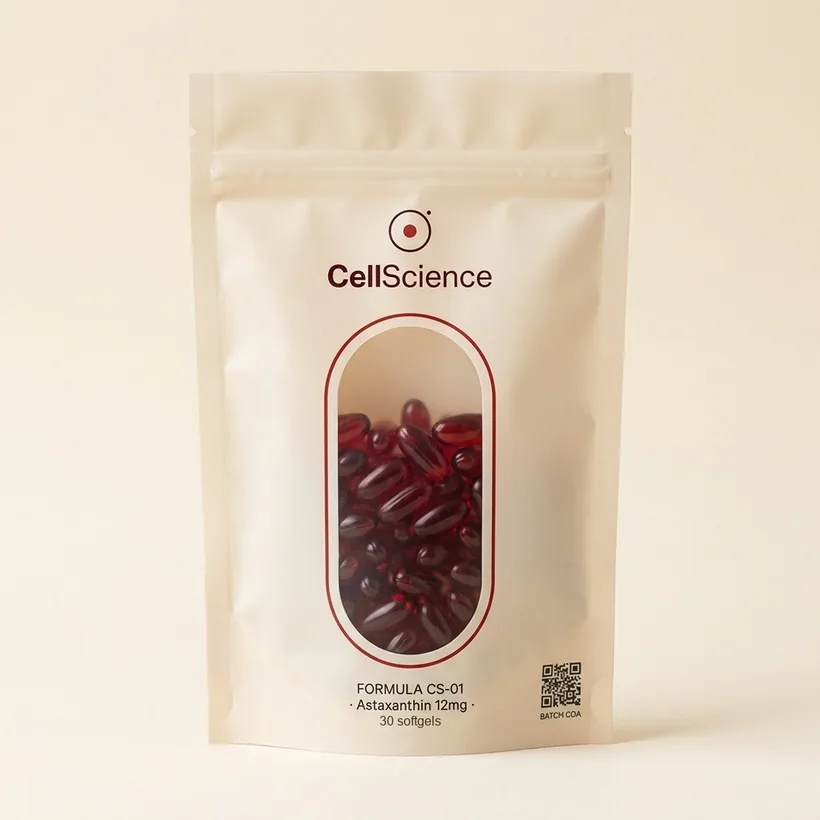
A bag of CellScience Astaxanthin 12 mg softgels
CellScience Astaxanthin: 12 mg of natural astaxanthin in one softgel.
The guaranteeours at 69%ours only
Theirs, in our words

Nothing on their page does this job here.

Ours, word for word

What got me to order was the guarantee. It is a 30-Day Money-Back Guarantee, and you keep the bag. The worst case was thirty days and my money back.

r22 row 93
The buttontheirs at 35% of the words · ours at 70%
Theirs, in our words
#31at 34%●●●●○p · 5 words

The first link out: a low-pressure invitation to read more about the winner, with an arrow. It asks for a look, not a purchase.

Why it works. Offer the smallest next step to the reader who is already persuaded. commitmentease

Why it sits here, and how it is written

It stands at the end of card one, a third of the way down: the first point at which the whole case (criteria, grade, price, guarantee) has been made once. Any earlier and the review pose would break.

Five words and a plain verb. Keeping the word for buying out of the link keeps the page in character as a review.

Planned for ours, before we wrote: kept the move. CS-P1 already places its primary CTA block directly after the winner card, with a harder button that carries the guarantee. A softer text link in the same slot is a test, not a gap.

See these lines on their page ↗
Ours, word for word
Try The Cell Shield
30-Day Money-Back Guarantee · Free US shipping
A product cardtheirs at 36% of the wordstheirs only
Theirs, in our words
#32at 35%●●●○○2× h2 · 2× p · 9 words

Card two names Rovina's 12 mg product at rank two with the next grade down, a single step below the top.

Why it works. Set up a close runner-up so the ranking looks like a contest. contrastcandor

Why it sits here, and how it is written

It follows the winner's link: the reader who did not click now sees that the reviewer can praise a competitor. A near-equal second place is what makes first place believable.

The same four-row header as card one, so the eye compares like with like. The gap is one grade step.

Planned for ours, before we wrote: kept the move. CS-P1 also has Rovina at rank two, marked down on its dose axis: four softgels a day to reach 12 mg, read on its own page on 2026-09-14. The two pages disagree on facts (this one says the count per bottle is not listed; we found sixty to a bag). Use only what we read ourselves.

See these lines on their page ↗
#33at 37%●●●○○h2 · 5× p · 32 words

Five plus points credit the rival with the full dose, algae origin, a coconut-oil base, a ninety-day refund and independent checks: it passes every criterion.

Why it works. Concede the formula to the rival in full. candorconsensus

Why it sits here, and how it is written

Praise comes first: a rival that passes all three criteria proves the criteria were not rigged for one brand. It has to precede the cons so the markdown reads as fair.

Shorter rows than the winner's, five to seven words each, and nine rows shrink to five. The brevity is itself a ranking signal.

Planned for ours, before we wrote: kept the move. CS-P1's rival cards each carry three pros, every one read from the rival's own page. Same move; ours is sourced.

See these lines on their page ↗
#34at 39%●●●●○h2 · 4× p · 27 words

Four minus points, none about the formula: a price near $39.99, best pricing tied to auto-ship, softgel count not shown, and online-only sales.

Why it works. Mark the rival down on money and buying terms. anchoringloss-aversioncontrast

Why it sits here, and how it is written

The rival's price appears only after the winner's $29.99 has been stated twice, so ten dollars more needs no comment. Commercial cons keep the markdown defensible.

The mould again, six words a row. The online-only point is the same fact the winner's own cons carried as exclusivity: the page faults a rival for what it treats as a virtue in itself.

Planned for ours, before we wrote: kept the move. CS-P1 marks Rovina down on routine (four softgels a day), supply (fifteen days to a bag) and test results available only on request, with price shown as a tier symbol. Ours is stronger because each con is a label fact. Do not borrow theirs.

See these lines on their page ↗
#35at 41%●●●○○h3 · 2× p · 104 words

The verdict praises the rival's fundamentals, places it just behind the winner on price and sales model, flags the missing softgel count and credits its refund window.

Why it works. Explain the one-step gap in the tester's voice and show fairness. candorreason-whycontrast

Why it sits here, and how it is written

The reader has seen equal formulas and needs a reason for unequal grades. The prose supplies it and names the winner again inside the rival's card.

A paragraph of sixty-six words, then one of thirty-six. Conversational and exact on price. It repeats the cons nearly item for item.

Planned for ours, before we wrote: kept the move. CS-P1's rival bodies have the same shape: two paragraphs, praise first, then label facts. Already there.

See these lines on their page ↗
#36at 45%●●●●○h3 · p · 42 words

The rival's bottom line recommends it only as the fallback should the winner be out of stock, then repeats that it costs more but is an honest formula with a long refund window.

Why it works. Turn the runner-up into a reminder that the winner may run out. scarcitycandoranchoring

Why it sits here, and how it is written

It closes the strongest rival's card, the point where a reader might defect. The fallback framing sends them back up the page, and no link to the rival is offered.

The opening conditional is the cleverest sentence in the rival cards: a recommendation that sells the other product.

Planned for ours, before we wrote: rewritten to our claims. CS-P1's rival cards end on a price tier and a short verdict tag, not on a fallback line. The device transfers only with a true stock statement; we have launch pricing on the multi-bag tiers, not a stock limit. Without one, the pointer back to rank one is the part to keep.

See these lines on their page ↗

Ours, word for word

Nothing on our page. The plan on the left says why.

What the page admitstheirs at 47% of the wordstheirs only
Theirs, in our words
#37at 46%●○○○○fine · 22 words

Small print under the rival's card credits the results to a named ranking system that belongs to another review publisher: a leftover from the template this page was cloned from.

Why it works. Legal cover, left unedited.

Why it sits here, and how it is written

It sits at the foot of each rival card by template habit. Its content gives away the page's origin: the chassis of a third-party review site, reused by a seller.

A tell. The system it names appears nowhere else on the page, and the footer claims a different publisher. Treat the ranking system as nonexistent here.

Planned for ours, before we wrote: left out. Nothing to take. CS-P1's builder asserts that no donor string survives the purge; keep that assertion.

See these lines on their page ↗
Ours, word for word

Nothing on our page. The plan on the left says why.

A product cardtheirs at 48% of the wordstheirs only
Theirs, in our words
#38at 48%●●○○○2× h2 · h3 · p · 11 words

Card three names Double Wood's product at rank three, with a grade in the B band, one step below the runner-up.

Why it works. Open the value tier of the ranking. contrast

Why it sits here, and how it is written

By the third card the reader expects a drop. The step from the A band to the B band marks where nearly-as-good ends and good-for-the-money begins.

The same header mould. The grade ladder so far is evenly spaced, which makes it look computed.

Planned for ours, before we wrote: kept the move. CS-P1's rank three is BioAstin; Double Wood is not in our list. Keep our own four rivals, each verified on its own page and each the same species of product (CL-13).

See these lines on their page ↗
#39at 49%●●●○○h2 · 4× p · 29 words

Four plus points: a full 12 mg of a branded extract, outside testing in a certified US facility, about $25.95 for sixty softgels, and a free-from formula.

Why it works. Concede that a cheaper product passes the criteria. candorspecificity

Why it sits here, and how it is written

The lower price is admitted openly, two cards after the winner's price was set. The page has to deal with the bargain somewhere and does it mid-page, where fewer readers are.

The branded extract name appears unexplained; a stranger would not know it is an ingredient supplier. The price row is the most exact on the page: dollars, cents and count.

Planned for ours, before we wrote: kept the move. CS-P1 concedes value openly in its Sports Research card (lowest cost per day on the list). Already there.

See these lines on their page ↗
#40at 52%●●○○○h2 · 5× p · 38 words

Five minus points, all cosmetic or circular: a plain bottle, no added vitamins, olive oil as the carrier, mostly direct sales, and no bonus ingredients. The second and fifth are one point stated twice.

Why it works. Mark down a product that beats the winner on price per softgel, without touching its formula. contrastanchoring

Why it sits here, and how it is written

The rival passed all three criteria and costs less for twice the count, so the markdown has to come from outside the criteria. The cons follow the price row at once, to blunt it.

The weakest list on the page. Packaging is not a criterion, and a single-ingredient formula is what the winner is too. A reader doing the arithmetic will see the winner costs more per softgel.

Planned for ours, before we wrote: left out. We do not invent cosmetic faults: CS-P1's rule is rival copy that is accurate and fair, every line read on the rival's page. Where a rival is cheaper, CS-P1 says so and wins on the lab-testing bar (c1, c3). c1c3

See these lines on their page ↗
#41at 54%●●●○○h3 · 2× p · 87 words

The verdict admits surprise, credits the full dose at about $26 in an olive-oil base and the testing, and concedes only a plain bottle and no extra antioxidants.

Why it works. Earn credibility by praising a bargain. candorspecificity

Why it sits here, and how it is written

Mid-page, with the winner's case already made, generous praise costs little and buys trust for the final recommendation.

It opens on a three-word sentence with real voice, and the quip about looks is the only joke on the page. Thirty-two and fifty-three words: the praise outruns the criticism.

Planned for ours, before we wrote: kept the move. CS-P1 does this in its value-pick card, which opens by granting that the rival would win on price alone. Already there.

See these lines on their page ↗
#42at 58%●●●○○h3 · p · 52 words

The bottom line calls the rival one of the best values listed and sends readers who care about extras or presentation back up the ranking.

Why it works. Send the quality-minded reader upward and let the price-minded one leave content. candorcontrast

Why it sits here, and how it is written

At the foot of the value card the page sorts readers by motive. The upward pointer is the only navigation cue inside the rival cards.

Four sentences, forty-nine words. The pointer is a quiet call to action with no link attached.

Planned for ours, before we wrote: kept the move. CS-P1's cards end on a verdict tag with no pointer back to rank one. A one-line pointer at the foot of our value-pick card is worth adding.

See these lines on their page ↗
Ours, word for word

Nothing on our page. The plan on the left says why.

What the page admitstheirs at 59% of the wordstheirs only
Theirs, in our words
#43at 59%●○○○○fine · 22 words

The same leftover small print as under card two, crediting another publisher's ranking system.

Why it works. Legal cover, left unedited.

Why it sits here, and how it is written

Template position, the foot of every rival card. Repeated word for word, it becomes easier to notice with each card.

Identical to the line under card two. Repetition makes the borrowed chassis easier to spot.

Planned for ours, before we wrote: left out. Nothing to take; CS-P1 has no per-card small print.

See these lines on their page ↗
Ours, word for word

Nothing on our page. The plan on the left says why.

A product cardtheirs at 61% of the wordstheirs only
Theirs, in our words
#44at 60%●●○○○h2 · h3 · p · 9 words

Card four names Sports Research's product at rank four. The grade label prints, but no letter reaches the text rows: the grade is an image or missing.

Why it works. Continue the descent. contrast

Why it sits here, and how it is written

Fourth place is where attention is thinnest. The card is there to make five, and to hold a well-known retail brand below the winner.

From here the template frays: a label for the grade with nothing readable beside it.

Planned for ours, before we wrote: kept the move. CS-P1 has Sports Research at rank four too, with three score bars in live text. Keep ours.

See these lines on their page ↗
#45at 62%●●○○○h2 · 3× p · 20 words

Three plus points, each a pair of claims: full dose in a triple-strength softgel, a vegan shell with coconut oil, and non-GMO verification with outside testing.

Why it works. Concede the criteria a third time. candor

Why it sits here, and how it is written

Praise opens the card as in the two before it; by now the reader takes the pattern for fairness.

The separator changes from a colon to a middle dot, and each row packs two claims with no reason given. A different hand, or a different source, filled in this card.

Planned for ours, before we wrote: kept the move. CS-P1's card for this rival has three pros read from its own page. Already there.

See these lines on their page ↗
#46at 64%●●○○○h2 · 5× p · 55 words

Five minus points: an unbranded algae extract, a daily cost above that of bulk tubs, a dose called more than occasional users need, storage that varies because many retailers carry it, and no lower-strength option.

Why it works. Find reasons to rank a product that passes every criterion fourth. contrastreason-why

Why it sits here, and how it is written

With formula, price and testing conceded, only traceability and retail handling are left to fault. They appear in the fourth card, where scrutiny is lowest.

Two of the five contradict the page's own first criterion: the dose the page calls the standard is here a drawback. It is the clearest sign that the rival cards were filled in without reading the top of the page.

Planned for ours, before we wrote: left out. Nothing here transfers. CS-P1 marks this rival down on one thing: a tested badge with no batch report to open, against our third-party lab testing (c1, c3). c1c3

See these lines on their page ↗
#47at 68%●○○○○h3 · p · 39 words

A one-paragraph verdict describes the product neutrally: full dose from algae in coconut oil, a plant-based shell that is rare among the five, sixty softgels for two months.

Why it works. Describe without judging. candor

Why it sits here, and how it is written

The verdict slot has to be filled for the card to match the others; nothing here moves the reader.

It reads like a product listing. The first person vanishes for thirty-seven words.

Planned for ours, before we wrote: kept the move. CS-P1's body for this rival has a point of view in both paragraphs (the value, then the missing report). Keep ours.

See these lines on their page ↗
#48at 69%●●○○○h3 · p · 72 words

The bottom line calls the product easy to trust, repeats its strengths, reduces the complaints to two minor ones and ends by recommending it to the majority of buyers.

Why it works. Keep the reviewer's fairness intact. candor

Why it sits here, and how it is written

It closes a card that had little to say against the product. Its praise is affordable this low on the page, where few undecided readers remain.

Sixty-nine words, the longest paragraph among the rival cards, and it undercuts the rank: a product judged sound for nearly everyone sits fourth with no grade. Praise and position do not match.

Planned for ours, before we wrote: left out. A rank has to follow from the scores. CS-P1's three bars make each position checkable; do not take praise that contradicts placement.

See these lines on their page ↗
Ours, word for word

Nothing on our page. The plan on the left says why.

What happens, week by weekours at 70%ours only
Theirs, in our words

Nothing on their page does this job here.

Ours, word for word
What I felt, week by week, on one softgel a day

I told myself I'd tell this part straight. I had already paid for one bottle that promised “complete.”

You can't feel your kidneys, so I wrote down what I could feel.

Week one: nothing. I took one softgel with breakfast and felt the same. I had expected that, because you don't feel a shield.

b9 row 98

What did change was me. For the first time since that Tuesday, I was doing more than waiting.

Week two. Three o'clock came and I wasn't heading for the couch. I got through supper and the dishes without sitting down. My afternoons were the first to change.

r7 row 100

Week four. The small print on my pill bottles stopped making my eyes burn. I hadn't even bought the softgel for my eyes.

b6 row 101

Week six. My stomach was calmer after dinner, with less bloating. I'd forgotten what a quiet stomach felt like.

r8 row 102
Proof: other peopleours at 75%ours only
Theirs, in our words

Nothing on their page does this job here.

Ours, word for word
“You're not dragging by supper anymore,” my husband said. “What changed?”
What happens, week by weekours at 76%ours only
Theirs, in our words

Nothing on their page does this job here.

Ours, word for word

One softgel a day had changed. Nothing else.

b9 row 104

In week seven the patient portal sent me an appointment reminder. I opened it with both eyes.

By then it was a habit, like winding the kitchen clock. One softgel beside the coffee maker, every morning.

b9 row 106
What the page admitstheirs at 71% of the words · ours at 77%
Theirs, in our words
#49at 72%●○○○○fine · 22 words

The same leftover small print a third time, crediting another publisher's ranking system.

Why it works. Legal cover, left unedited.

Why it sits here, and how it is written

Template position, the foot of every rival card.

Identical to the lines under cards two and three.

Planned for ours, before we wrote: left out. Nothing to take; CS-P1 has no per-card small print.

See these lines on their page ↗
Ours, word for word
What one astaxanthin softgel a day will not do

The Cell Shield is not a medicine. One softgel a day does not replace your doctor, your tests, or anything you've been prescribed.

r27 row 108

And nobody should promise you what a softgel will do to a number on a lab sheet. I won't.

I kept my six-month date. I told my doctor everything I take. If you take blood thinners, or have a diagnosed kidney condition, ask your doctor before you start.

r27r28 row 110
A product cardtheirs at 72% of the wordstheirs only
Theirs, in our words
#50at 73%●●○○○h2 · h3 · p · 9 words

Card five names Life Extension's product in last place. Again the grade label prints with no letter in the text rows.

Why it works. Introduce the one product that will fail a criterion. contrast

Why it sits here, and how it is written

Last place is kept for the best-known catalogue brand: the biggest name falls furthest, which flatters the unknown winner.

The same frayed header as card four.

Planned for ours, before we wrote: kept the move. CS-P1's rank five is Dr. Mercola, marked down on cost per day and on no test report on its page. Life Extension is not in our list.

See these lines on their page ↗
#51at 75%●●○○○h2 · 3× p · 42 words

Three plus points: an established name with quality control, phospholipids added to aid absorption, and a low price of about $12 a month.

Why it works. Grant the rival its reputation and its price before the dose is attacked. candoranchoring

Why it sits here, and how it is written

The low price is conceded first so that the cons can undo it. The reader has to hold the $12 figure in mind for the dose arithmetic that follows to bite.

The third row mixes a price with a remark about broad marketing, two unrelated points in sixteen words.

Planned for ours, before we wrote: kept the move. CS-P1 grants each rival its real strengths before the facts that mark it down. Already there.

See these lines on their page ↗
#52at 77%●●●●○h2 · 7× p · 116 words

Seven minus points, the page's longest list: 4 mg a softgel against the 12 mg standard, a triple daily count to match it, a proprietary blend, a small bottle, a marine source, and a cost that climbs at full dose.

Why it works. Show one product failing the criteria outright, so the criteria are seen to bite. contrastreason-whyspecificityloss-aversion

Why it sits here, and how it is written

The only outright failure is kept for last place. It is the payoff of criterion one: a familiar, cheap brand fails on dose, which proves the yardstick was worth learning.

The first two rows and the sixth are strong and arithmetical. Then the list pads: the rows on bottle size and softgel type are filler, and the last repeats a phrase from the pros. Seven rows against the winner's two is proportion used as argument.

Planned for ours, before we wrote: rewritten to our claims. The contrast is cleared for us: 12 mg clinical strength against brands that sell 4 to 6 mg (b7). CS-P1's list has no underdosed rival, since all five are 12 mg products (CL-13), and its dose bar separates on softgels per day. An underdosed fifth card needs a same-species rival whose label we read ourselves. b7

See these lines on their page ↗
#53at 82%●●●●○h3 · p · 78 words

The verdict trusts the brand and likes its absorption aid, then turns on the label number: 4 mg equals one third of the research dose, so it takes three softgels daily to equal one from the top picks.

Why it works. Make the dose failure feel like arithmetic, not opinion. reason-whyspecificitycandor

Why it sits here, and how it is written

The list stated the fault; the prose proves it with division. It comes at the bottom of the ranking so that the last thing learned from the rivals is that dose decides.

Seventy-six words, the longest and best-reasoned paragraph on the page. It closes on a three-part sentence that pays two compliments before naming the fault.

Planned for ours, before we wrote: kept the move. CS-P1 does the same arithmetic in its Rovina card (four softgels a day, a bag lasts fifteen days), from that rival's own directions. Already there. b7

See these lines on their page ↗
#54at 85%●●●●○h3 · p · 55 words

The bottom line says the product does no harm, repeats that 4 mg is an underdose, and argues that the low-priced bottle stops being a bargain once enough softgels are taken to reach 12 mg.

Why it works. Flip the rival's price advantage into a cost. anchoringreason-whyloss-aversion

Why it sits here, and how it is written

It is the last rival sentence before the winner returns. Ending the ranking on the idea that cheap is not cheap shields the winner's price from the cheaper bottles in the list.

Fifty-two words. The closing clause points away to an unnamed elsewhere instead of naming the winner, which keeps the reviewer's tone.

Planned for ours, before we wrote: kept the move. CS-P1 scores cost per day on every card, so the per-day arithmetic is already a bar, not a remark. Keep ours.

See these lines on their page ↗
Ours, word for word

Nothing on our page. The plan on the left says why.

The scene aheadours at 80%ours only
Theirs, in our words

Nothing on their page does this job here.

Ours, word for word
My next kidney test

Six months after that first sheet, I sat in the same chair.

This time I hadn't spent the week dreading the email. I had spent six months doing something.

My doctor read the new sheet line by line, and I watched her face. Then she set the next date, six months out. We are still watching.

I left with a date on a card, the same as the first time. But I had walked in steady, and that was new.

That night I left my laptop shut. I had nothing left to look up at two in the morning.

For months I had been a woman who waits. Tested, watched, told to come back. My mood hung on one number. I have a garden and two grandsons to keep up with. I'd rather be a woman who does something.

r24 row 117

My body had not turned on me. It needed help in a place I couldn't reach.

The closetheirs at 89% of the words · ours at 86%
Theirs, in our words
#56at 88%●●●●○h2 · p · 35 words

The heading re-crowns the product as the pick for kidney support. The tester enlarges her claim to more than fifty products and says only one earns her trust for that purpose.

Why it works. Re-open the sale for the reader who scrolled through all five cards. earned-authorityexclusivityspecificity

Why it sits here, and how it is written

At the foot of the ranking the reader has just seen the weakest product. The page brings the winner back at once, before attention drops, with a larger number that raises the cost of doubting.

The pool still grows tenfold without explanation. The base page's claim of getting everything right becomes a statement of personal trust, which is softer and harder to disprove. Treat the number as invented.

Planned for ours, before we wrote: kept the move. CS-P1 ends on a final CTA block about the product that passed all three tests, after the timeline, comments and FAQ; it has no re-crowning section with a recap list directly under the last rival. Add one. The count stays at five, which is what we read.

See these lines on their page ↗
Ours, word for word
Two ways to spend the six months before your next kidney test

You can do what I did at first. Drink the water. Read the labels. Hold your breath when the email comes.

Or you can watch and protect at the same time. Keep your appointments. And put a guard where the rust starts, inside your kidney cells. That guard has a name, The Cell Shield, and it takes one softgel a day.

r10m2 row 121
Why this onetheirs at 91% of the wordstheirs only
Theirs, in our words
#57at 89%●●●○○3× p · 26 words

The first three ticks repeat dose, source and delivery with bracketed reasons; the dose bracket now points to the amount used in research.

Why it works. Replay the criteria as a checklist the winner completes. loop-closedreason-why

Why it sits here, and how it is written

Third pass through the same three points: criteria, pros, recap. By now the reader can recite them, which is the aim: the yardstick has become their own.

One bracket edited: a vague phrase about the number that counts becomes a reference to research, in keeping with this page's more clinical register. One adjective appears twice in a row of ten words.

Planned for ours, before we wrote: kept the move. Recap our three bars in their order: the full 12 mg in one softgel (b7, b9), third-party lab tested (c1, c3), cost per day. CS-P1 has a proof bar with three short items but no ticked recap beside the winner's name. b7b9c1c3

See these lines on their page ↗
#58at 90%●●○○○2× p · 15 words

Two more ticks: outside testing the buyer can verify, and a free-from label with no fillers.

Why it works. Carry the trust points into the close. borrowed-authorityreason-why

Why it sits here, and how it is written

They follow the three criteria in the order the pros list used, so the recap reads as that list in miniature.

One bracket promises the buyer can check purity and strength, yet nothing on the page links to a report. The promise is not kept.

Planned for ours, before we wrote: our proof in its place. Ours can keep the promise: third-party lab tested every batch (c3), against about 64% of unverified products failing (c1). CS-P1 states it in the winner card and the proof bar. c1c3

See these lines on their page ↗
Ours, word for word

Nothing on our page. The plan on the left says why.

The guaranteeours at 88%ours only
Theirs, in our words

Nothing on their page does this job here.

Ours, word for word
How to run your own 30-day test of one softgel a day
r22 row 122

Trying it is the easy part, because the 30-Day Money-Back Guarantee covers the test. Don't take an ad's word for it, and don't take mine. Run your own test, in your own kitchen.

r22 row 123
How to take itours at 90%ours only
Theirs, in our words

Nothing on their page does this job here.

Ours, word for word

Today. Choose how to start. One bag is a one-time order. The free trial turns into a monthly plan, and one click cancels it.

r31 row 124

Every morning. One softgel, with a meal that has some fat in it. Eggs, yogurt, half an avocado.

b9r31 row 125
The guarantee (theirs: the offer)theirs at 93% of the words · ours at 91%
Theirs, in our words
#59at 91%●●●○○2× p · 17 words

The last two ticks are the ninety-day refund, described as time enough to judge, and the price of $29.99 with the discount ceiling.

Why it works. Put guarantee and price back in front of the reader just before the name. risk-reversalanchoring

Why it sits here, and how it is written

Third statement of the price and fourth of the guarantee. They close the checklist so the final items read before the brand name are the two that lower the cost of saying yes.

Eight and nine words. The label claims best value, although two products in the ranking cost less per softgel.

Planned for ours, before we wrote: our offer in its place. 30-Day Money-Back Guarantee, keep the bag; $29.99 for one bag, $59.97 for three, $89.95 for five, free shipping (BRAND section 3, x4 on the five-bag tier). CS-P1's CTA blocks carry this; a recap list would restate it. x4

See these lines on their page ↗
Ours, word for word

The day your bag arrives. Write down how your afternoons feel. Week four. Read it back. If nothing is better, send one email before day thirty and get your money back. You keep the bag. If you chose the monthly plan, cancel it that day too.

r22 row 126
The scene aheadours at 93%ours only
Theirs, in our words

Nothing on their page does this job here.

Ours, word for word

Then keep your next test on the calendar, and tell your doctor what you take. I can't promise you a number. I can promise you'll walk in having done something.

r10 row 127
The closetheirs at 94% of the words · ours at 94%
Theirs, in our words
#60at 92%●●○○○p · 4 words

A sentence of four words gives the brand's name as the answer to the checklist.

Why it works. Pay off the colon that opened the recap. loop-closed

Why it sits here, and how it is written

It comes after the ticks, not before, so the name arrives as a conclusion. The reader has known it since card one; the delay is for rhythm.

Short, flat, final. The reveal is cadence, not news.

Planned for ours, before we wrote: kept the move. If we add a recap, it ends on the full noun: The Cell Shield, from CellScience. CS-P1's final heading alludes to the winner without naming it.

See these lines on their page ↗
Ours, word for word

You've stayed with me this long, and I think I know why. You're tired of only watching, the way I was. Three short questions come next.

Why this onetheirs at 94% of the wordstheirs only
Theirs, in our words
#61at 93%●●●○○h2 · 2× p · 35 words

A heading promises what sets the brand apart. Two matched sentences: most brands are the work of marketers after margin; this one comes from a team that minds whether the ingredient arrives at the kidneys and other organs.

Why it works. Give the brand a motive, and the category a worse one. common-enemycontrastidentification

Why it sits here, and how it is written

After the facts, a character argument. It is kept for the close because near the top it would sound like advertising; here it follows five cards of apparent fairness.

The mirror loses its symmetry: the second sentence grows to nineteen words against twelve. The cell of the base page is replaced by organs.

Planned for ours, before we wrote: our own explanation in its place. Ours has a name for what they gesture at: The Cell Shield, astaxanthin spanning the whole cell membrane (m2, r5), with the kidney cells as one place it matters (r10). CS-P1 uses the name in the winner title and the buttons but never joins name and idea in one line. m2r5r10

See these lines on their page ↗
#62at 94%●●●○○p · 30 words

One paragraph says every requirement is met on purpose, admits this costs more to produce, and claims it is the only route to a result the reader can feel.

Why it works. Justify the price with cost of production and promise a felt result. reason-whycandorhope

Why it sits here, and how it is written

The reason for the price comes after the motive and immediately before the link: the reader about to click gets an explanation for why a product this complete is not the cheapest on the list.

Thirty words. The cost admission is a classic reason-why. The felt result is the closest the page comes to promising an outcome, and it names none.

Planned for ours, before we wrote: rewritten to our claims. Where they promise an unnamed feeling, the gate lets us name what the reader notices and when: steadier energy in weeks one to two (r7), eye strain relief in 14 to 28 days (b6), kidney labs re-drawn at weeks eight to twelve (r10). CS-P1 has this as its week-by-week timeline. r7b6r10

See these lines on their page ↗
Ours, word for word

Nothing on our page. The plan on the left says why.

The buttontheirs at 97% of the words · ours at 95%
Theirs, in our words
#63at 95%●●●○○p · 5 words

The second link out repeats the first word for word: a soft invitation to read more about the winner.

Why it works. Catch the reader persuaded by the closing argument. commitmentease

Why it sits here, and how it is written

It follows the argument about what sets the brand apart, about sixty percent of the page after the first link. The long gap is the price of the review pose: no link sits inside or between the rival cards.

Identical wording builds no escalation; the harder ask is held for the last line.

Planned for ours, before we wrote: kept the move. CS-P1 spaces its CTA blocks more evenly (after the winner, mid-page, at the end) and has a sticky bar, so our reader is never sixty percent of a page from a button. Keep ours.

See these lines on their page ↗
Ours, word for word
Answer 3 questions and SAVE UP TO $210!
  1. What do you most want to protect?
  2. How do most afternoons feel?
  3. What do you take every day now?
Save up to $210 →
Save $210 is the 5-bag price: $17.99 a bag instead of $59.99. Every order has the 30-Day Money-Back Guarantee.
The doubt, answeredours at 95%ours only
Theirs, in our words

Nothing on their page does this job here.

Ours, word for word

P.S. You may wonder why your doctor never brought this up. I asked mine. A doctor watches and prescribes. A softgel made from microalgae isn't a prescription, so it isn't on her list.

The closetheirs at 98% of the words · ours at 96%
Theirs, in our words
#64at 96%●●●○○h2 · 2× p · 27 words

Under a final bottom-line heading, a conditional piece of advice (anyone taking the ingredient should take an effective dose), then the four requirements as four clipped fragments.

Why it works. Reduce the whole page to a rule and a checklist the reader can carry away. reason-whyspecificitycommitment

Why it sits here, and how it is written

The close speaks about the category, not the brand, which returns the page to its opening pose as advice. Coming after the second link, it serves the reader who is still reading and so still undecided.

The four fragments are the best rhythm in the close: a number, a place, a format, a test, each ending on a full stop. The conditional opener is sixteen plain words.

Planned for ours, before we wrote: kept the move. CS-P1's final paragraph names its three points in one sentence. Breaking them into fragments (12 mg in one softgel; third-party lab tested; one softgel a day) would read better aloud for our reader. Rests on b7, b9, c3. b7b9c3

See these lines on their page ↗
Ours, word for word

That doesn't make watching wrong. It just leaves you six months with nothing to do. What you do at your own breakfast table was always yours to decide.

What is at staketheirs at 99% of the wordstheirs only
Theirs, in our words
#65at 97%●●●○○p · 10 words

A single sentence warns that accepting a lesser product means wasted money.

Why it works. End the argument on loss, the same stake the deck opened with. loss-aversionloop-closed

Why it sits here, and how it is written

It is the last sentence before the final link. The deck promised to separate working products from costly duds; this line closes that loop and leaves the reader with the cost of inaction.

Ten words, second person, no hedging. It is the only stakes line on the page and it is about money, not health.

Planned for ours, before we wrote: rewritten to our claims. Our stake is a true number: about 64% of unverified astaxanthin products fail potency testing (c1), so an untested bottle is a coin toss. CS-P1's final paragraph ends on benefit and has no loss line. c1

See these lines on their page ↗
Ours, word for word

Nothing on our page. The plan on the left says why.

The buttontheirs at 100% of the wordstheirs only
Theirs, in our words
#66at 98%●●●●○p · 7 words

The final link changes the ask: try the winner, with the ninety-day risk-free window written into the link itself.

Why it works. Make the hard ask, with the guarantee as its wording. risk-reversalcommitment

Why it sits here, and how it is written

Only the last link asks for a trial; the two before asked for a look. The escalation is saved for the reader who has read everything and needs the risk removed, not more information.

Seven words. The verb of trying plus the window makes the guarantee the call to action. It is the strongest of the three links.

Planned for ours, before we wrote: our offer in its place. CS-P1's buttons already follow this pattern with the noun in them (try The Cell Shield, risk-free). The 30-Day Money-Back Guarantee is named in the line under the button.

See these lines on their page ↗
Ours, word for word

Nothing on our page. The plan on the left says why.

What the page admitstheirs at 88% of the words · ours at 97%in a different place on their page
Theirs, in our words
#55at 86%●○○○○fine · 19 words

The small print changes for the last card: results are said to rest on what the product's own label and advertising state.

Why it works. Legal cover, and an accidental admission of method.

Why it sits here, and how it is written

Template position, the foot of the card. It is the last line of the ranking proper, directly above the winner's return.

The one disclaimer that tells the truth about the method: the rival was judged from its label. It contradicts the headline's claim of testing.

Planned for ours, before we wrote: kept the move. This is the honest version of the method, and it is ours: CS-P1 says in its intro that every label was read. Say it once, in the method, not in small print.

See these lines on their page ↗
Ours, word for word

One last thing, because I'd want to know. Most people take astaxanthin without any trouble. If you have a diagnosed kidney condition, or you take blood thinners or other medicines, ask your doctor or pharmacist first. The same goes if you are pregnant or nursing.

r27r28 row 132
Proof: the researchours at 99%ours only
Theirs, in our words

Nothing on their page does this job here.

Ours, word for word
Every study the story leans on, with what kind of evidence it is. The kept page lists its sources the same way.
What I read
  1. Review. The aging kidney and oxidative stress in its blood vessels. Acta Physiologica Hungarica, 2007. PubMed 17444279
  2. Lab study on kidney cells, not people. Astaxanthin and the cell's own defenses under high sugar. Marine Drugs, 2018. PubMed 29621130